YC AI Startup F25 Batch Review
Startups that may change our life and the industry
Hello folks!
We gathered today to explore new startups from Y Combinator’s Fall 2025 batch. So far, 81 startups have been announced, and once again, the majority of them revolve around AI.
In an era where major AI companies unveil their latest innovations almost daily (looking at you, OpenAI), can AI startups still surprise us? Without a doubt, yes. Today, we will dive into the new cohort, share the most catching ones I’ve selected, and I can’t wait to discuss them with you.
To track the development of the industry of AI products, take a look at our previous posts:
Keep your mailbox updated with practical knowledge & key news from the AI industry!
YC Batch | The Cradle of Startups
Since Demo Day for F25 hasn’t happened yet (it’s scheduled for early December 2025), we can’t say how many startups applied and how many failed to get into the list.
However, we definitely know what to expect, as YC kindly outlined their vision in the Fall batch’s Request for Startups:
- Worker-first agenda: This means building modern vocational schools that train people in hands-on jobs like welding or plumbing using AI, voice, and AR/VR. The goal: teach practical skills in months, not years, beyond traditional classrooms.
- Video generation as a primitive: The idea is to treat video like a core building block, just like text or code. This opens up apps like games without engines, endless training data for robots, or even video calls with lost loved ones. YC backs founders building tools and platforms for this video-first future.
- 10-person, $100B company: YC supposes that focused small teams can beat big corporations. So they are willing to fund ambitious founders who can build huge companies with just 10 people.
- Multi-agent systems future: AI agents can work together to run long workflows, filter huge data sets, and make decisions at scale. YC is looking for builders who understand the challenges of managing fleets of AI agents.
- AI Native Enterprise Software: This seeks to rebuild business tools (Sales, HR, CRM) with AI at their core. Think of it as the next generation of SaaS, designed around AI from day one.
- Using LLMs Instead of Government Consulting: This means replacing costly government consultants with LLMs that do the same analysis and paperwork.
# A few observations
Let’s take a look at what this season landed us:
- Agent infrastructure: More and more startups are emerging to support AI agent fleets: observability, memory, and security. Obviously, for all these AI agents developed before, Fall 2025 presents the systems to run them at scale.
- Video is still here: From building blocks for ads and shopping experiences to filmmaking, projects on “treating video as a primitive” seem to be pushing boundaries.
- A bit about founders: The first shift is that more and more entrepreneurs are launching startups even before finishing university in their early 20s. The second is the growing number of female co-founders (an encouraging sign for all women in tech!).
- Constant leadership: From batch to batch, the gap in the number of startups from the United States and from other places is still growing. For example, back in the summer of 2023, 20 startups from Europe were represented, but now there are only 5 compared to 65(!) from the United States.
Well, if we think of a startup as a house, AI is no longer just a door to another room, it’s the foundation. I want you to notice that YC wants companies to embed AI into hard infrastructure problems, not just for fun startups.
Are you curious? I am! Let’s see a new scope of fresh ideas these startups are bringing to the table. We will start with the ones you can already try out today, then delve into the ones that could actually help your business, and move on to those that, in our opinion, have a huge future ahead (though hey, we never really know).
Koyal
In a nutshell: an audio-to-video filmmaking platform that transforms audio into “personalized videos with visual effects” using AI. Koyal supports multilingual scripts, lip-sync, and multiple characters.
They promise engaging, story-driven videos, but it feels more like a compilation of stock clips glued together in a National Geographic style.
Relevance: It could become a strong asset for clip makers who are running out of ideas, especially without the cost or constraints of full production. Koyal generates custom characters, settings, and instant visual results, though, honestly, at this stage, they work ONLY when paired with real footage.
Team hails from Carnegie Mellon, MIT, and Meta. They also launched a public beta (beta.koyal.ai).
Try it here: Audio-to-Video Filmmaking Platform
Pixley
In a nutshell: An unexpected startup in a sea of “serious business solutions.” A simple recipe: we take a child’s drawing, mix it with AI that turns it into a fully animated character, and, voilà, you can create your own educational cartoons! The app lets parents with children set the scene and choose characters.
Relevance: Neither the Summer 25 nor the Spring batches’ ideas focused on kids, although children now spend as much screen time as we do. Surprisingly, no one really wants to tap into this market. Pixley’s founders are promoting personalized education, and it’s not really unique, but this trend of giving kids the chance to control what they consume, rather than YouTube content, is warming.
Try it here: AI cartoon platform
SellRaze
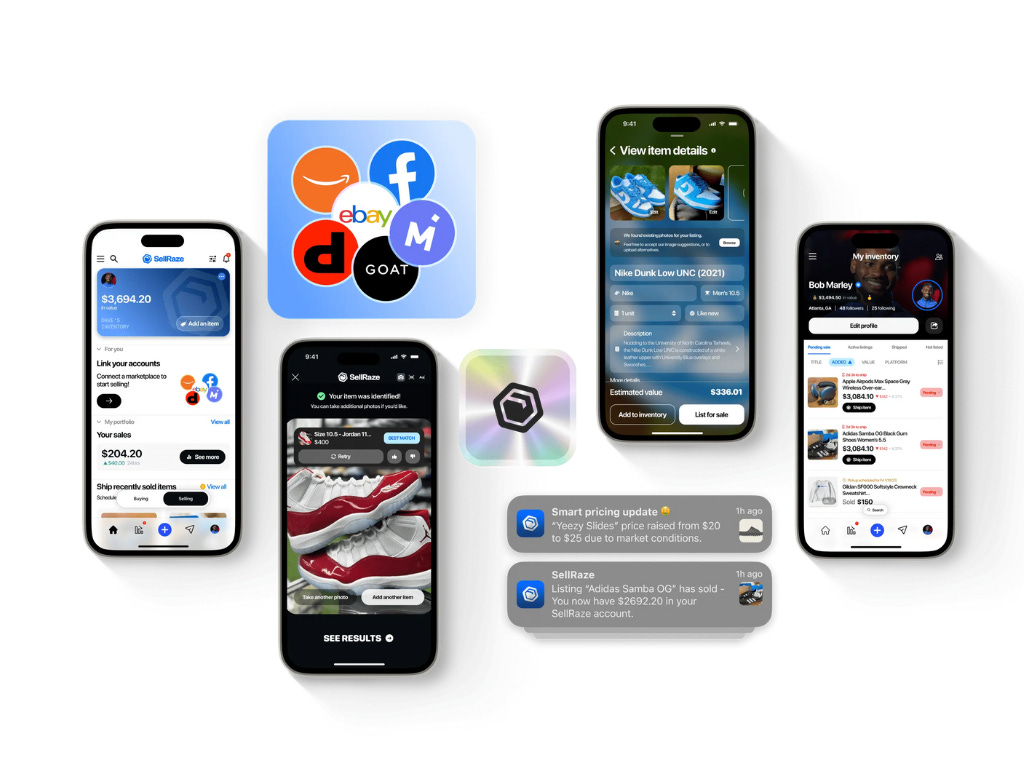
In a nutshell: The startup uses AI to recognize products straight from videos or photos, automatically generating descriptions, prices, and listings. The application is aimed specifically at selling secondhand and working across marketplaces, so sellers at home can showcase several items in one clip, while the system guides filming and editing.No longer need to manually upload photos and rewrite descriptions across multiple platforms.
Relevance: Everyone has heard about overconsumption. But digging through your closet, taking photos, and posting everywhere is exhausting. If you’re already selling vintage or secondhand stuff and don’t want to waste hours doing it, this one could actually help you. It even includes European Vinted.
Yes, it is for “real sellers”, but who prevents small companies from using its potential?
You can already find them in the App Store and join 200,000+ other sellers.
Try it here: Cross-listing App Helper for Sellers
Parrot
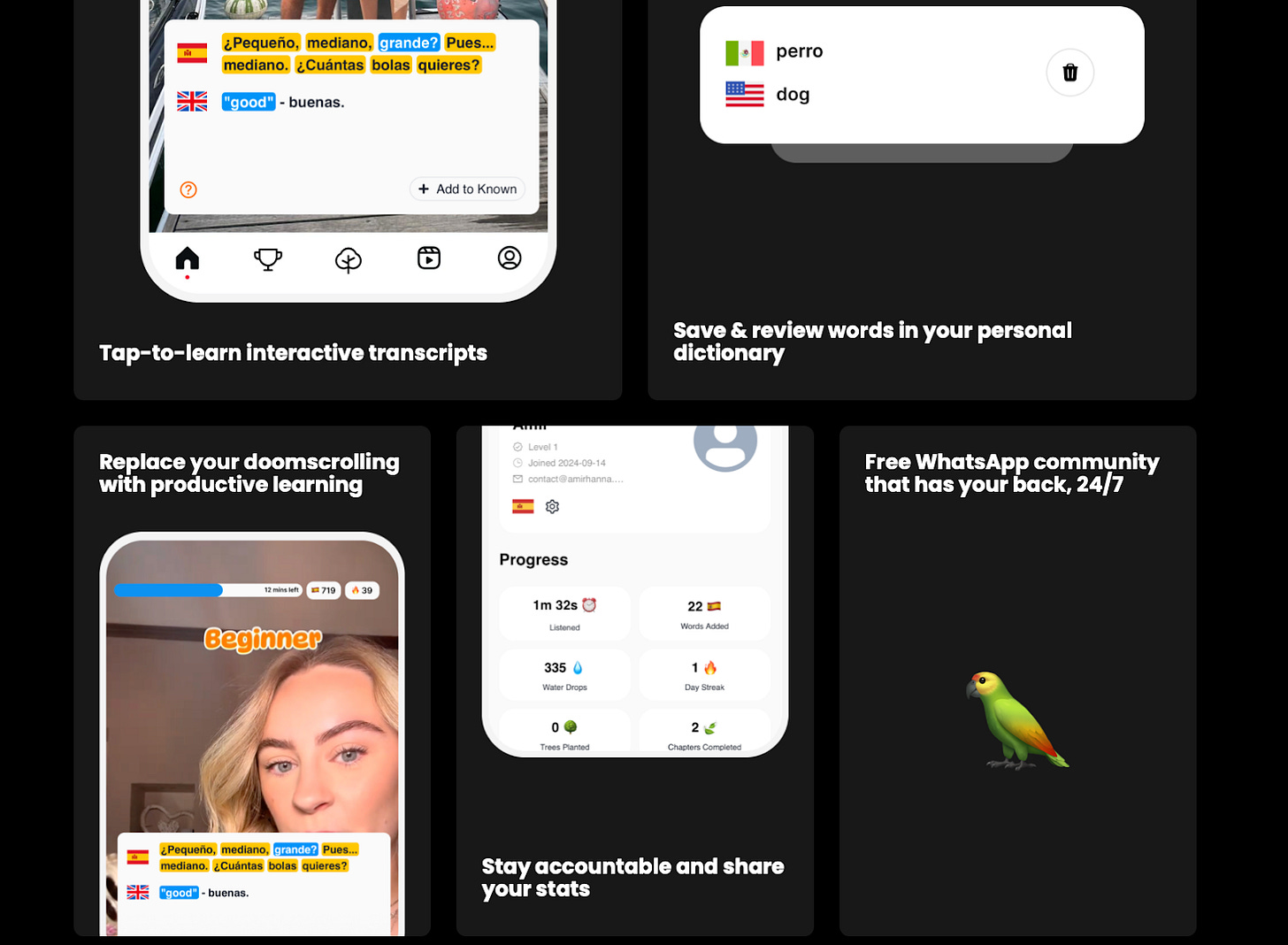
In a nutshell: The idea behind it is to turn doomscrolling into fluency through personalized short-form video lessons based on Dr. Stephen Krashen’s Comprehensible Input theory. Only Spanish.
Relevance: Language learning is an evergreen market. Converting it into a social media experience is kinda compelling. I mean, we already spend hours on our phones, and maybe this might just make Duolingo sweat if they add other languages.
The Weekly plan costs $7.99/week.
Try it here: TikTok for Language Learning
For your business
Narrative
In a nutshell: Another video tool, but this time, what a relief for video editors. It helps editors process thousands of hours of footage in a snap — search, identify scenes, and generate timelines instantly.
Relevance: So it makes AI the backbone of the workflow, solving a pain point for production teams drowning in video volumes. In addition, it supports terabyte-scale footage.
The target audience is pretty obvious - production studios and professional editors.
Try it here: AI Video Editor for Professionals
Hyperspell
In a nutshell: It creates a memory network, connecting to tools such as Slack, Gmail, Notion, and Drive. To get the necessary context about people and projects, the model processes thousands of documents and conversations.
Relevance: Conor and Manu, founders of Hyperspell, have experienced the limitations of the AI without memory, which inspired them to build Hyperspell. Indeed, we cannot deny that when working with AI agents, the context is lost between sessions, and the user is forced to repeat information, wasting time.
So far, you can only book a demo, but I really recommend saving it. Processing thousands of documents automatically was never a bad idea.
Try it here: Memory for AI Agents.
Multifactor
In a nutshell: When you give an AI agent access to your Gmail/Notion/Stripe, it’s not safe. So agents can do anything and even steal our data. Multifactor securely stores passwords through a proxy (the agent never sees passwords) and restricts what an agent can do.
Relevance: They’re building security infrastructure for AI agents that access your accounts. Given the AI agent hype, it sounds interesting, but is there a real threat? If you’re concerned about security, it’s worth paying attention to.
But if Microsoft or OpenAI integrates something like this, the project will stay in the shadows.
Try it here: Zero-trust authentication for AI agents
Sourcebot
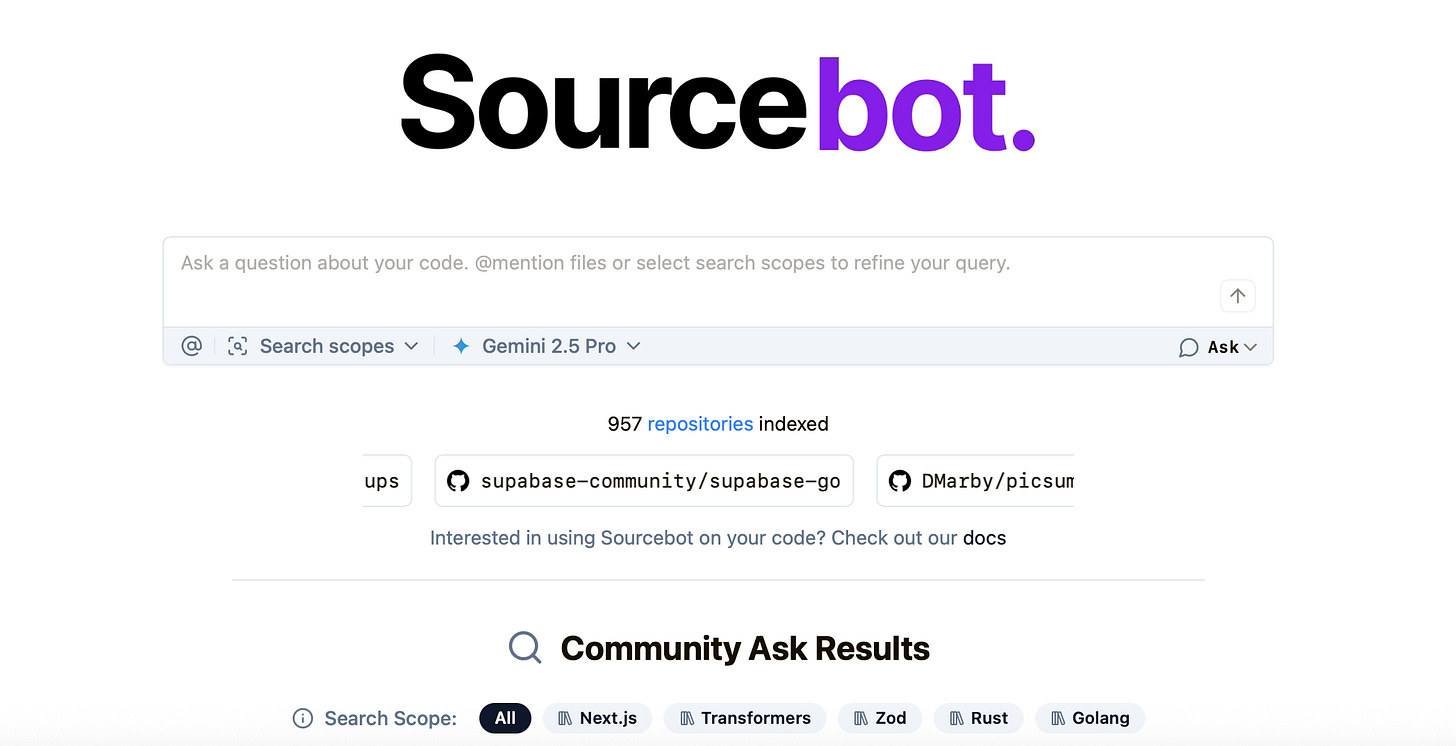
In a nutshell: It enables regex search across millions of lines of code and lets us ask questions across thousands of repos using reasoning models. The platform is open-source, so you can deploy it on-premises in enterprises without problems.
Relevance: Founders make life easier for large engineering teams, especially for junior ones. Sourcebot turns scattered codebases into searchable and contextual knowledge, making onboarding onto complex codebases faster.
Sourcebot is already used by NVIDIA, Red Hat, Wikimedia, and Arista Networks.
Try it here: AI agents for Massive Codebases
Meet the unicorns
Given the current trends, can we discover stars?
Sorce
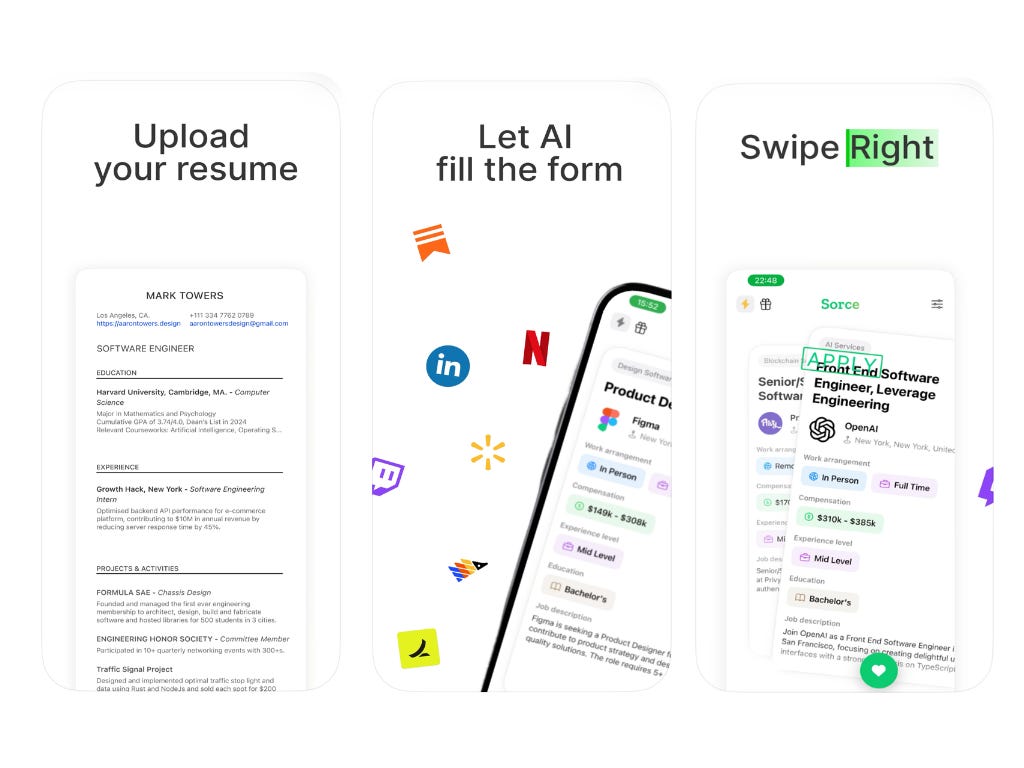
In a nutshell: It has a swipe-based interface where the AI agent automatically fills out job applications and cover letters on employer websites, when we swipe right in hope.
The relevance: The job market is a slow-motion burnout. Candidates are forced to apply daily to multiple positions. I am sure that people are exhausted by repetitive application processes, so the product offers a much-needed breath of fresh air.
Since its launch in 2024, it has reported millions of swipes and hundreds of interviews conducted through the platform.
Try it here: Tinder for Jobs (real material relationship)
The Context Company
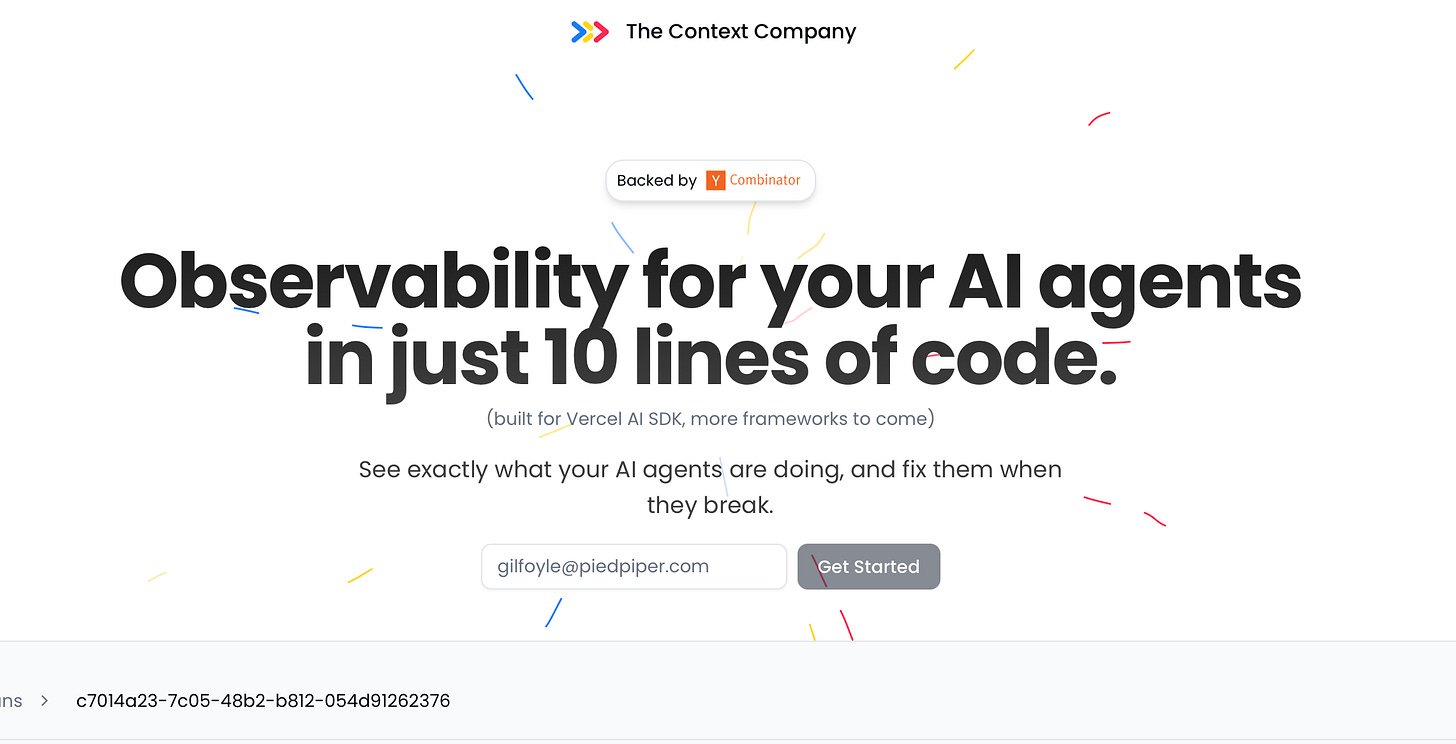
In a nutshell: It keeps tabs on AI agents, showing where they fail, why, and how to fix issues. Also, it combines tracing, tool calls, and silent error monitoring.
Relevance: Building AI agents is already tough. Do you truly understand what is happening inside? They’re right on time for ensuring the reliability of multi-agent systems in production environments.
Comparable to Weights & Biases (ML monitoring) and Sentry (general monitoring).
Try it here: Observability for AI Agents
Selfin
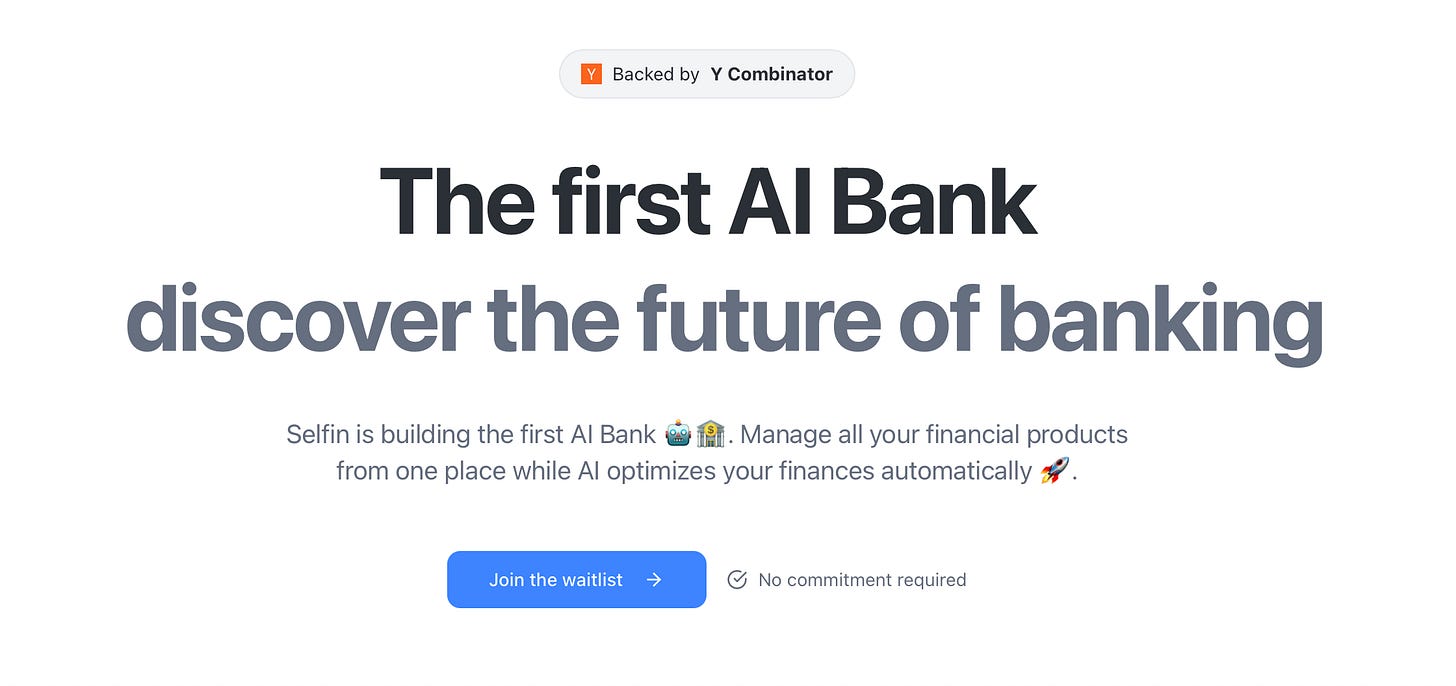
In a nutshell: It is developing AI-powered banking. We connect all our financial products, data, and preferences, as I see it, to a single intelligent platform, and it provides personalized recommendations and financial optimizations.
Relevance: Founders present it as “The first AI Bank”, but it is not…They were literally beaten in August 2025. However, if they can solve compliance faster than competitors and focus, for example, on youth or cryptocurrencies, they will be able to become the first. Moreover, the concurrence is not that big.
Try it here (only a waitlist): Observability for AI Agents
Redapto
In a nutshell: Redapto builds the infrastructure that lets AI agents continuously learn and adapt from real-world usage. Their platform integrates controller models, domain-specific post-training, automatic feedback pipelines, and self-updating data sources, making a system to evolve! So we are talking about a “continuous learning loop” into enterprise AI stacks.
Relevance: As AI systems get deployed, models tend to start to slow down as they stop learning from real-world use and quickly hit a performance wall. Redapto wants to fix that by making AI agents that can keep improving over time.
To pull this off, honestly, they’ll need to build a solid architecture that balances autonomy with real-time data updates. This is still early and hasn’t shown much product traction yet, but their vision can really change the way internal AI systems work.
Try it here (only a waitlist): Self-improving AI agents
Conclusion
After looking closely at the Fall 2025 YC batch, it feels like YC is doubling down on killing repetitive, operationally heavy work. Most B2B startups in this batch are basically turning AI into an invisible co-worker.
We have already entered the AI infrastructure era. Everyone is tired of trying to build consumer AI apps or competing with giants like OpenAI. Instead, founders are expanding the foundation itself, building the practical tools everyone else will need.
The ideas are forming around AI-native enterprise software, multi-agent systems, and video generation as a new primitive. Vocational training and education with AI, voice, and AR/VR, which YC explicitly called for, are still waiting for their moment, as well as LLMs instead of Government Consulting. There were literally zero startups in these sections.
Also, small teams are a trend. Most startups this round have between 2–10 people, something YC itself pointed out in their internal notes. Only 6(!) companies have teams larger than that this fall.
I suppose you notice as well that most products are still rolling out in stealth or early list stages. Many are pre-product, promising ideas that haven’t started earning yet. Well, the Demo Day is coming!
This article was first published in the Creators AI newsletter. View the original edition.