How to Monetize AI Music Up to $10M (And Stay Out of Jail)
Breaking down the most unusual case for our newsletter and creating music with AI.
Hi!
I found another perfect approach for a side hustle. It's this: We generate hundreds of music tracks using AI, upload them to different streaming platforms, recruit some bots, and make over $10M in royalties over a few years! Sounds good, right?
Technically, there are a couple of other moments where we get arrested by the FBI and indicted, threatening 20 years in jail, but we'll deal with that later.
Okay, you certainly shouldn't do that. I mean the crime, not the music generation. In fact, we will talk about creating and monetizing tracks (only legally) with AI today. And we'll also discuss whether crime can be used as a case study for creators.
Criminal Case as a Case Study for Creators?
Well, I see an ethical problem here.
On the one hand, when we choose creators, we try to take those who can boast of results. And given that we're talking about new kinds of work and AI entrepreneurship here, the most telling results are revenue. Our case study today has quite solid results.
At the same time, I do not want to give the impression that we condone scammers and criminals. We condemn the breaking of laws and the use of platform rules to make illegal profits. So, let's treat the case below as a compelling story that demonstrates the impressive capabilities of AI and modern progress.
Keep your mailbox updated with practical knowledge & key news from the AI industry!
Meet Michael Smith, a 52-year-old musician from North Carolina. His lawsuit, filed in U.S. District Court in New York, alleges that between 2017 and this year, he earned more than $10M by uploading generated music to services like Spotify, Amazon Music, Apple Music, and YouTube Music. The scheme worked quite simply.
The songwriter receives small royalty payments when a song is played on a streaming platform. Smith realized that he couldn't succeed with honest work, so he focused on quantity rather than quality. By automating the track generation process, he created and uploaded 661,440 tracks per day.
Smith created randomly names for the AI-generated music to make it look legitimate. Fake song names taken from an alphabetized list included Zygotic Lanie, Zygotic Washstands, and Zyme Bedewing, while fake artists were given names like Calliope Bloom, Callous Humane, and Calvinistic Dust. Although the tracks received an extremely small number of listens, it was enough to generate a six-figure annual income.
The indictment states that the average fee per stream was half a cent, which meant daily royalties brought Smith an approach of $3,307.20, monthly royalties totaled $99,216, and annual royalties totaled $1,207,128. Considering that our enthusiast has been in the business for over eight years, he has made more than $10M.
According to U.S. Attorney Damian Williams, Smith stole millions in royalties that should have been paid to musicians, songwriters, and other rights holders whose songs were legitimately streamed.
For now, law enforcement officials call the case the first of its kind involving artificially inflated music streaming. Smith is being charged with wire fraud conspiracy, wire fraud and money laundering conspiracy. Each count carries a maximum sentence of 20 years in prison.
And that's an example of how AI-generated content shouldn't be monetized. But that doesn't mean there aren't perfectly legal analogs to this business. Let's look at how it works.
They probably won't be as effective, but at least you won't have problems with G-Men.
How to Create & Monetize Your AI Music
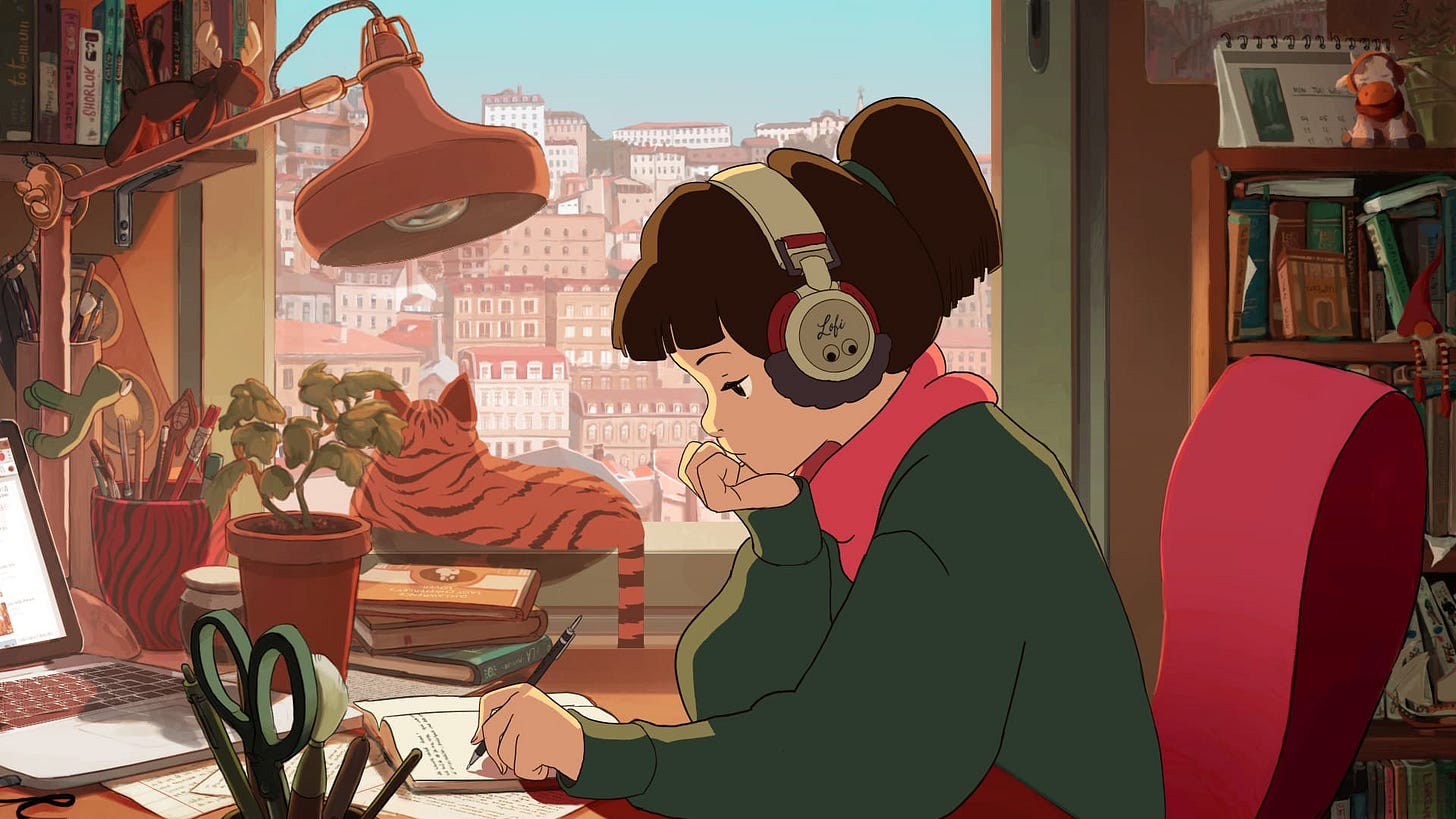
You probably know the girl in the image above. (Yes, the one who hasn’t finished her homework for several years now). If not, her name is Lofi Girl (formerly ChilledCow), and she is the face of a French YouTube channel & label with lo-fi hip-hop music. The videos on this channel are streaming 24/7, so you can open it anytime and use it as a background for work and study.
There are actually a lot of such channels. Some of them gain huge views, others keep a small but stable audience due to their unique approach. That said, much of this kind of content is generated with AI. Here's what you need to do to replicate their results.
Step 1. Music Generation
The first step is basic.
We need to decide what kind of music we will create and what tools we will use. I advise you to decide on a genre in advance and stick to one direction within the project (you can also run several projects in parallel to avoid confusing your audience). To make it a little easier for you, I suggest focusing on the three most popular categories among AI music creators:
- For sports and workouts
- For study and work
- For relaxation and meditation
Sharing is caring! Refer someone who started a learning Journey in AI!
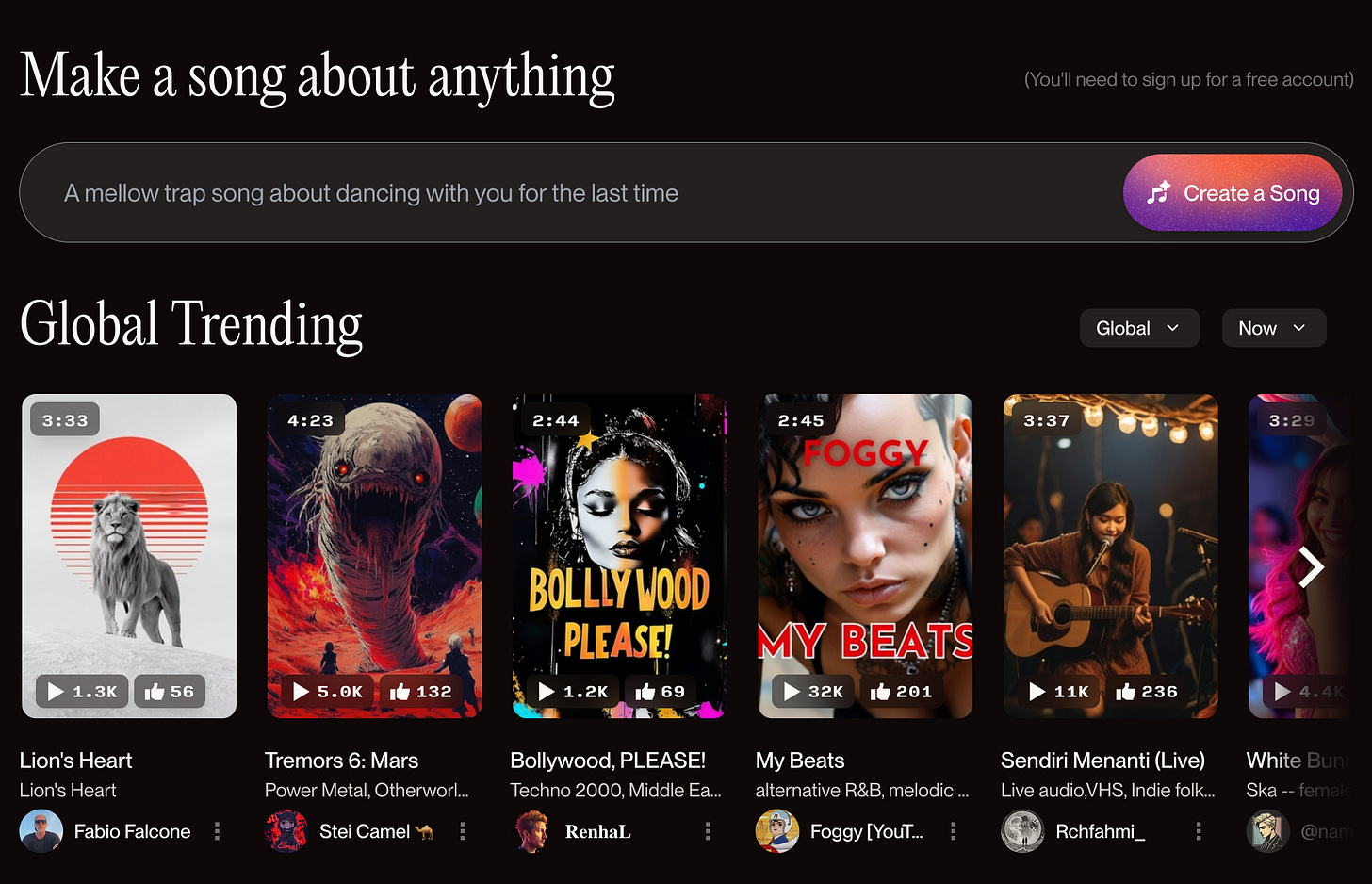
When you decide (ask ChatGPT if you can't make a decision for a long time), you can move on to generation. Many platforms allow you to create music for commercial purposes. Here are a few of the most popular ones:
Now, we need to make a suitable prompt to generate music on one of these platforms. Sign up and prepare a suitable track description. As an example, I want to create a channel with relaxing music, so my prompt looks like this:
A peaceful soundscape with soft synths, gentle textures, and subtle nature sounds. Slow, continuous tones create a calm and relaxing atmosphere.Within a couple of minutes, you will receive your track.
Here's what I got:
Since services like Suno AI have limits on the length of tracks, you won't be able to generate a file for hours. So, I suggest creating more tracks in different styles and combining them in any audio editor.
Step 2. Cover Art Generation
The next step is also quite important. We need to generate a cover image for the video that conveys the mood of the track and attracts the target audience. To generate a suitable image, I’ll use Leonardo.ai. This platform has a free plan that allows you to generate up to six images with four different options for each.
Here is my image:

Be sure to choose the right aspect ratio for your cover.
Step 3. Upload to YouTube
And the last one is the easiest. Combine the finished track with your cover artwork and upload it to YouTube. Give the video a suitable title that accurately reflects the essence. If you are active on other social networks, use them for promotion.
In addition to YouTube, you can also upload your tracks to other platforms. Just make sure that the AI-generated content doesn't violate their rules first.
Conclusion
Traditionally, I like to remind you that when using AI to work or create, it's essential to add a bit of your unique human artistry to set yourself apart from other creators. AI offers endless possibilities for creating and monetizing music, but the key to success lies in combining AI-generated elements with your own creativity.
Learn how to work with modern tools properly and you will get the desired results.
Share this edition with your friends!
This article was first published in the Creators AI newsletter. View the original edition.