Personal AI Robots & AI Hardware You Can Buy Now
Trends, prospects, and obstacles of the AI robotics industry
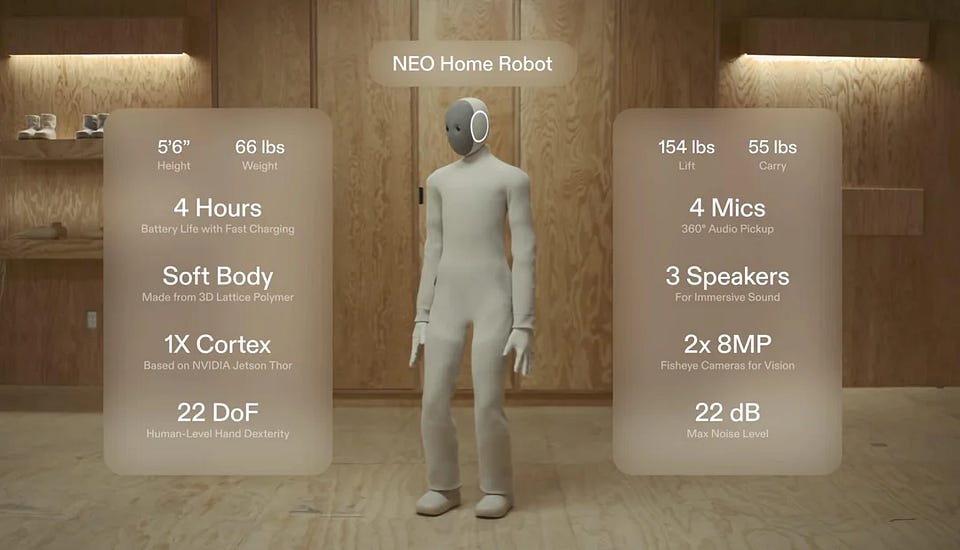
Today, we have something that could free us (or not?) from the most boring part of our life — chores. Neo is here, and X (formerly Twitter) is flooded with memes about a new home robot designed to help around the house. I got really curious to dig into what’s inside this robot, because this fusion of vision, language understanding, and action already triggers wide-ranging changes in the industry.
In this article, we:
- Elaborate on Neo and compare it to its alternatives
- Discover the actual state of personal AI robots
- Recommend 5 AI devices worth considering now.
Let’s go.
This and many other practical posts with AI use cases are available exclusively to our subscribers.
I, Robot — What is NEO and Why Everyone is Talking about It
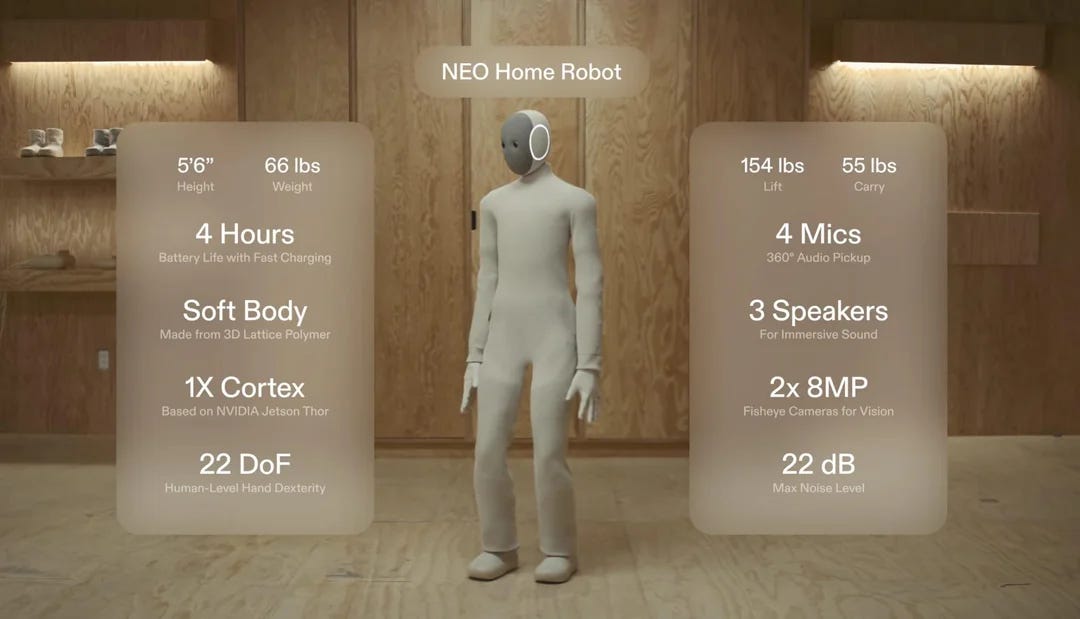
Not capable of writing a symphony yet, Neo is a Humanoid Home Robot, created to take over routine household tasks — from cleaning and laundry to interacting with the elderly and children. The robot is capable of carrying loads of up to 25 kg, opening doors, and manipulating objects on the floor or table. Seems to me like a flying start.
Neo is connected to the mobile app, so it is expected that people create to-do lists and set the time there.
Behind his eyes:
- Redwood AI, 1X’s own vision-language large language model that can process camera data, gestures, and surroundings (we will come back to this surveillance below).
- It remembers things and understands both voice and visuals, so it gets what’s going on. Like this, you can even chat with him, not only about cleaning.
- Neo adapts to new environments and develops skills that weren’t intended by the developers.
- The soft body keeps noise down. It has built-in Wi-Fi, Bluetooth, and 5G, plus speakers in the torso and chest so you can play music through it.
- Sadly, the battery runs for up to 4 hours, but keeps an eye on its own charge and plugs itself in when needed!
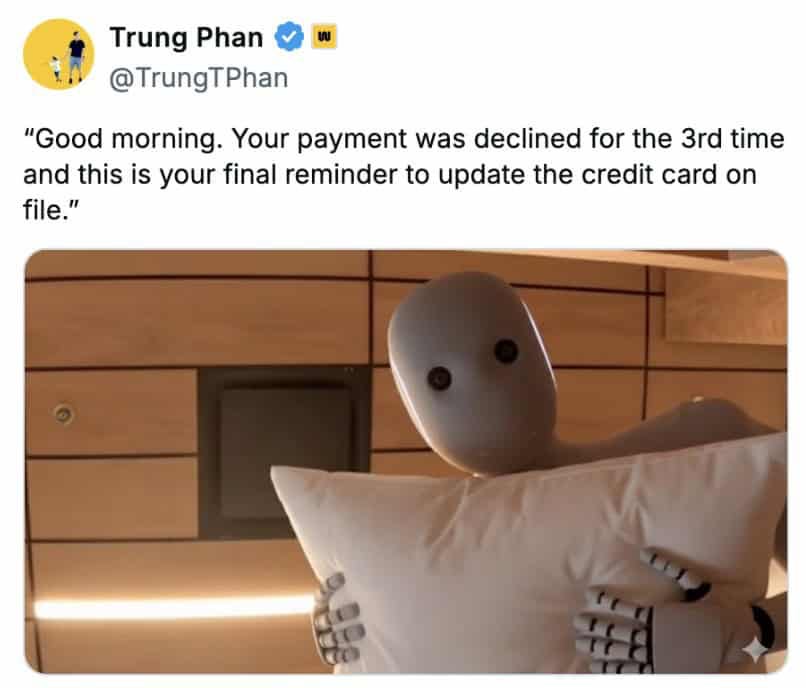
While some people are dreaming of him doing their dishes, others are churning out memes.
Who’s the creator
These cute robots belong to 1X, an AI and robotics company, founded in 2014 by Bernt Bornich in Norway. Now they have the HQ in California, attracting specialists from all over the world.
The story began in 2018, when they unveiled Revo1 — a lightweight but powerful servo motor that gives robots stronger and smoother joint movements.
It’s not by chance that I mention it, because it took only 5 years till in 2023 the NEO Project was born. After proving that EVE, a wheeled humanoid robot, worked great in factories, the company switched to making friendly human-like helpers for homes.
In 2025, the company presented NEO Gamma, an updated and home-optimized version of NEO. And it looks like they’re not slowing down. In 2026, 1X plans to bring NEO into real customer homes through a wider Early Access rollout.
AI Helpers or Home Spies?
But even if you drop 20k on that robot, you accept the fact that operators can tap into its cameras to handle tricky tasks, gather data, and train the AI. According to the devs, it’s the only way to improve it.
It’s not 24/7 spying, more like scheduled or on-demand sessions. The robot auto-blurs everyone’s faces, and you can mark bedrooms, bathrooms, and other private spaces as no-go zones through the app. But still...the internet is already making fun of how it is creepy.
Anyway, no other company has reached this milestone. Not Tesla with Optimus, not Figure, not Unitree. 1X is moving from the demo stage to consumer preorders.
State of Personal AI Robots
Humanoid robots are nothing new, but I get why people are freaking out. Neo took a step forward toward the creatures that we’ve only seen in movies. I think you remember that the same thing happened with Boston Dynamics’ robot dogs, which kept the buzz going for years.
As you can see from the table below, Tesla Optimus and Figure 02 are the main competitors of 1X NEO with LLM under the hood, but both are ultimately focused on large-scale task optimization, even though Figure 02 is also trying to position itself as a potential home robot.
!function(){"use strict";window.addEventListener("message",(function(e){if(void 0!==e.data["datawrapper-height"]){var t=document.querySelectorAll("iframe");for(var a in e.data["datawrapper-height"])for(var r=0;r<t.length;r++){if(t[r].contentWindow===e.source)t[r].style.height=e.data["datawrapper-height"][a]+"px"}}}))}();
The main difference is that NEO is indeed carving out a different niche, which is, let's be honest, quite risky.
What does “сonsumer-ready humanoid robot” even mean today?
So the company claims that it’s the world’s first home humanoid robot. It’s not a regulated label, just another level.
What sets NEO apart from other humanoids:
- Soft materials and fall detection sensors make it safe around kids, pets, and elders. You’re not gonna worry about a metal machine knocking over your toddler.
- It can handle actual home tasks in messy environments, like the kitchen, not some clean factory floors
- It’s available for regular people to buy (well, preorder), not just for factories or labs.
The reality is that Neo is not yet fully autonomous and still relies on teleoperation. I’m sure it’s going to take some time before a robot does most household stuff on its own. Think about it - every apartment is different, stairs are a nightmare, and we are asking one machine to handle everything.
The potential is huge, not even a question. And AI is growing like crazy right now, so watching this transition play out is super interesting. But this niche is in an awkward phase, where robots show promise but aren’t so attractive. The real test is whether these robots can adapt to unpredictable homes without constant human help (and don’t judge us for the mess in our apartment).
Anyway, the game has already changed. Who knows, maybe Musk will surpass this success.
Trends and prospects of AI robots
Well, the population’s getting older, and at the same time, there’s a growing shortage of workers, so we see that the demand is going to shoot up. The Global Automation: Humanoid Robot — The AI Accelerant report backs that up, too. They say the market could hit around $38 billion by 2035 thanks to faster AI progress, cheaper components, and ramped-up production.
Of course, we’ll still have to deal with all the ethical stuff — like how people feel about robots and how much freedom they should have — but I don’t doubt that in the next few years, we’ll start seeing them take over jobs that are too risky for humans, like mining or chemical plants, and also in elderly care.
We’re heading straight toward AI-native factories where AI robots and systems run every step of production. Take Xiaomi’s Changping facility, which is an 86,000-square-meter plant running on 100% automation through the HyperIMP platform.
Picture factories with no lights or people (for me, it still sounds scary). They even have a name, “lights-out manufacturing”. The pitch that we will save energy, but are we counting what the robots and AI actually consume?
But on the flip side, microfactories are taking off. Perhaps you heard people talk about local production being hard to organize, but apparently, AI can solve this. A human handles only tricky stuff, while AI does the rest.
The MicroFactory DevKit shows you exactly what this looks like. A robot that works as a mini-factory you drop in your basement, garage, or office.
We have already mentioned in the YC AI Startup F25 Batch post that startups are getting thinner, often built by teams of 3-5 members. The same thing is actually happening in the hardware building. One founder with a few right AI tools that train and run on autopilot can build something real. But I truly believe that the real value is being around others who make things happen. Communities like Blueprint get this. They give folks tools, labs, and energy to keep creating projects that might end up being another project like NEO one day.
Check out their Founders Inc Demo Day, where young teams and solo builders pitch their stuff. A ton of geek hardware projects showed up: AI companions, autonomous surgical robots, AI cooking robots for your kitchen, AI receptionists booking appointments, and a whole bunch of other wild stuff.
AI robots are clearly not just big metal helpers; they are also devices that are changing how we live and work. Tech stores are full of products with the “AI” label, from smart assistants to home gadgets and factory bots.
Below, we will break down tools that are already part of our everyday life, and you can actually try them.
AI devices worth considering now
Starting with the most popular AI gadgets, we move up to the more advanced stuff. From smart glasses to personal AI robots, here’s a handpicked list of tech you can actually use.
Meta Ray-Ban Smart Glasses 2
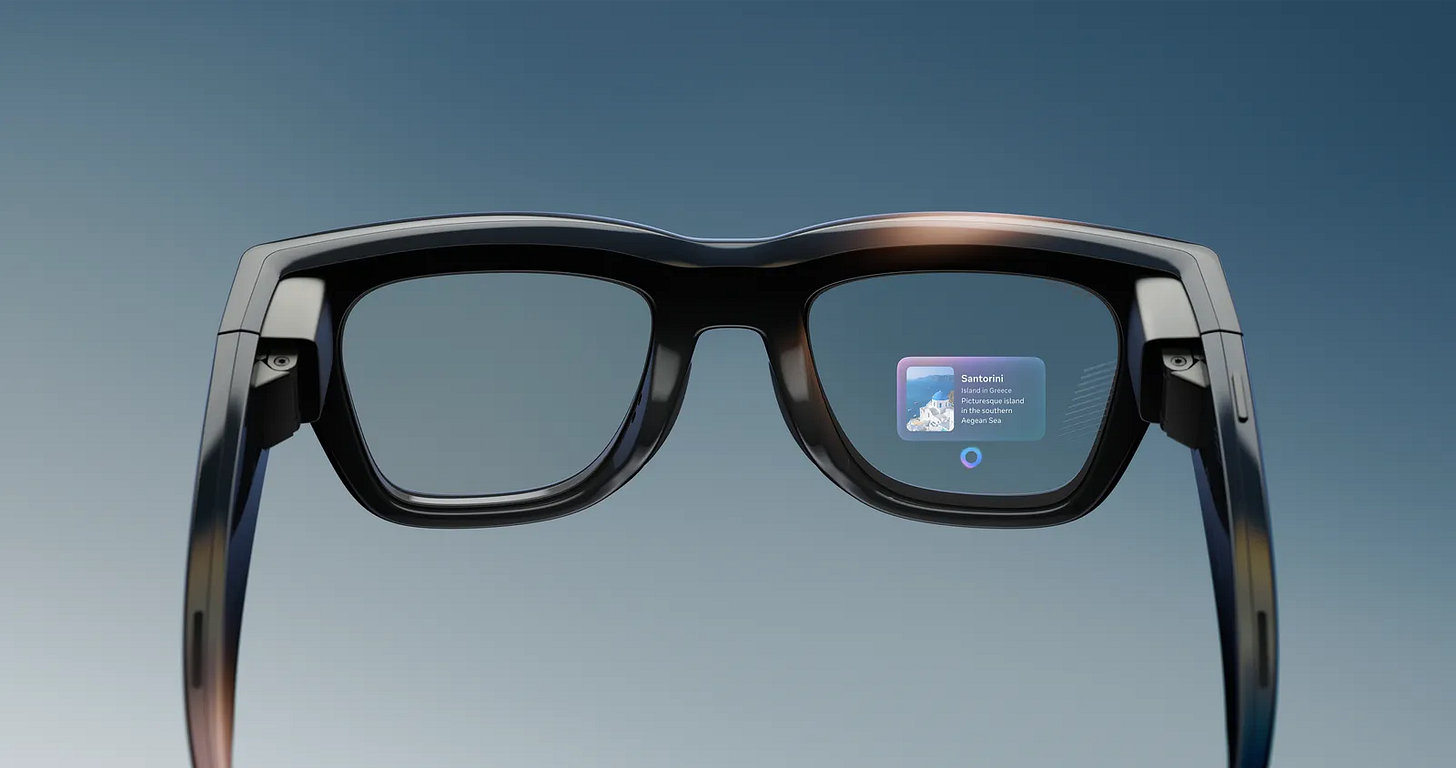
Just a great choice of smart glasses. With the second generation that lasts up to eight hours, you can snap pics of cute dogs (let the AI handle the frame and exposure for you), shoot 3K videos hands-free with a 12-MP camera to make your content look different. The coolest part is can go live on Instagram and Facebook from your POV. Streams last up to 30 minutes.
AI Features are quite extensive. Say “Hey Meta” to trigger Meta AI (works offline for basic commands) or tap the temple to wake it manually.
Meta AI remembers what you look at, like where you parked your car, recognizes what you see, and answers questions about it in real time. For example, it points you to nearby restaurants and cool spots around the city, plus it describes plants or monuments when you travel or are just curious.
The glasses also read text right off documents, slides, and everything, I’d say. If it’s in another language, they’ll translate menus, signs, or random posters automatically. It also sends voice messages on WhatsApp, calls a number, and scans QR codes straight from a flyer; you just need to ask.
You can manage your glasses in the Meta AI app to edit and share photos, and interact with your Meta AI assistant. In addition, Meta partnered with Be My Eyes to help blind and low-vision users by connecting them with volunteers who see the camera feed.
Meta offers several Ray-Ban models, including a sporty Oakley version. Btw, the standard glasses don’t have a built-in screen, but there’s a separate Ray-Ban Meta Display model with a small HUD in the right lens. The same features, but you not only hear all the messages and tips, you also see them.
P.S. in the EU, we can’t use Vision AI and the Display version due to local regulations🤓
Starting price: $379
Find it here: Click
Timekettle W4 Pro AI Interpreter
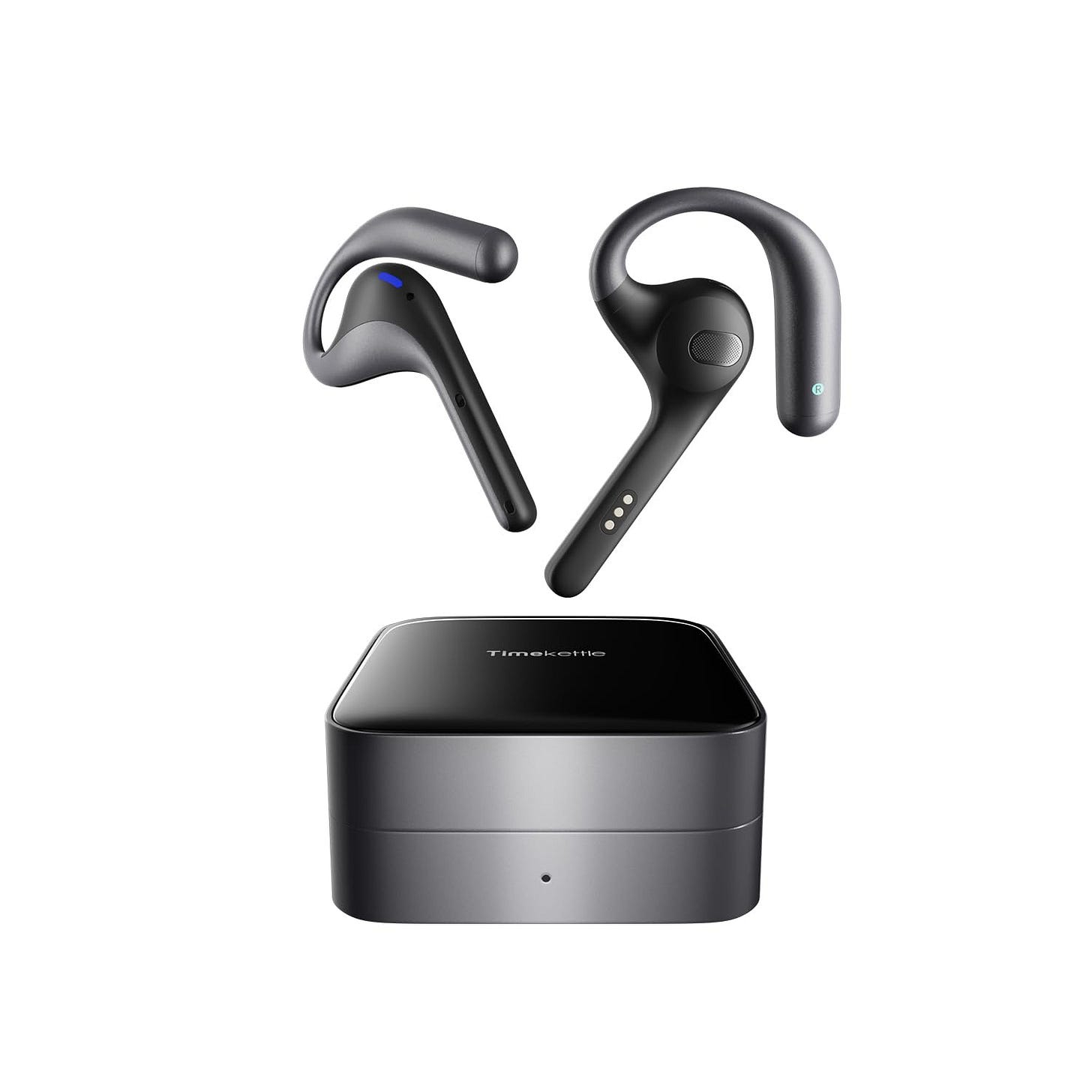
This one I would recommend for business people, companies, and hardcore travelers who are constantly in touch with foreigners. The W4 Pro gives you almost instant translation with super low delay, and the AI-powered app can even turn your meetings into little summaries.
W4 Pro isn’t a full-on replacement for your phone when it comes to voice translation. In any case, the Timekettle app is a must because you control the headphones through it.
You can translate offline, but you get about 13 languages. Online, it unlocks the whole deal with 40 languages and, supposedly, 93 accents.
Speaking of the AirPods Pro 3 that Apple’s been actively promoting for their live translation feature as well, right now they support only main languages: English, French, German, Portuguese, Spanish, Italian, Japanese, Korean, and Simplified Chinese (some were literally added 4 days ago). So we see that the difference is pretty obvious, because for AirPods, it’s a side feature, while W4Pro is made for this.
Starting price: $449
Find it here: Click
Plaud NotePin
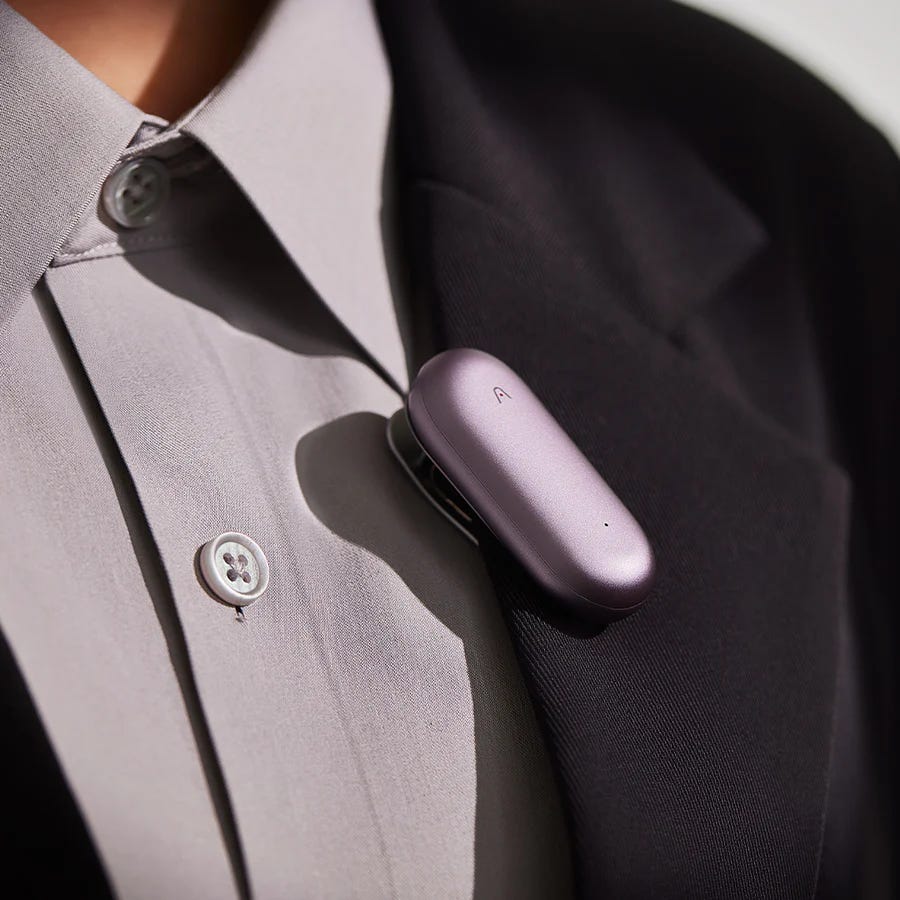
At first glance, it just looks like a tiny voice recorder, but nope, it’s actually a smart assistant powered by ChatGPT (and even Claude 3.5 Sonnet). The Plaud app and web platform give you quick and accurate transcriptions in 112 languages. It can whip up summaries, mind maps, and to-do lists.
You can clip it pretty much anywhere: it has a magnetic pin for the NotePin body, a necklace, a bracelet, and a clip. Super compact and super light. The 270mAh battery keeps it running for up to 20 hours. What is more, you’re fully in charge of your data — you pick whether to store it locally or in the cloud.
People mention how clean the sound capture is compared to others, but, honestly, the device doesn’t provide you a passive tracking the whole day. Talking about use cases, students and professionals can record lectures, interviews, and team syncs.
With the Unlimited subscription, you get industry-specific dictionaries. For example, it gives a more accurate transcription during a doctor’s appointment, in court, or at a meeting. Writers can dictate story ideas and character names. I’ve seen reviews that the device is good at recognizing unusual names and helps organize creative thoughts.
The free plan gives you about 300 minutes of transcription per month. If that’s not enough and you need more minutes plus extra features like templates, you can upgrade to the Pro Plan or Unlimited Plan.
Starting price: $169
Find it here: Click
HuskyLens 2 AI Camera
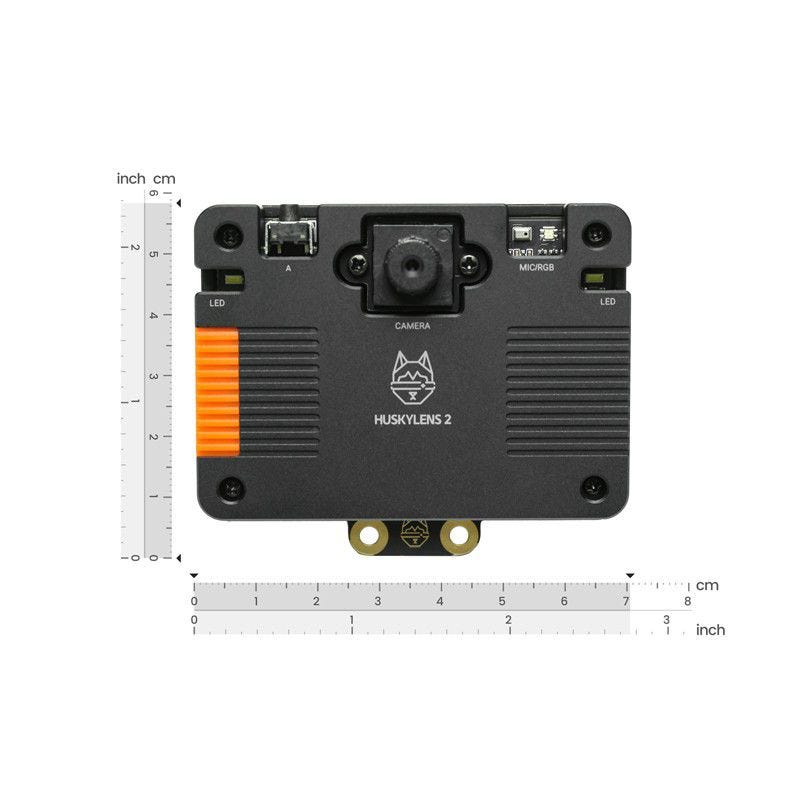
HuskyLens 2 AI Camera is a little AI camera from DFRobot built on the Kendryte K230 chip with 6 TOPS performance (this means that the AI processor inside the camera can perform 6 trillion operations per second). It runs fully offline with no cloud access, supports local machine learning, and even has self-training on the device.
The camera has a 2.4-inch IPS touchscreen, a microphone, a speaker, and a microSD slot, so you can use it without a computer. The AI supports face, gesture, color, object, and QR code recognition, as well as scene segmentation. HuskyLens 2 supports I2C and UART, making it easy to connect to robots or IoT devices.
Well, you can use it as a robot’s “eyes” for navigation, object detection, and safety control. Robots can follow a specific color, respond to gestures, and recognize their operator’s face. Feel like a DIY builder, and use HuskyLens 2 for smart home projects such as face-based door access, interactive toys, and systems that identify items by color and shape. Play around with it!
Starting price: $75
Find it here: Click
Distiller Alpha - Your AI’s dedicated computer
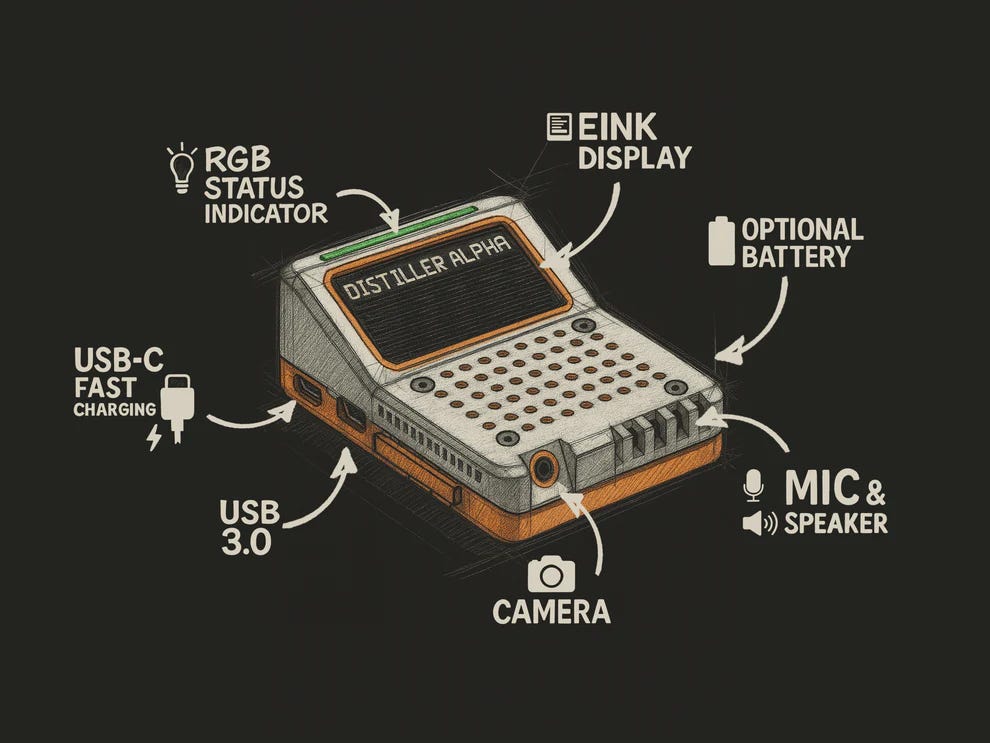
It’s a compact AI development kit built on Raspberry Pi CM5, about the size of a Mac Mini. Distiller Alpha runs Claude Code 24/7 as your AI coding assistant, and it is accessible remotely through VS Code. It’s modular with plug-and-play sensors for robotics and IoT projects.
Perfect for AI devs and hardcore tech guys who want total control over their setup.
You connect through VS Code and write and run your code without the need for cloud access or big servers. People hook it up to hardware like cameras, servos, or robots. One example is a Roomba Vacuum that picks up trash like Wall-E, which you can see below. Some guys just turned a boring vacuum into a little helper robot.
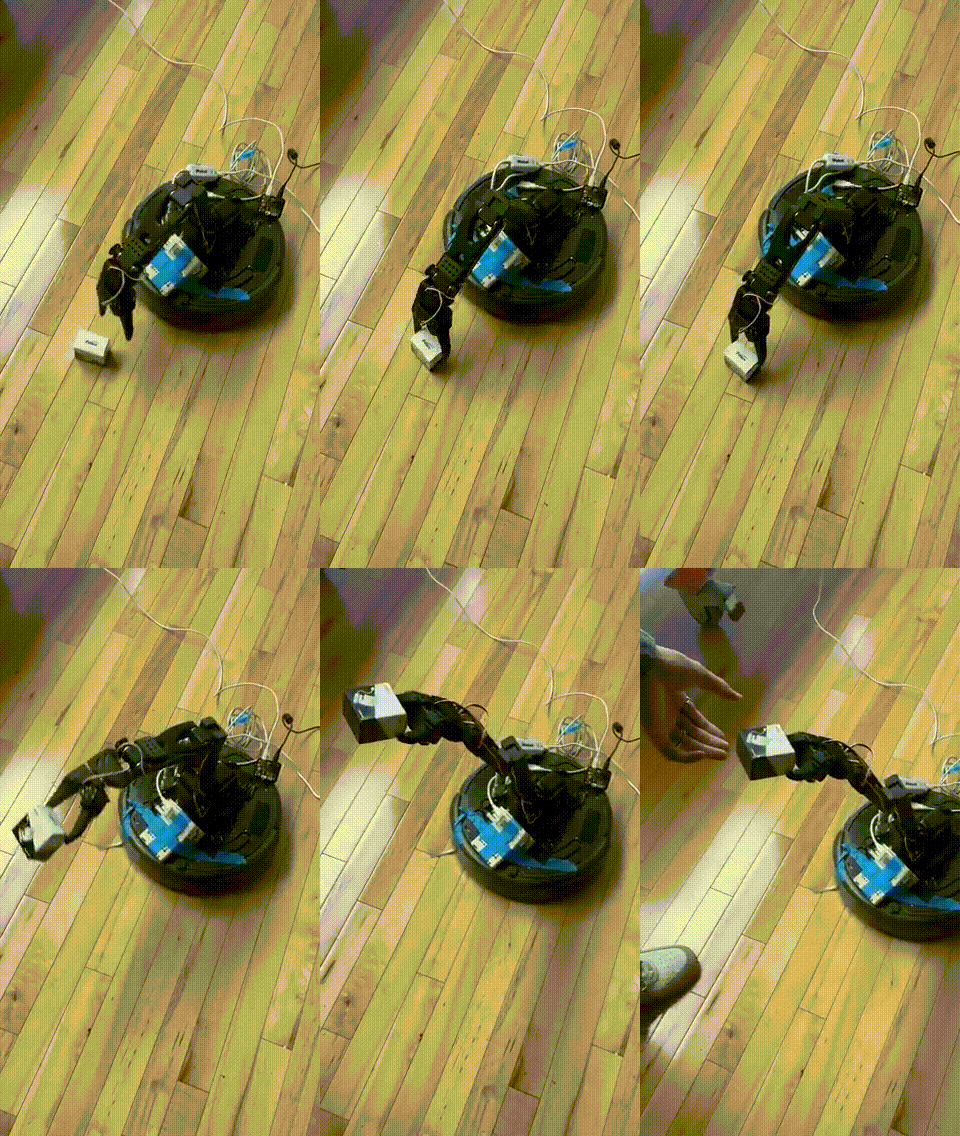
You can also prototype LLM-based workflows, letting the device handle API calls and autonomous decision tasks. Or another example, Pamir Distiller is connected to a Sony Alpha 7 IV camera and runs AI in real time to spot objects, track them, and shoot automatically.
Starting price: $200
Find it here: Click
What is next?
At this point, AI’s not just living in chats and apps anymore; it’s literally around us. The whole robotics scene is finally hitting that full-on “consumer” stage, when high-tech stuff for labs or big corps lands right in people’s homes. Talking about Neo — what used to be split apart (voice assistants that talk, cameras that see) fused into one real-world agent. We’re standing on the edge of a new era, where AI actually rolls up its sleeves and gets things done with us.
I bet there are plenty more coming next year: AI assistants, mini-robots, smart tools. So stay tuned, maybe you will stumble upon something that’ll actually make your life easier.
Hardware is the new Software?
This article was first published in the Creators AI newsletter. View the original edition.