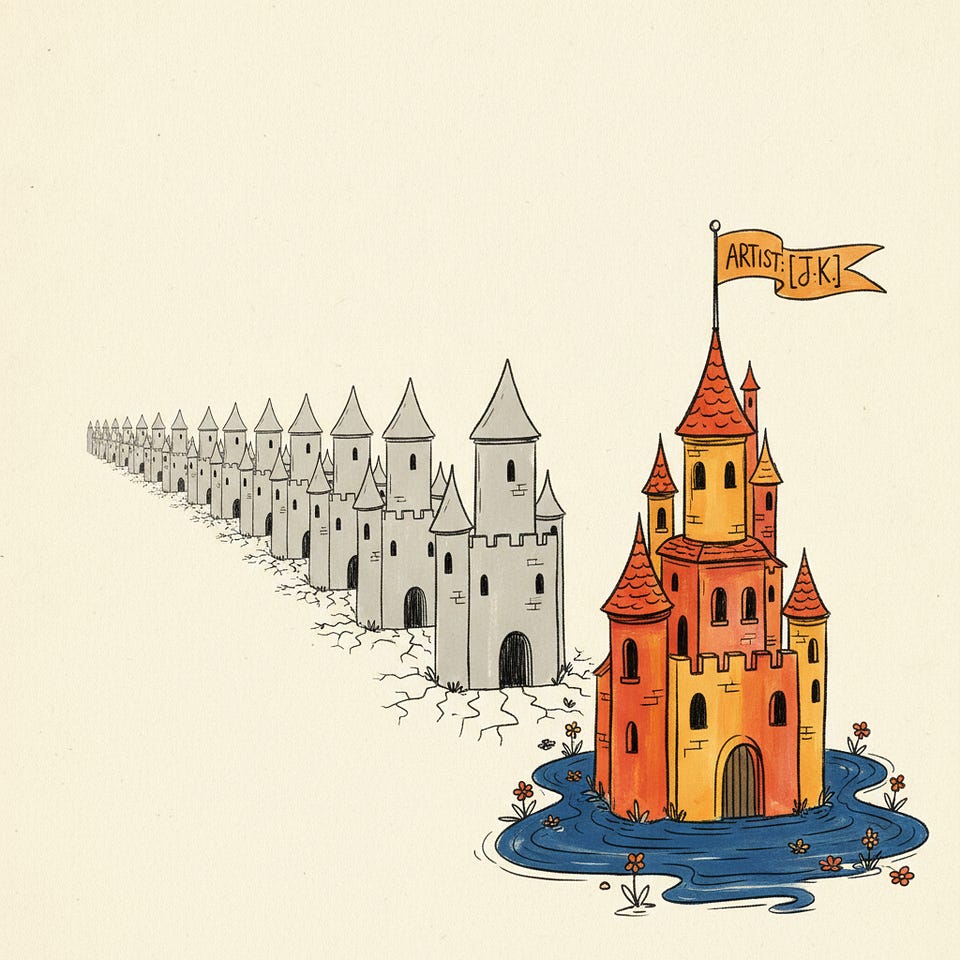
The 7-second chorus that hijacked my feed
PLUS HOT AI Tools & Tutorials
Hey, friends.
Twelve videos in a row. The same 7-second chorus. One DM later, I found out it took 9 minutes to make…
And yesterday my feed pulled a simple trick on me! I watched a dozen videos back-to-back - different creators, different niches, different editing styles - and the same song kept showing up.
Not a remix. Not a similar vibe. The exact same glittery, slightly nostalgic earworm engineered to move your thumb.
So I messaged one of the creators and asked, “What is this track?”.
The reply: “I made it last night. 9 minutes.”
That is the moment the shift became obvious: in short-form content, music is no longer only art. It is interface design.
In feeds, the track often moves faster than the video idea itself. For creators and founders, that changes how attention is earned - and how products are packaged for public platforms.
- Opening
- What goes viral now
- Four signals this is already mainstream
- Part 1 - Build loops first
- Part 2 - Turn the winner into a full track
- Part 3 - Proof & rights
- Part 4 - Where to make it (and what to screenshot)
- Prompts you can steal
- Optional visual idea in Creators AI style
- Related Creators AI references (add 3 real links before publishing)
- Links worth your 5 minutes
- Closing
Keep your mailbox updated with practical knowledge & key news from the AI industry!
# What goes viral now
The thing that goes viral is not always a full song. It is a handle - a memetic key that can fit into many stories.
A useful short-form hook usually has four traits:
- It is legible in 1-2 seconds.
- It loops cleanly with no awkward tail.
- It supports caption text or voiceover.
- It carries one clear emotion (nostalgia, triumph, tension, chaos, glow-up).
This is why AI music fits feed logic so well. So, it is fast to iterate, easy to customize, and simple to test against different video formats before anyone commits to a full production cycle.
# Four signals this is already mainstream
Before the workflow, here is the bigger point: this is not a niche trend anymore. The market is already building policies, product decisions, and licensing models around AI-assisted music.
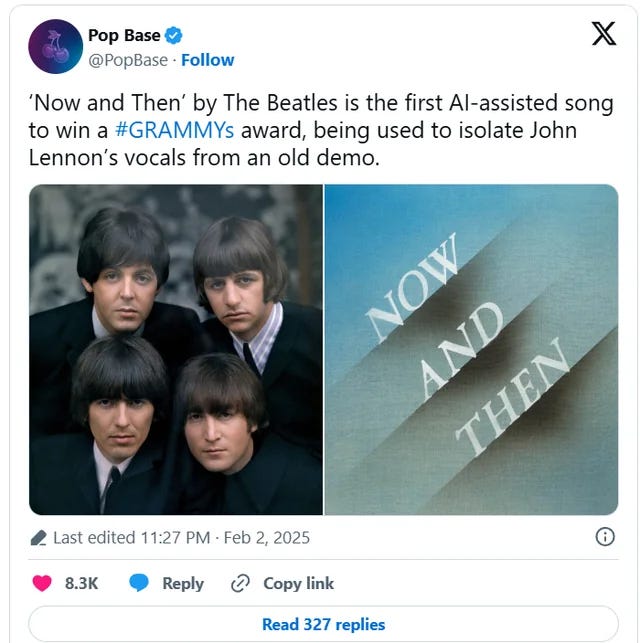
- The Beatles - “Now and Then”: AI-assisted source separation helped recover John Lennon’s vocal from an old demo and brought a finished release to a global audience.
- Ghostwriter977 - "Heart on My Sleeve": a viral imitation-style track triggered copyright takedowns and forced a public conversation about ownership, likeness, and platform responsibility.

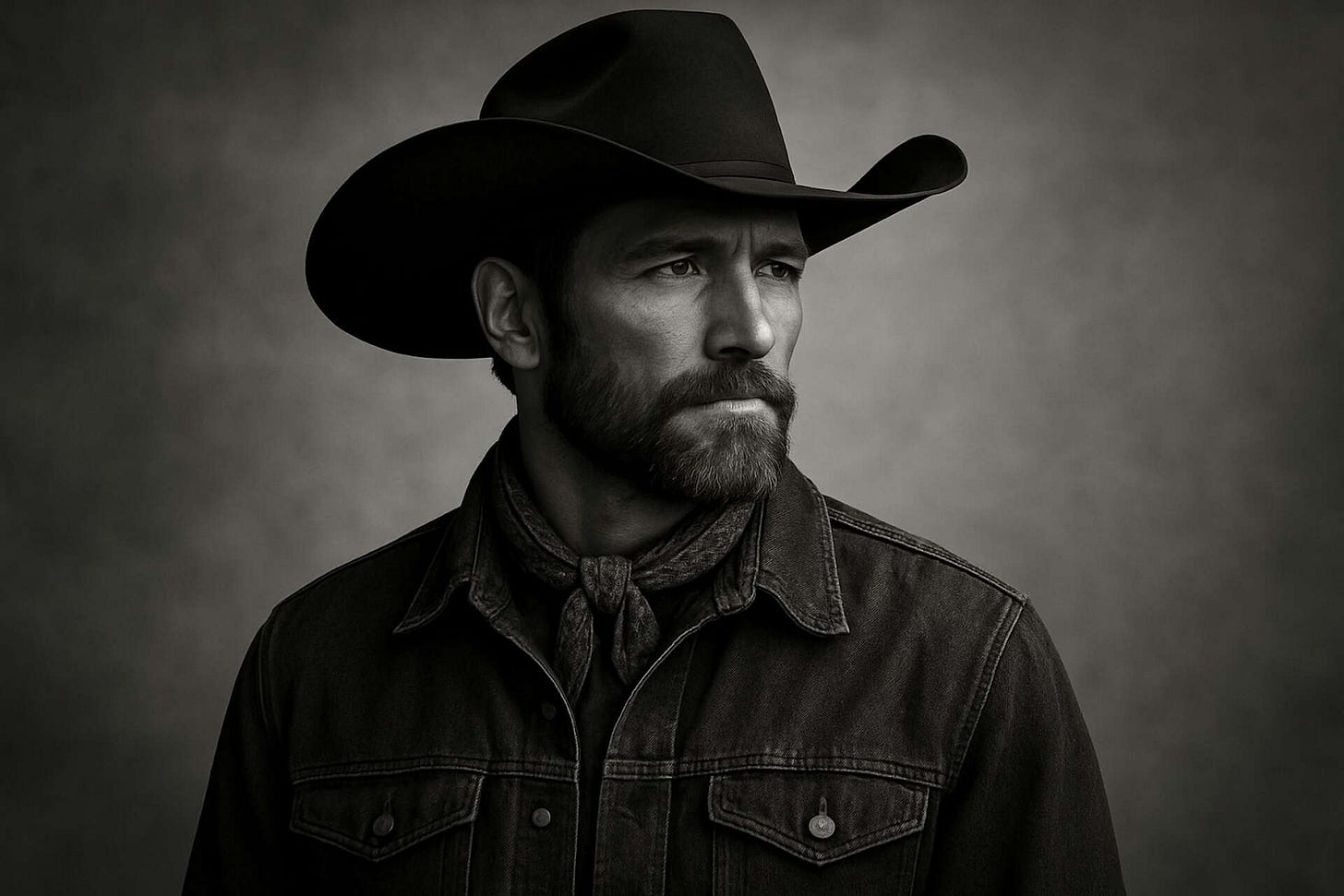
- Breaking Rust - “Walk My Walk”: an AI-based country release reaching Billboard’s Country Digital Song Sales chart showed mainstream traction beyond pure meme culture.
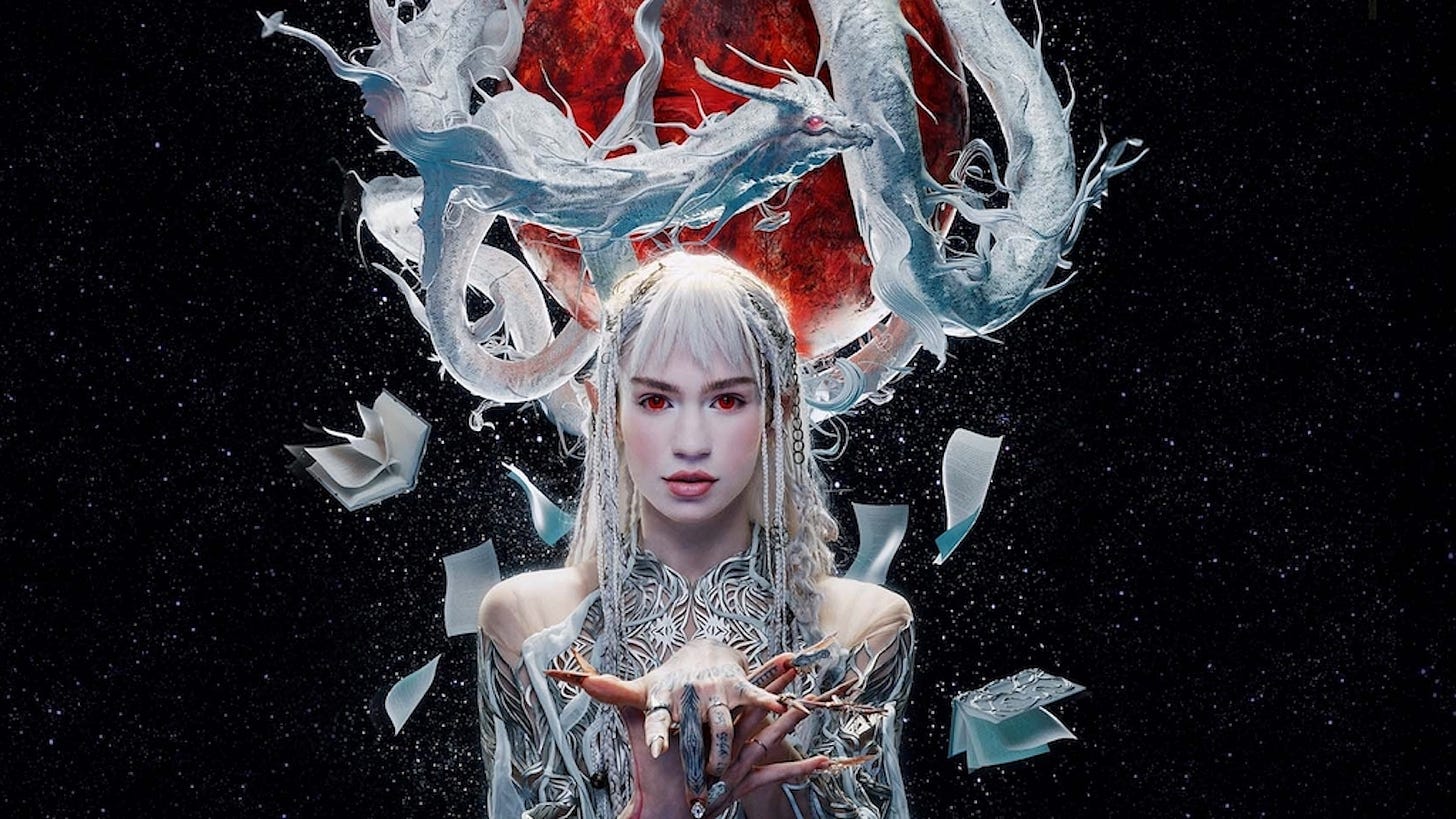
- Grimes / Elf.Tech, a royalty-sharing model framed AI vocal use as collaboration, with clear permission and creator economics built into the process.
This is the transition many creators miss: the conversation is no longer “Can AI make music?” The real question is “Can you turn fast generation into a reusable asset with structure and proof?”
Share this post with friends, especially those interested in AI!
If this framing is useful, share this post with one creator or founder who still thinks “music” is the last thing to optimize in short-form content.
# Part 1 - Build loops first
In 2026, the loop is your packaging. It is the part people hear while scrolling, and it has one job: earn the next second of attention.
Practical rule: generate 10-20 ideas, but only 1-2 deserve expansion. The loop is your filter. It helps you test the idea before you spend time on arrangement, vocals, or polish.
What makes a loop usable for short-form:
- Immediate start - the hook begins in the first second.
- One emotion - hype, tension, nostalgia, calm.
- One signature sound - vocal chop, bass shape, synth tone, or drum texture.
A simple workflow that works:
- Create 3 versions of the same loop. A (original), B (stronger first hit), C (cleaner drums / top end).
- Run a phone-speaker test - can you still hear the signature sound?
- Run a background test - play it while writing, making coffee, opening tabs.
- Run a three-scene test - gym montage, talking-head founder clip, morning routine clip.
If the loop works across all three scenes, it has reuse potential. Reuse is what pushes reach!
Before you expand a loop, ask:
- Can I hum it after 10 minutes?
- Does it still work at low volume?
- Does it fit more than one content style?
If the answer is yes three times, you have a real candidate.
Short-form export starting point:
- True Peak: around -1 dBTP
- Loudness: about -9 to -12 LUFS integrated (short-form version)
# Part 2 - Turn the winner into a full track
The full track turns a viral moment into a catalog asset. Short-form gives you attention; the full version gives you something to stream, upload, pitch, and reuse.
Do not expand every loop. Expand only after the loop shows traction (your own posts perform, other creators reuse it, or you can already imagine 2-3 strong content formats).
A reliable 2-3 minute structure:
- 0:00-0:15 - Hook appears immediately
- 0:15-0:45 - Reinforce the hook (add texture, bass, percussion)
- 0:45-1:15 - Small variation (remove one element, add a counterline)
- 1:15-1:45 - Main change (chord color, drum switch, break, vocal layer)
- 1:45-2:15 - Hook returns stronger
- 2:15-2:30+ - Intentional ending or loop-friendly outro
Keep two masters: one for short-form (louder, phone-first), one for streaming (more relaxed and comfortable for longer listening).
- Streaming master starting point: about -14 LUFS integrated
- Keep enough dynamics for earbuds and normal listening volume
Before closing the project, export assets while everything is still open:
- Full mix instrumental
- 15s and 30s edits
- Clean loop stem (drums + music)
- Vocal-only or topline stem (if relevant)
CTA - Subscribe
If you are building a creator brand, subscribe for more practical systems like this. I will keep translating complicated workflows into simple repeatable steps.
# Part 3 - Proof & rights
This part feels boring until a track starts moving.
The moment a sound gets traction, people ask the same questions: Who made it? What tool was used? Are the vocals original? Can it be licensed? Can it be distributed safely?
If your answers are clear, the track becomes usable. That is the difference between a viral clip and a real asset.
Create a simple track passport for every release (2 minutes of admin):
- Working title and final title
- Artist/project name
- Date created
- Tools used (generator, DAW, plugins)
- Account tier/plan used (important for licensing terms)
- What was generated vs what was original
- Lyrics author and any collaborators
- Vocal source (your voice, hired vocalist, synthetic voice)
Keep one clean folder per track:
- /Project
- /Exports
- /Stems
- /Artwork
- /Docs (passport, credits, disclosure, screenshots)
Finalize metadata before distribution:
- Title
- Artist name
- Cover art
- Credits
- ISRC / release info (if assigned by distributor)
- Final WAV + backup
- Clear stem names
Simple disclosure line you can use:
“This track was created with AI-assisted composition tools and arranged, edited, and mastered by [Artist Name]. Lyrics and final production credits are listed in metadata.”
# Part 4 - Where to make it (and what to screenshot)
The draft needed a stronger practical bridge here, so this section is intentionally concrete. The workflow below keeps the content useful and visually clear for Creators AI format.
Recommended stack (simple version):
- Suno - fast loop ideation and quick variants
- Udio (optional) - second generator for alternate takes and textures
- A DAW (Ableton, Logic, FL Studio, etc.) - arrangement, editing, mix, exports
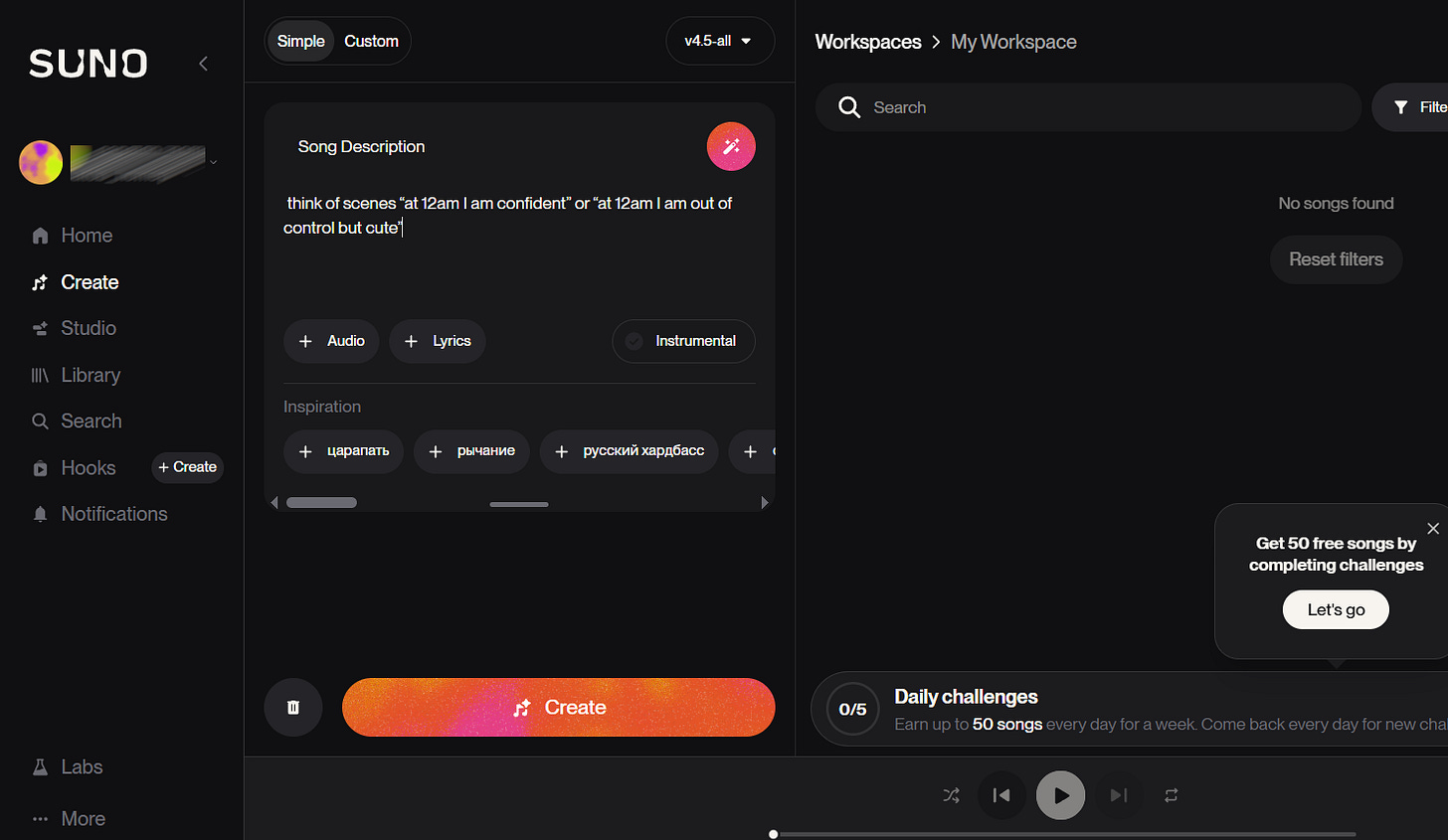
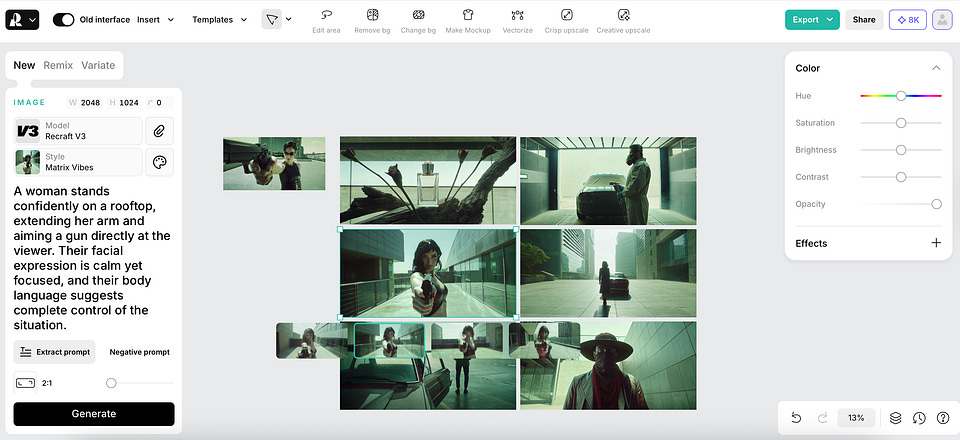
Screenshot: Suno — Simple prompt + Create button.
Suno workflow (clean version):
- Start with a scene, not a genre. Example: “neon night drive after a win” is better than “hyperpop.”
- Write a short prompt and generate several variants fast.
- Use the magic wand expansion only after you know the emotional direction.
- Treat variants like A/B tests. Save 5-10 loops (6-12 seconds) before choosing a winner.
- Pick the loop by reaction, not theory: the winner is the one you replay without forcing it.
- Identify one signature element (vocal chop, phrase, synth texture) so the sound stays recognizable.
- Export three assets: full track, short creator cut, and voiceover-friendly version.
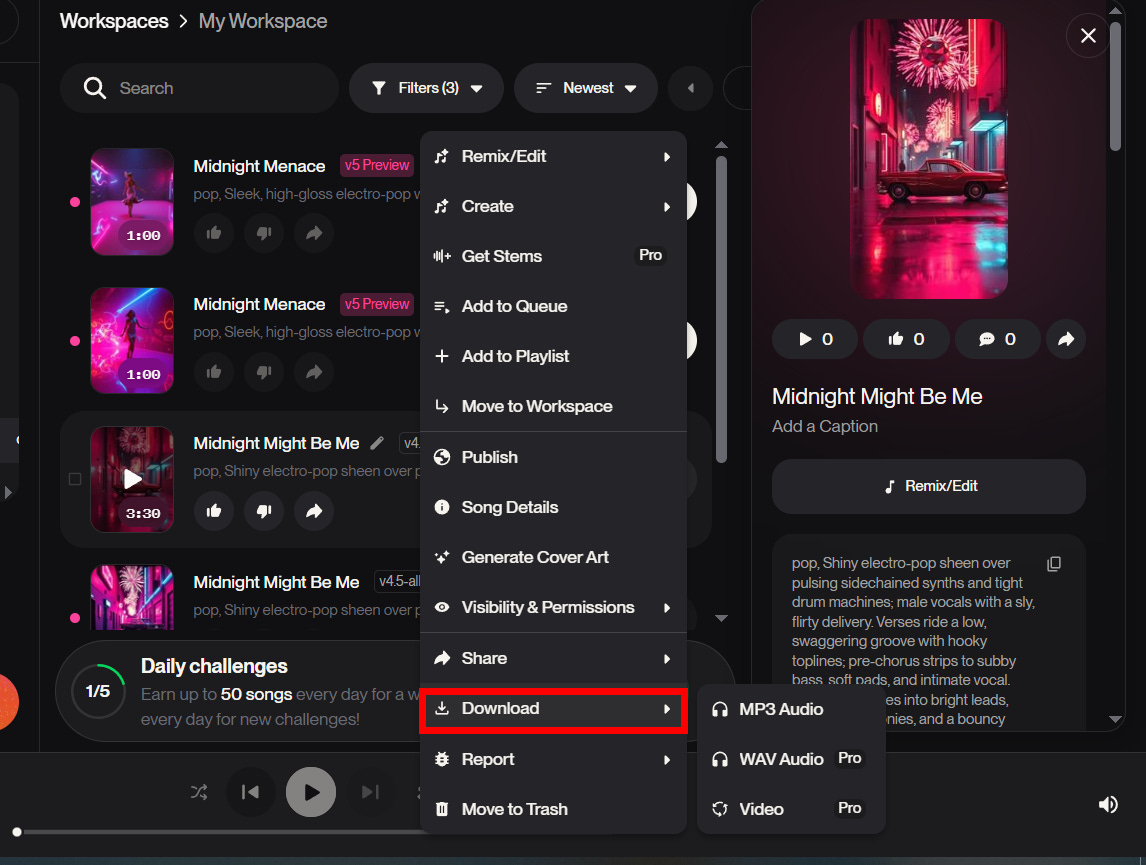
Screenshot: Suno — Download/export (MP3/WAV).
This fixes the transition issue from the previous draft: the point is not only to generate music, but to generate options, test the hook, and keep the winning version reusable.
So…That’s the process. Hooks are created first, and then waterfalls are made.
# Prompts you can steal
Prompt 1 - The Loop
Create a 10-second hook designed to loop perfectly. Start on the first beat with no intro. Emotion: clean confidence (walking into a room and remembering you belong there). Tempo around 125 BPM. Bright airy synths, tight drums, one addictive motif in the first second. Add one short lyric line that can also work as on-screen caption text. End so the restart feels seamless.
Prompt 2 - The Creator Cut
Create a 35-second section built for voiceover. Leave space in the midrange so speech stays clear. Mood: focused glow-up montage. Add a subtle lift every 8 bars, no dramatic drop. Keep it moving, not busy. End with a loop-friendly tail.
Prompt 3 - The Streaming Track
Turn the hook into a full 2:20 track with a simple verse/hook structure. Keep the signature motif. Add one obvious change around 1:10 (new chord color or counter-melody) so it evolves. Keep the mix polished and uncluttered. Give it a real ending.
# Optional visual idea in Creators AI style
Keep the meme concept, but adapt the presentation to your usual visual language. The idea works best as a clean branded card, not a random meme screenshot.
Template idea (text only):
- Left card, “The track I spent 3 months making”
- Right card - “10 hooks in one night”
- Caption, “2026 - music is A/B testing before it is a finished song”
# Related Creators AI references (add 3 real links before publishing)
Place these after the paywall so links support the post without pulling readers out too early.
- [Creators AI post #1 - relevant context on short-form hooks]
- [Creators AI post #2 - relevant context on AI tools/workflows]
- [Creators AI post #3 - relevant context on creator monetization or rights]
# Links worth your 5 minutes
Add links only if they directly improve the reader’s understanding. Put all of them after the paywall.
- Deezer on AI music upload pressure and recommendation filtering
- UMG + Udio licensing/collaboration news
- WMG + Suno / rights and licensing coverage
- Suno (or your chosen tool) commercial terms for your exact plan
- A practical DSP distribution guide for beginners
# Closing
When anyone can generate an unlimited number of songs, the bottleneck is no longer production. It is selection, structure, and proof.
That is why this workflow matters:
- Test loops fast
- Expand only winners
- Document everything while the track is still small
That is how a 7-second moment becomes a usable catalog track instead of another forgotten upload.
Reply with one sentence for the hook you want to test this week: emotion + scene + tempo. Example: “nostalgic glow-up, neon night drive, 125 BPM.”
And one more thing: do not overthink version 1. Make five loops, pick the one that makes you smile, and ship it.
You are one hook away from your next real asset.
This article was first published in the Creators AI newsletter. View the original edition.