Lovable Growth Secrets (and Costs): $200M ARR Playbook
How Lovable Became the FastestGrowing Startup
Hello friends! Happy Thanksgiving!
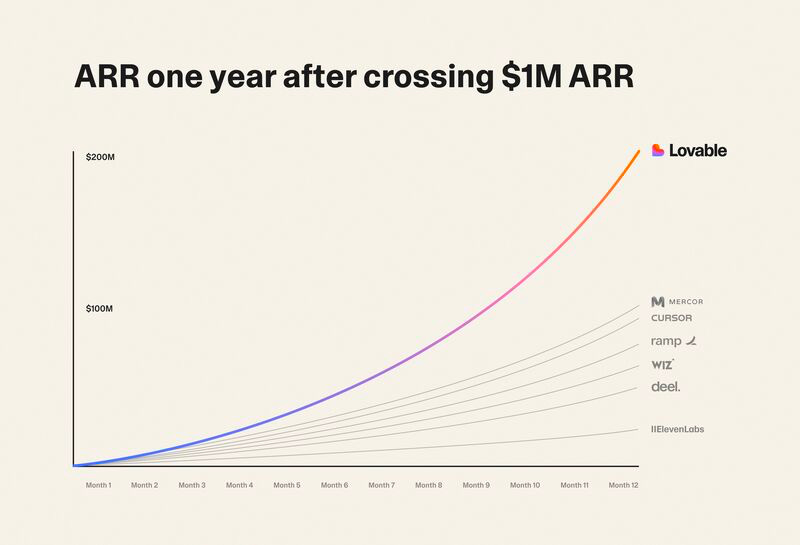
Today Lovable, the fastest-growing startup not only in Europe but in the world.
After being released just a year ago, this hyped Stockholm startup has hit more than $200M in annual revenue! Obviously, getting there wasn’t all sunshine and rainbows; people were putting in tons of hard work behind the scenes.
And today,
- We take a look at the product.
- Discover how they push their marketing to achieve those results,
- And what steps lie behind their fast rise that you can apply to your own business and projects.
This year, we have a limited pre-BFCM Offer for our readers to get 20% OFF Annual Subscriptions. Limited Offer ⏳🔥
What Lovable Comes With
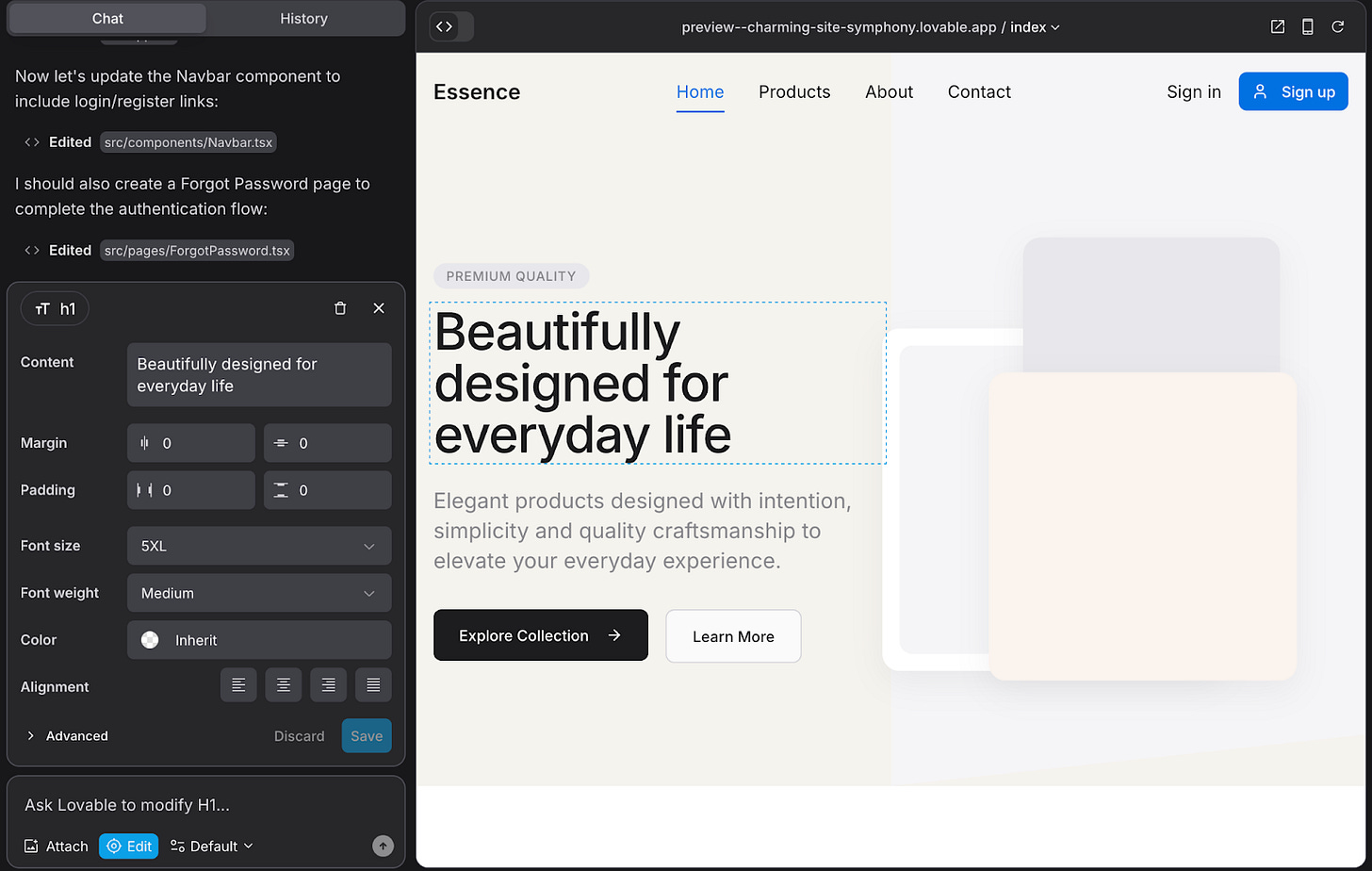
Lovable is an AI-powered platform that allows anyone to create fully functional web applications without writing code. The whole point is to shrink the gap between an idea and a working product.
Let’s rewind to when this startup actually dropped. These days, everyone, including us and the Lovable itself, loves putting the label “AI vibe coding startup” on it. And essentially, it is true, because it simplifies app development with an intuitive and visual interface.
But the startup came out way before vibe coding was introduced by Andrej Karpathy in Feb 2025.
This concept of Lovable came from two founders, Anton Osika and Fabian Hedin. Osika co-founded Depict AI, a YC-backed company that raised 20 million dollars, while Hedin worked as a developer at SpaceX (basically came out of the cradle of a successful business😅) and launched several companies, so he brought the experience needed to build something that scales fast.
Long story short, in November 2024, they launched Lovable (relaunched, actually).
!function(){"use strict";window.addEventListener("message",(function(e){if(void 0!==e.data["datawrapper-height"]){var t=document.querySelectorAll("iframe");for(var a in e.data["datawrapper-height"])for(var r=0;r<t.length;r++){if(t[r].contentWindow===e.source)t[r].style.height=e.data["datawrapper-height"][a]+"px"}}}))}();
So it could seem like they just nailed the timing and predicted trends, however, as I already mentioned, Lovable wasn’t built from scratch.
Before it, there was GPT Engineer — their first project based on the same idea of an open-source agent that helps with building code. They were testing the waters from the start.
It was dropped on GitHub as the open-source CLI project gpt-engineer in summer 2023, while the commercial web version launched at the end of 2023. In the end, it didn’t work out, and GPT Engineer was then transformed into Lovable.
My point is that Lovable’s story actually started way before its official drop, not a year ago. I’m not taking credit away from Osika and Hedin, because they did an impressive job of getting into a trend (or even kicking it off) by keeping up with the market. But, anyway, by the time Lovable finally launched, they already knew their product-market fit and had a whole audience ready to go.
About the Tool
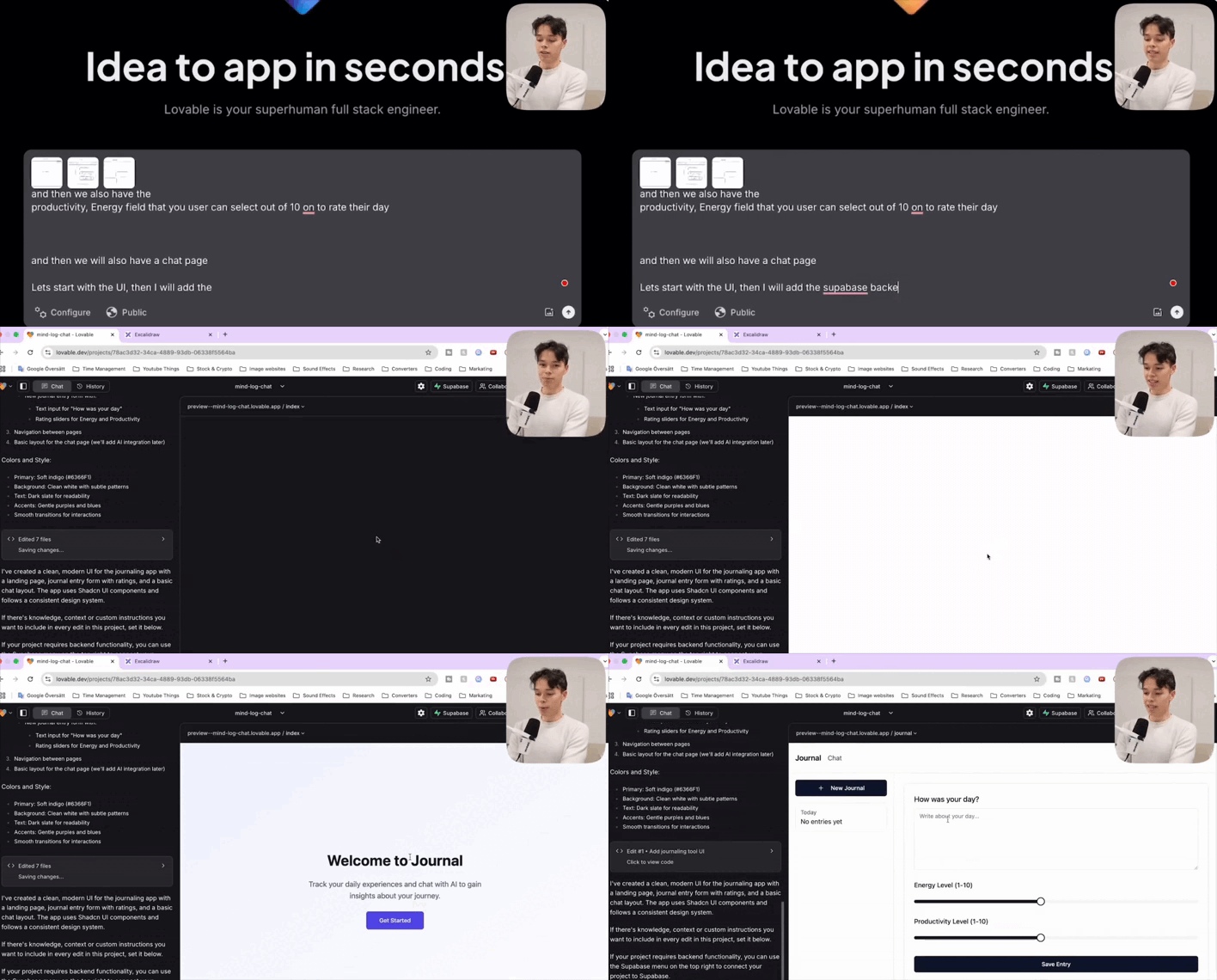
A guy is building a journaling tool where users log their day and chat with an AI
Today, everyone’s falling for ‘no code’ (we do as well), but Lovable used it to the max.
Key stuff Lovable can do:
- You can edit and add to the AI-generated code to roll out new features.
- Cloud features included. So you can manage databases, CRUD, user auth, roles, and permissions.
- Lovable has built-in publishing tools, plus you can hook it up with Netlify and similar services. You dont need to think about production and deploy!
- Integrations with Supabase (a tool for building backend for apps), GitHub, Three.js (a library for creating 3D graphics and animations), p5.js (a library for drawing and animations), D3.js (graphs, maps, infographics), Stripe, OpenAI, Anthropic, Highcharts, you name it. Plus API access to connect other tools.
Among other models
While prepping, I kept running into mentions of Bolt, Cursor, v0, and Anything alongside Lovable, but honestly, their workflows, goals, and target users are totally different. Check out the table.
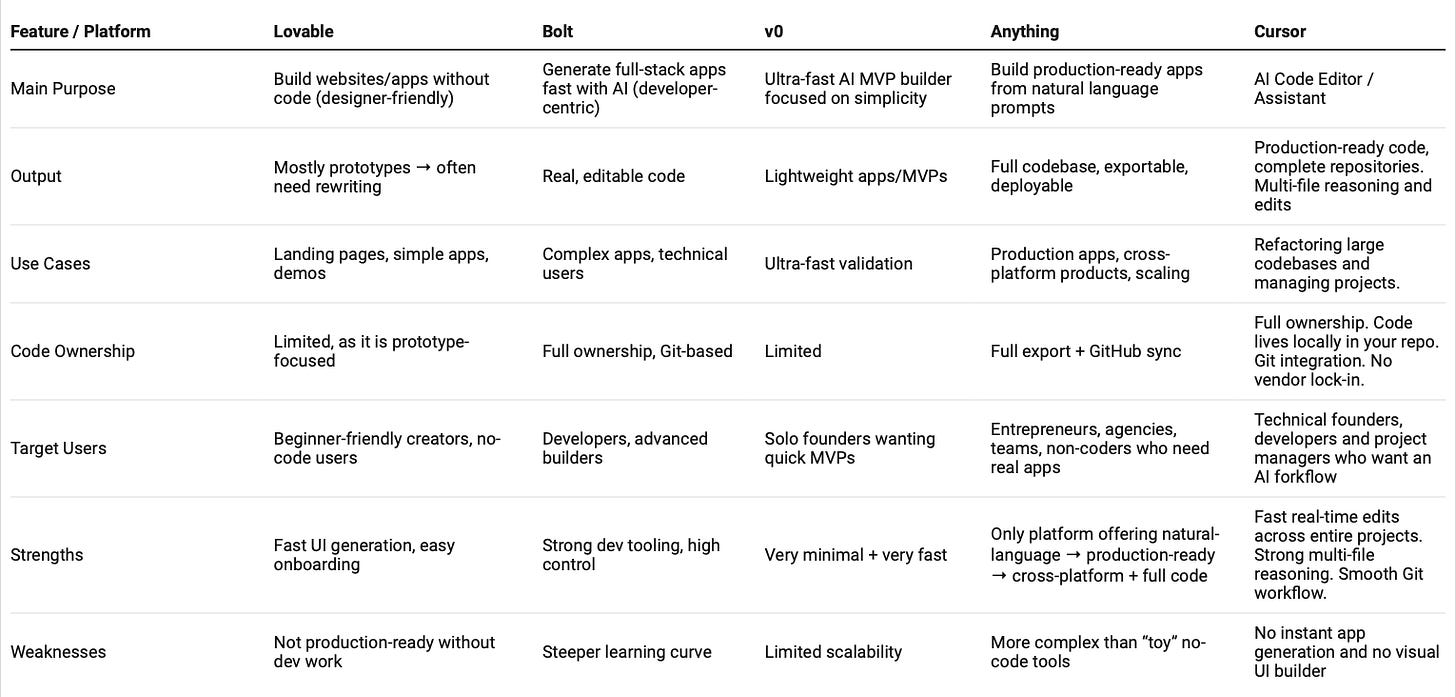
For example, Bolt feels more developed. It can also crank out full-stack apps from prompts, too, but it leans way more dev-first. Anything (the app) is not far, and is built for real production shipping. It runs in a similar lane and churns out one codebase for Web, iOS, Android, full code export, real infra, and GitHub sync.
As you probably know, Cursor isn’t a no-code builder (surprise, surprise). But I suppose everyone brings it up because you can use it after the prototype, when you’re actually developing, refactoring, scaling, and working in a live codebase. Or just because there are many more opportunities inside.
Cursor is one of our team’s favorites, and the post about it is one of the most loved by our subscribers. Don’t miss it!
Finally, v0 lets you drop in a Figma file, and it will spit out a UI clickable mockup. Great if you want instant components and an integrated preview.
I’d say it’s probably the closest thing to Lovable in terms of speed and simplicity, but Lovable stands out because it actually kicks out a working mini-version of the product. It’s all about fast prototyping, low barriers to entry, and letting users create something tangible with minimal technical skills.
They were among the first to make personal AI software (almost an agent).
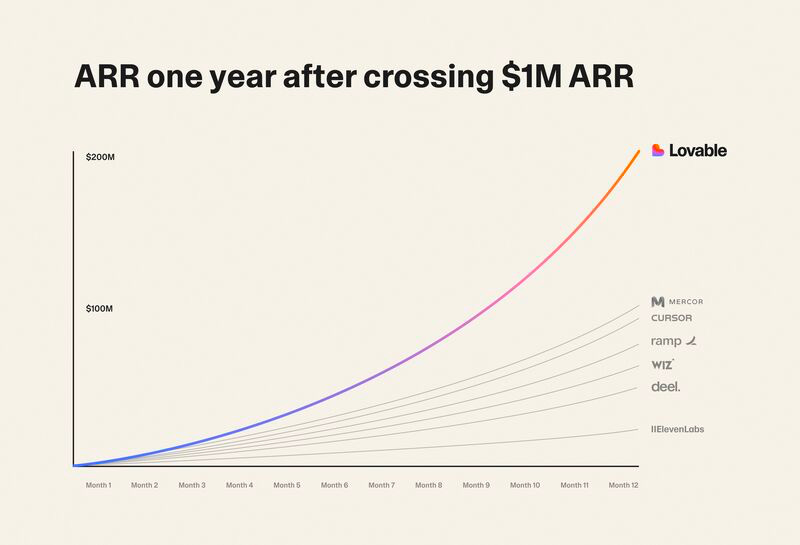
But what makes Lovable really stand out is the fastest GTM with $100M ARR
!function(){"use strict";window.addEventListener("message",(function(e){if(void 0!==e.data["datawrapper-height"]){var t=document.querySelectorAll("iframe");for(var a in e.data["datawrapper-height"])for(var r=0;r<t.length;r++){if(t[r].contentWindow===e.source)t[r].style.height=e.data["datawrapper-height"][a]+"px"}}}))}();
Secrets (and Costs) Behind the Growth
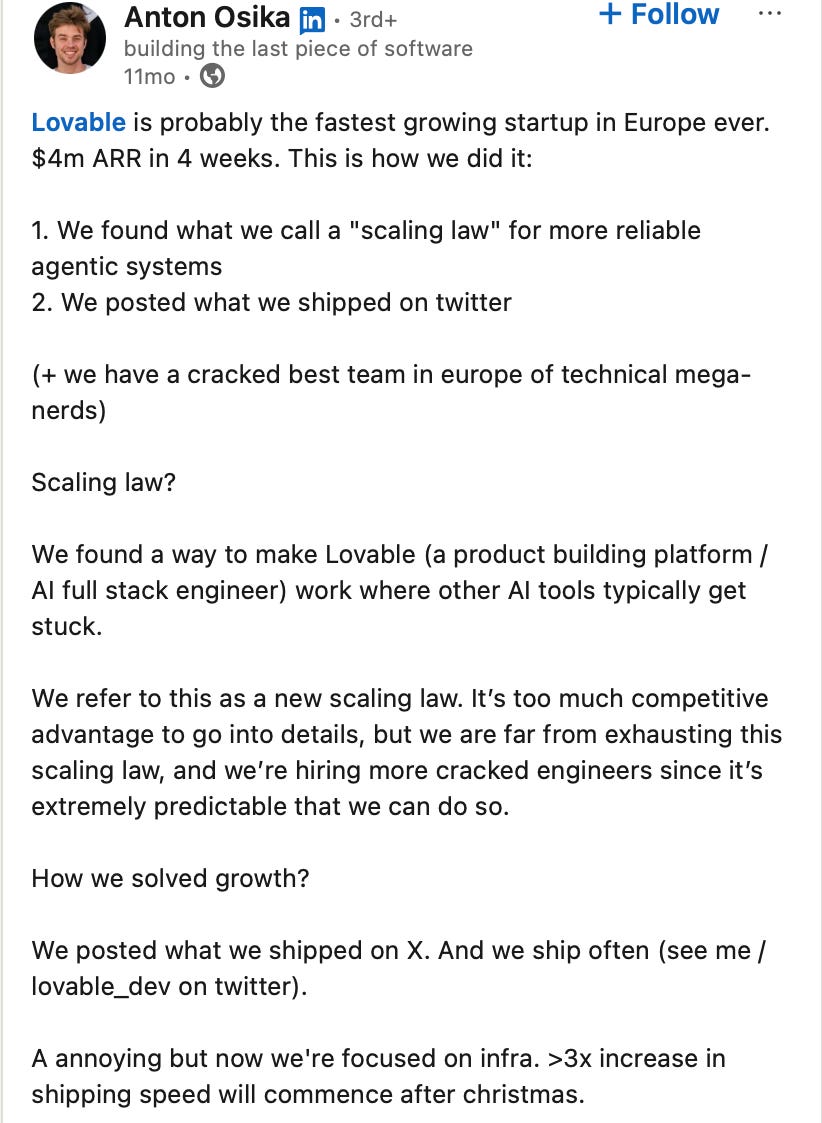
I let the creator begin
Here we are to figure out how they pulled it off. The thing is that if you’re building a business with AI right now, the quality of your product isn’t even the main thing. What really matters is smart marketing and perfect timing.
Even with all the buzz, as we said, the startup didn’t just pop up like some fairytale unicorn.
They eventually realized that GPT Engineer was way too technical for regular users, needed some tweaks to make it approachable, and on top of that, the monetization was weak.
However, it was open-source, and I will get around to this later.
Overall, only after the first case turned out not successful, they switched up their storytelling, and Lovable appeared. They rode the wave of the trend, where the app doesn’t tell you exactly what to do or require skills. It gave insane freedom.
I bet you have a question: what marketing and other features helped them reach such heights? Below, you may find some insights for your business, as well as its flaws, as promised in the intro.
Their Playbook To $200M ARR
Lovable blew up fast because they nailed three things: made it simple to use, got people naturally sharing what they built, and built something that worked for everyone, from solo devs to entire teams.
Capital Efficiency That Breaks All Rules
Lovable achieved $100M ARR with less than $20M in total funding spent—a 5:1 capital efficiency ratio compared to the industry standard of 0.5:1. Most SaaS companies burn $30-50M to reach $100M ARR.
- Revenue per employee: $1.7-$1.9M ARR per employee (vs. industry benchmark of $275K)
- Team size at $75M ARR: Just 45 employees
- No sales team until $100M ARR—pure product-led growth
Breaking Down the Revenue Model:
Pricing tiers:
- Free: 5 credits/day (30/month max)
- Pro: $25/month for 100 credits + 5 daily credits (up to 150/month)
- Business: $50+/month with expanded features
- Enterprise: Custom pricing
Assumptions for $200M ARR:
- If average revenue per paying user (ARPU) is ~$300-600/year
- At $200M ARR with 200,000+ paying subscribers = ~$1,000 ARPU
- This suggests strong Business/Enterprise tier adoption, not just $25 Pro plans
Growth math:
- Peak growth: $2-2.5M new ARR per week
- That’s roughly 2,000 new paying customers daily at ~$25/month average
- Or fewer customers at higher ARPU (enterprise contracts)
Enterprise traction:
- 50%+ of Fortune 500 companies now use Lovable
- Likely for prototyping and internal tools, not mission-critical production apps
- This is bottom-up adoption (employees finding it), not top-down enterprise sales
Culture native growth
Instead of building a whole community from scratch around their product, they shifted the focus to diving deep into an already existing community that shared the same passion.
Back to GPT Engineer, because it was free, it attracted a lot of people. It became popular on GitHub: the repository gained more than 50,000 stars. How?
- It was a very simple CLI tool: one prompt made a project skeleton without complicated setups.
- They initially positioned the repo as an “experimentation platform” for devs, where they could fork, tweak prompts, and share their own mods. Just like this, an instant community of tinkerers was created.
- Once the repo landed in Trending on Github, the star avalanche obviously kicked in across blogs, X, and Reddit channels.
So once they had an audience on a platform that wasn’t even that polished yet, they got real-time feedback, and then fixed stuff quickly(!). This way, people stayed for the new app. Moral of the story: always listen to your community if you want to reach $200M ARR.
Unusual target

Lovable skipped buying traffic on Google and put money into Magnus Carlsen’s online chess tournaments (I really like this fact from a marketing perspective). They also host the season finale at their HQ.
Their marketers aren’t buying clicks, they’re buying trust and access to a global community of strategists and analysts.
Real-life communication
Lovable runs hackathons and community events, pulling in developers and no-code enthusiasts. For example, SheBuilds — is a 48-hour buildathon for women to turn ideas into reality, with 3,000 applicants and 215 participants (go girls!).
They also teamed up with Anthropic for the Push to Prod AI hackathon at Slush in Helsinki and partnered with Outside Lands music festival in San Francisco for a hackathon, which was open to everyone (Musicians, DJs, producers, talent managers who can’t code, but suddenly could build solutions).
Ultimately, it played into their hands, as supporting people in achieving their dreams is an evergreen trend. Moreover, it drives content and hype on niche platforms and Reddit.
Continuing on Reddit
People started sharing what they built, and word spread organically. Btw, this led to “Lovable Agencies” popping up, where devs and freelancers use the platform to whip up apps for clients (a genuinely great business model). And it ended up driving growth from both ends, bringing in new users while keeping existing ones more engaged.
Also, the aggressive multi-channel strategy, including open-source community conversion, Product Hunt domination, social media virality where users shared creations on Reddit, X, LinkedIn, and TikTok, and content marketing through tutorials worked out
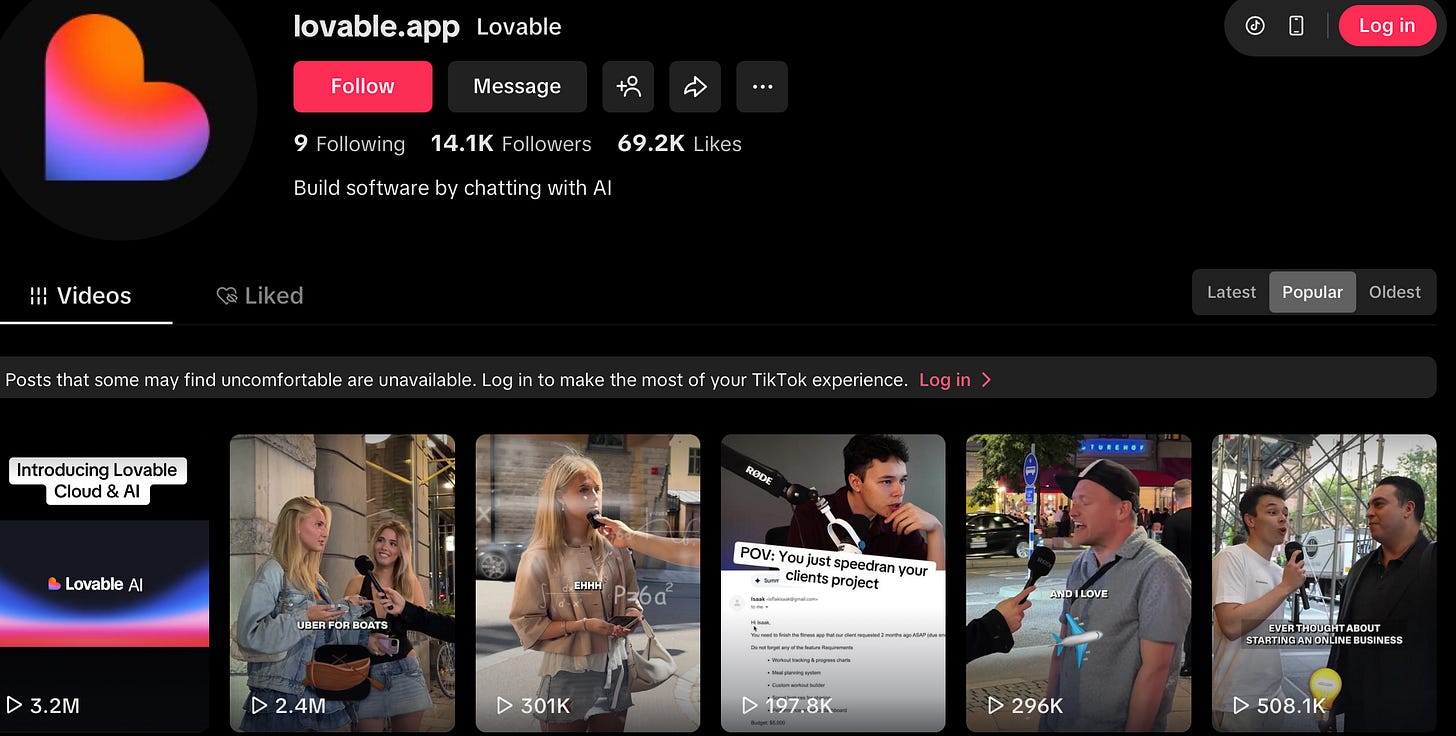
A quite successful account for the development app
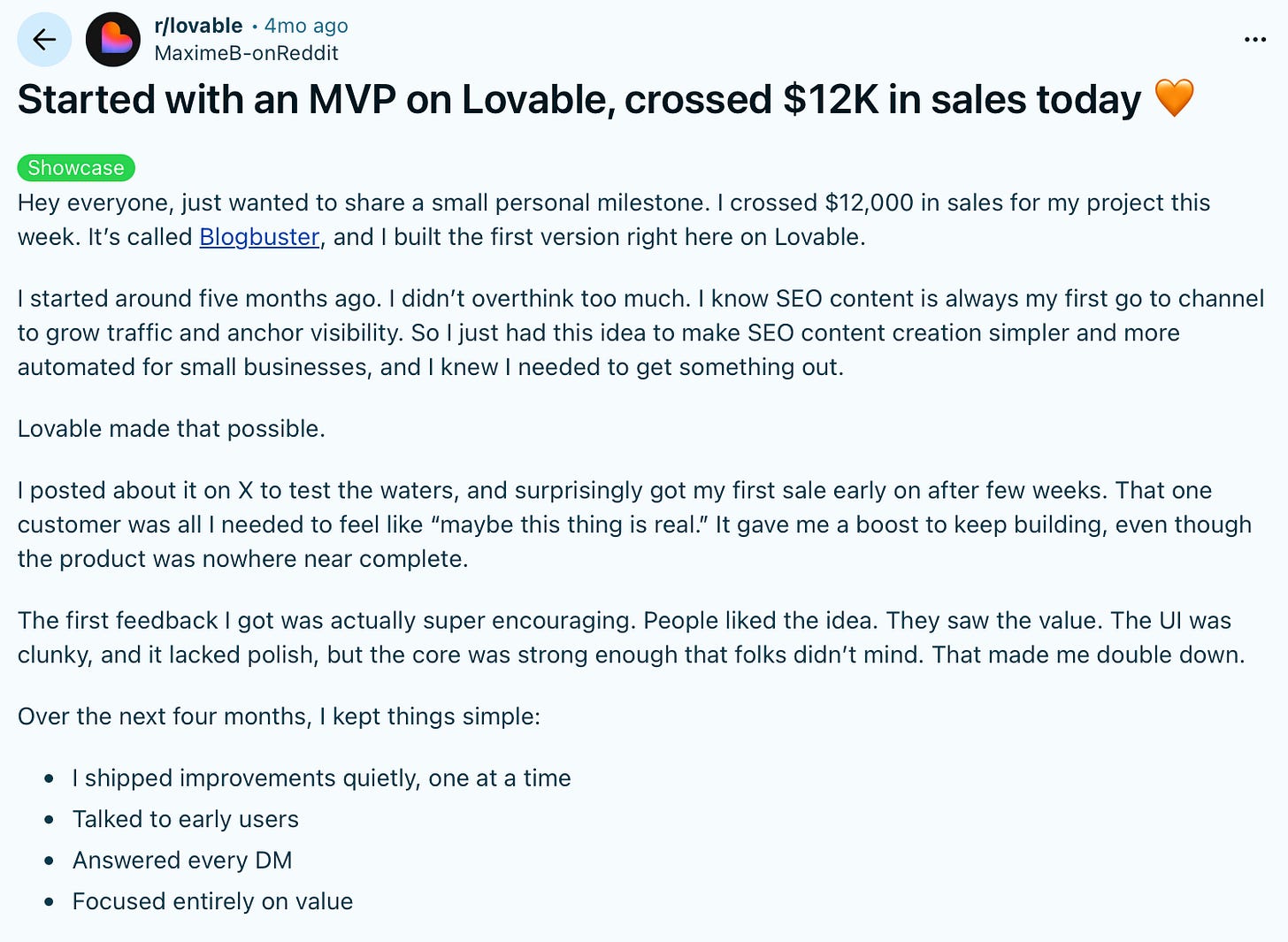
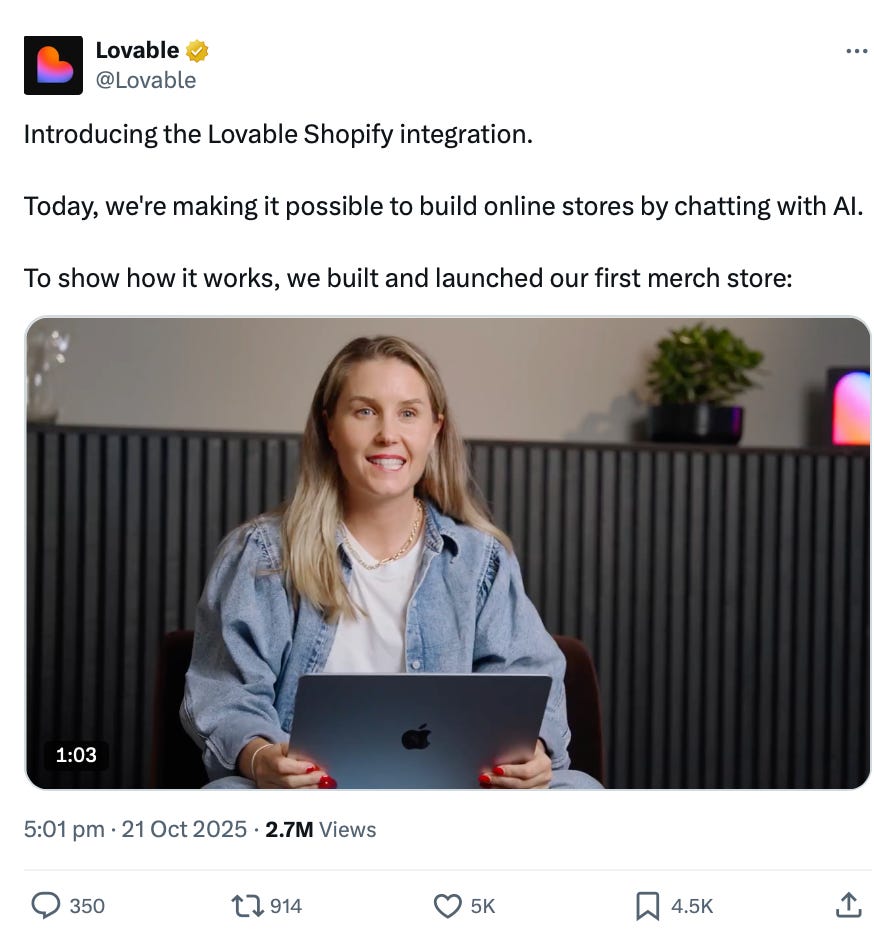
More tech features that helped
- Lovable Cloud acts like a backend-as-a-service, making it easy (and enjoyable, as the devs said) to spin up apps with user profiles, chats, file management, and server logic all in one place.
- You can generate and export your code via GitHub, giving you full control and freedom to tweak your app.
- AI Gateway lets you hook up different models with a single API key.
But just because your ARR looks good doesn’t mean your business is perfect.
Nothing’s all roses
Lovable has a few pain points that show the cracks in their setup:
- In the summer, Lovable offered generous 50% discounts and large free credits. They sell the product with a flat fee while carrying high operating costs for cloud hosting and services like Supabase, which increase their expenses. Hmm, it raises the question of profitability, because a lot of users don’t always translate into real margins.
Later, they cut the free credits and removed the big discounts. And people, who had been experimenting with the platform for free or cheap access, now faced a price, which pushed them away and reduced traffic. A similar thing happened with v0 when they switched from $20/month to usage-based credits.
- Some users say that despite slick marketing and a clean UI, most apps never grow past a basic MVP. There are also complaints about opaque billing and hidden costs, which hurt trust and loyalty.
- A summer study by Barclays, using Google Trends data, spotted a drop in traffic to the market leaders: Lovable lost 40% of visits by September 2025 after peaking in May, while Bolt.new dropped 27%.
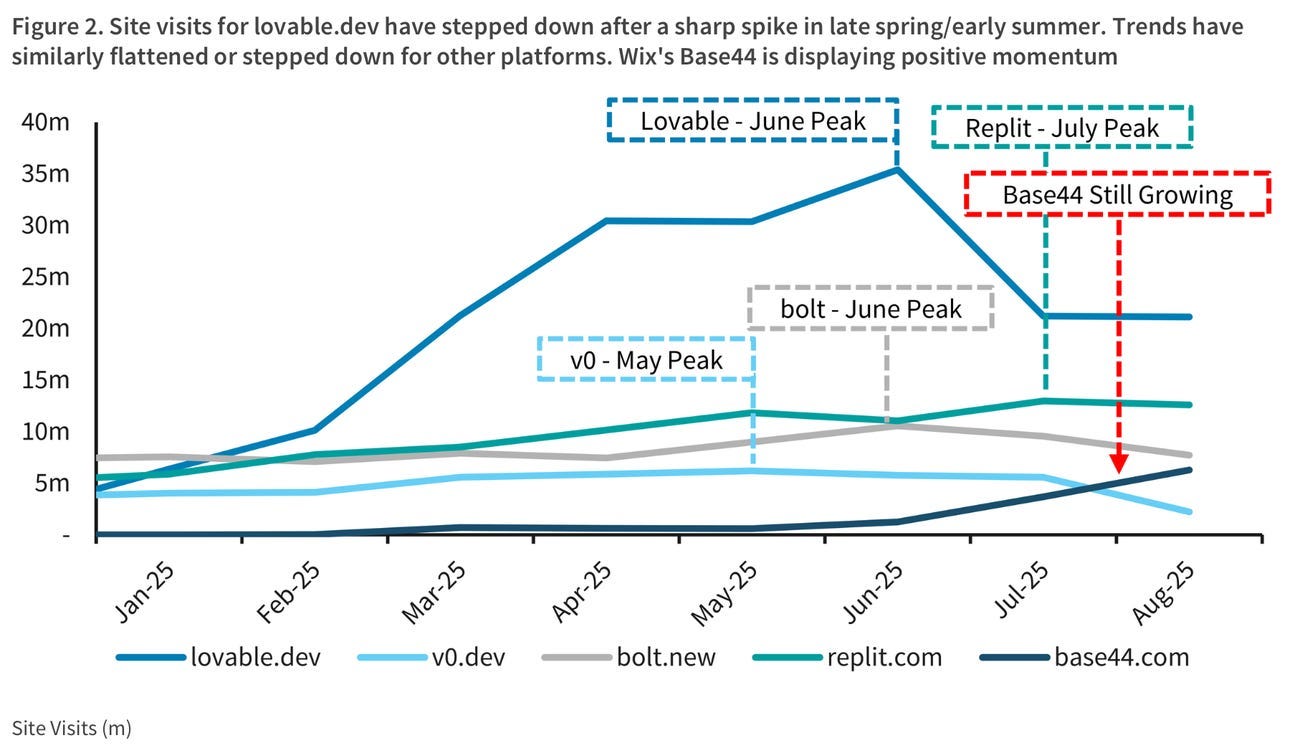
Barclays analysts noted in their investor report: “This drop in traffic raises the question of whether interest in vibe-coding has peaked or if it’s just a pause before the next surge”. Or is it really influenced by the Context engineering trend?🧐
We couldn’t sleep on this trend. There, you can discover more about the rise of the Context engineering:
The final words
Lovable’s still in the spotlight. The real test is whether they can keep growing, keep it profitable, and hold onto that billion-dollar valuation (why not). In general, like any product, Lovable challenges around business sustainability, product quality, customer retention, and security, so some things can help you, like:
- Target people with the same mindset and values, not just job titles.
- Build in existing communities, not from scratch.
- Let users share wins organically, but create a comfort environment for them to do so.
- Multi-channel beats single-channel every time.
- Real events create deeper brand loyalty.
- ALWAYS listen to community feedback.
While others serve as early warnings:
- Don’t chase ARR without unit economics.
- Growth doesn’t mean profitability, keep an eye on your margins.
- Watch the shifts in the market, because marketing alone won’t carry you forever.
I know many of us here are either business-people or creators. So if you want to pick up some inspiration or tips from Lovable’s founder, I highly recommend watching this podcast: Click
This article was first published in the Creators AI newsletter. View the original edition.