How Context Engineering Can 10x Your AI Models Performance
Real Cases & Tutorial
You know how it works when someone needs to handle a tricky customer complaint? It doesn’t just get handed off without context. The customer’s history gets pulled up, their past emails are reviewed, the latest policy docs are shared, everything they need to actually solve the problem is put in front of them.
That's context engineering for AI, but with a twist. Instead of one conversation, you're juggling multiple data sources, keeping track of what happened before, and feeding the AI exactly what it needs without drowning it in information.
Now, this probably sounds familiar if you've been working with AI tools. But it's not what you think. You’ll get the difference after reading this post.
What is Context Engineering?
Let's start with a simple analogy. Early AI applications were like giving someone a single sticky note with instructions and expecting them to complete a complex project. This was prompt engineering, crafting the perfect set of instructions in a single text string.
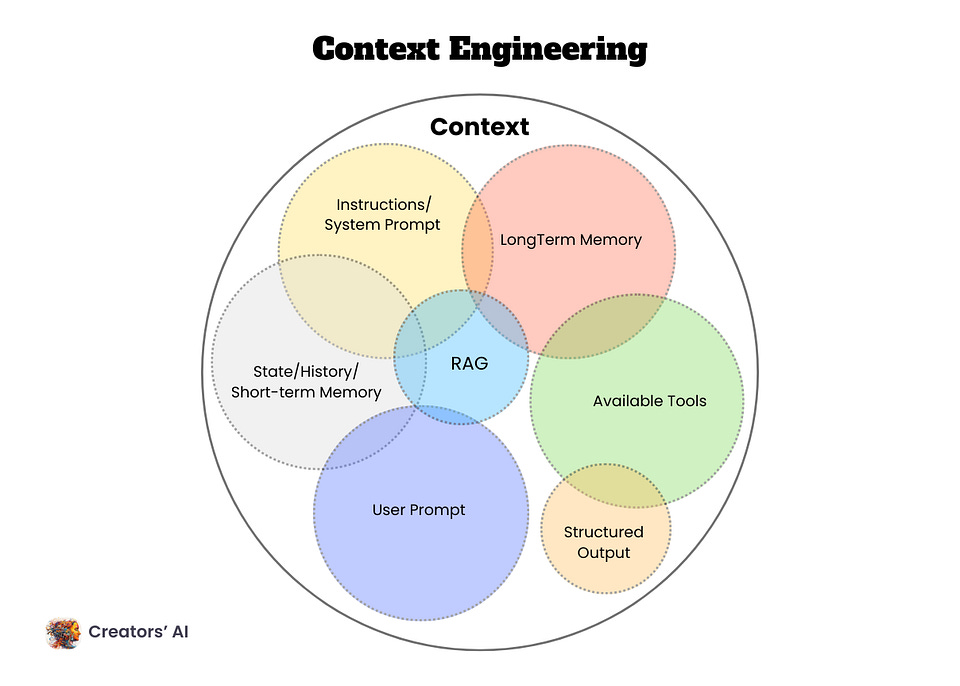
Context engineering is different. It's the discipline of designing and building dynamic systems that provides the right information and tools, in the right format, at the right time, to give an AI everything it needs to accomplish a task.
Context engineering operates on four fundamental principles:
- System-Based, Not String-Based: Context isn't just a static prompt template. It's the output of a system that runs before the main AI call.
- Dynamic and Adaptive: Created on the fly, tailored to the immediate task. For one request this could be calendar data, for another email or a web search.
- Information + Capabilities: You need the right information and the right tools. Giving the AI the right tools is just as important as giving it the right information.
- Format Matters: Just like communicating with humans, how you communicate with AIs matters. A short but descriptive error message will go a lot further than a large JSON blob.
Understanding these principles helps explain why context engineering has become essential for building reliable AI applications. But to see why this approach matters so much right now, we need to understand how it compares to other methods you've probably heard about.
Never miss an edition of Creators AI. Only practical knowledge for builders, creators and founders
Context Engineering vs. Prompt Engineering vs. RAG
Before going any further, let’s clear something up first. There's significant confusion in the AI community about these terms, and this confusion is costly. Choosing the wrong approach can lead to over-engineered solutions that waste resources, or under-engineered ones that fail in production. Understanding these distinctions helps you invest your time and budget in the right solution for your specific needs.
Many developers still think "better prompts" will solve complex AI application problems. This is like believing that writing better email subject lines will solve all your customer service issues. While prompts are important, they're just one small piece of a much larger system. Now, let's examine how these three approaches work in practice and when each one makes sense for your business.
Prompt Engineering is like writing a perfect instruction manual for a single task. You craft the exact words to get the AI to behave correctly for one specific scenario.
Example: A company wants to translate product descriptions.
- Simple prompt: "Translate this product description to Spanish, maintaining a professional tone."
- Works when: You have a clear, repetitive task with consistent inputs
- Fails when: You need the translation to consider brand guidelines, target audience, or regional preferences
RAG is like giving someone access to a library before they answer questions. The AI retrieves relevant information from a knowledge base and uses it to provide more accurate, up-to-date responses.
Example: A company wants to answer questions about their policies and procedures.
- How it works: User asks "What's our vacation policy?" → System retrieves current HR documents → AI answers based on retrieved information
- Works when: You need current, factual information that the AI wasn't trained on
- Fails when: The task requires multiple steps, personalization, or actions beyond just providing information
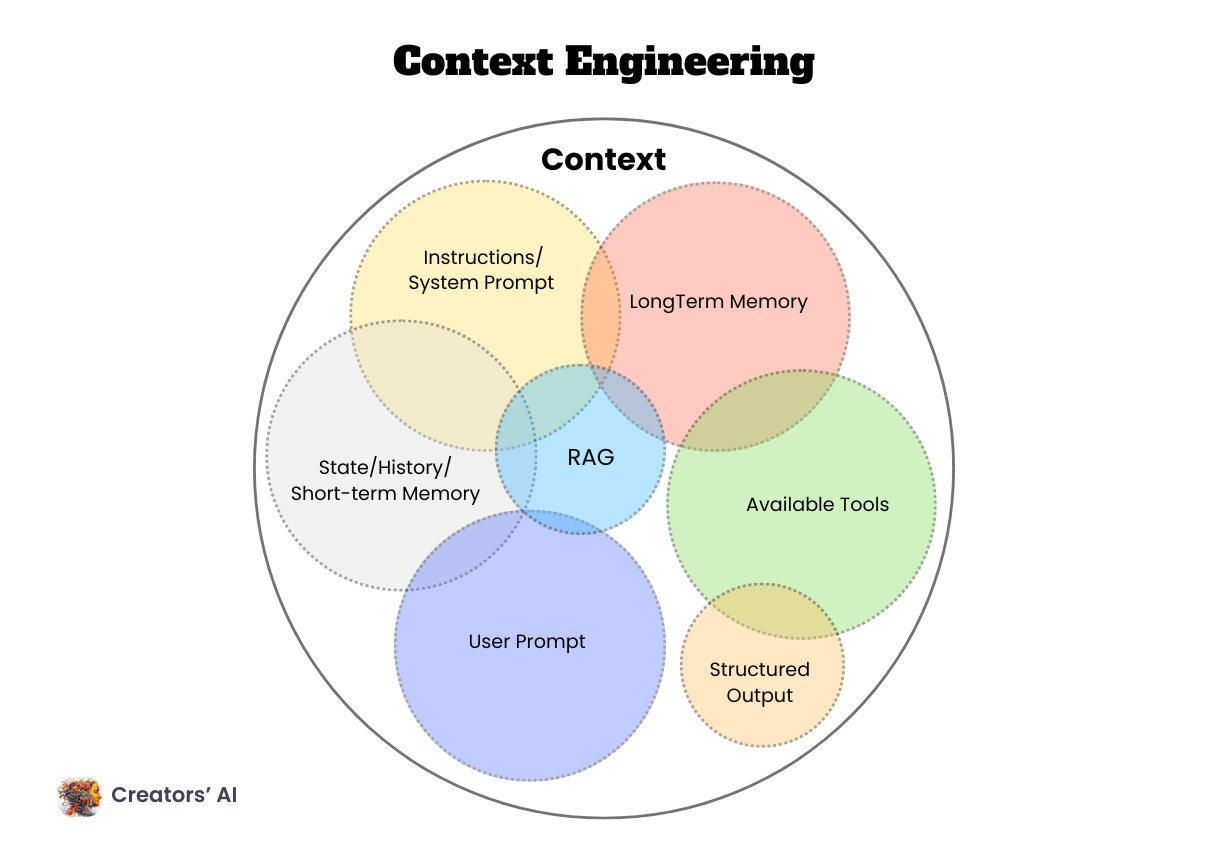
Context Engineering is like having a highly skilled assistant who knows exactly what information to gather, what tools to use, and how to present everything for maximum effectiveness. It orchestrates multiple information sources, memory systems, and capabilities.
Example: A company wants to automate customer support.
- How it works: Customer message → System gathers customer history, checks inventory, reviews past interactions, identifies available actions → AI provides personalized response and takes appropriate action
- Works when: You need reliable, personalized, multi-step assistance that adapts to different situations
- This is the evolution path: It incorporates prompt engineering (for instructions) and RAG (for information retrieval) as components of a larger system
Now that we've covered what context engineering is, it’s time to see why it has become so important!
Why Context Engineering Matters Now
The reality is that most of the time when an agent is not performing reliably, the underlying cause is that the appropriate context, instructions and tools have not been communicated to the model.
As AI applications have evolved from simple chatbots to complex, long-running agents, we've hit significant limitations:
- Context Overload: AI systems can become overwhelmed with too much information.
- Missing Critical Information: Without the right context, even the most advanced AI will fail.
- Poor Information Formatting: How you present information dramatically affects AI performance.
- Tool Integration Issues: AI systems need not just information, but capabilities to act on it.
Most agent failures are not model failures anymore, they are context failures. When AI agents fail, it's usually because:
- Information Gaps: The AI doesn't have access to crucial information needed for the task
- Context Poisoning: Incorrect or hallucinated information makes it into the context
- Context Confusion: Too much irrelevant information influences the response negatively
- Context Conflicts: Different parts of the provided information contradict each other
As AI systems become integral to business operations, context engineering becomes the bridge between raw AI capability and practical business value. Without it, you're essentially asking a brilliant consultant to solve complex problems while blindfolded and with their hands tied.
So why should you focus on Context Engineering?
- Performance gaps are widening between demo and production AI systems - AI system performance depends more on deployment context and system design than on model selection alone
- Information architecture directly impacts AI reliability - The same model can perform vastly differently depending on how information is structured and presented
- Integration complexity is increasing exponentially - As AI systems connect to more data sources and business processes, context management becomes the critical bottleneck
- Context engineering principles show measurable improvements - RAG implementations (which apply basic context engineering concepts) demonstrate significant accuracy gains over standalone model queries in production environments
Join us and level up your knowledge every week.
Context Engineering in Action
So far, we’ve discussed the definition of context engineering, compared it with similar concepts, and explored its core principles. Now, let’s look at some real-world examples to better understand how context engineering is applied.
Example1: Research Planner Agent
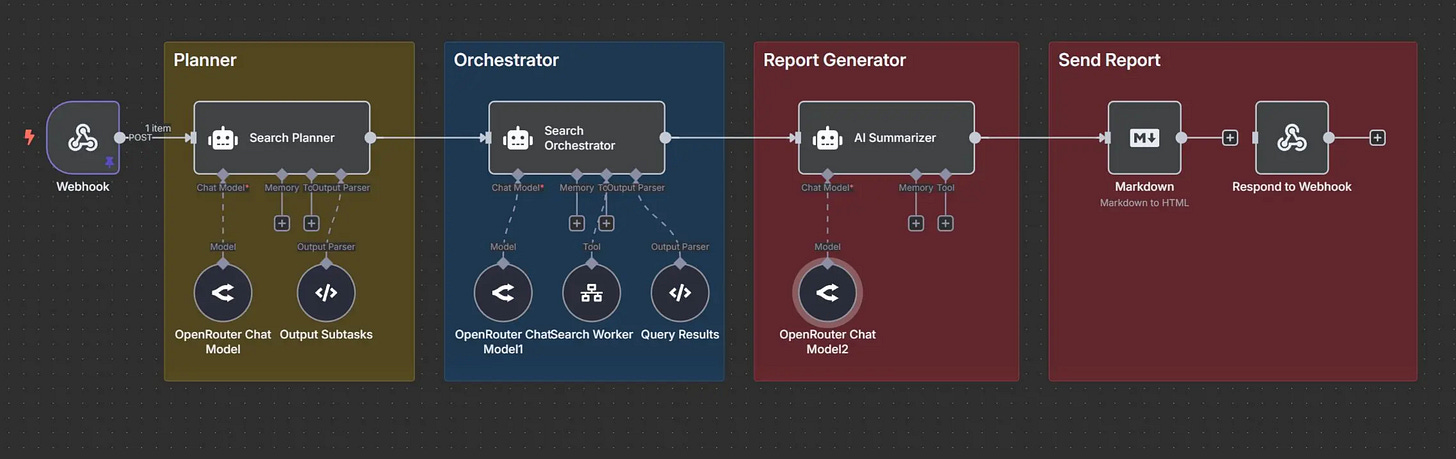
Imagine you’re designing a multi-agent research assistant that takes a complex user query and breaks it into manageable, focused search tasks.
In this workflow, context engineering starts right from the first line you feed the system. You frame the agent with a system prompt that doesn’t just say “plan the search.” Instead, it tells the AI:
You are an expert research planner. Your assignment is to take the user’s query and split it into specific search subtasks, each with clear identifiers, query focus, source type, time relevance, domain hints, and priority.
That’s not one-size-fits-all, it’s System-Based, Not String-Based. The system is built with structure, not left to wander inside a vague instruction.
Then the agent examines the user’s real input, for example, “What’s the latest on OpenAI development news?” It uses delimiters to clearly distinguish that content, ensuring it's not lost or mixed with other instructions. From there, the agent generates two (or more) subtasks, each designed for different angles, perhaps one focuses on product updates from official blogs (source: “news”, time period: “past\_week”), while another captures technical deep-dives from research archives (source: “academic”, time period: “recent”). Each subtask includes an explicit ID, priority ranking, and even programmatically inferred dates, “start\_date” and “end\_date” derived from “past\_week”, so each piece of context is Dynamic and Adaptive, tailored precisely to the query at hand.
by feeding the AI not only the “what” but the how, with structured metadata and dynamic context, the agent knows exactly how to behave, even before it starts fetching data. It blends Information + Capabilities, because the planner isn't just thinking, the system can also later incorporate tool definitions or search API specifics into the context for execution planning.
Read the full explanation of this example here.
Example2: From Customer Complaint to Strategic Action Plan
Most professionals using ChatGPT, Claude, or similar AI assistants are stuck in a prompt loop which means they’re constantly refining their questions, hoping the next attempt will give them exactly what they need. But there's a better way.
Let’s see how context engineering transforms a frustrating AI interaction into a powerful business tool.
Imagine a customer support manager, receives this escalated complaint:
"I've been trying to cancel my subscription for 3 weeks. Your website keeps crashing when I click cancel. I've called support twice and been on hold for over an hour each time. This is ridiculous. I'm going to dispute the charges with my bank."
He needs actionable guidance fast. Like most professionals, his first instinct is to ask his AI assistant directly. So, he opens ChatGPT, for example, and types:
Analyze this customer complaint and tell me what to doChatGPT responds with generic advice: apologize, fix the website, improve wait times, process the cancellation. Technically correct, but useless for making actual business decisions. Why? Because ChatGPT has no idea who this customer is, what the manager’'s business priorities are, what resources he has available, or what actions he can actually take. It's like asking a stranger on the street for directions without telling them where you're trying to go!
This process can be improved with some adjustments, which we call the Context Engineering approach.
Instead of fighting with follow-up questions, the customer support manager builds context once and transforms every future interaction. Here's how:
##### Step 1: he creates his context foundation
This goes at the beginning of his ChatGPT conversation or he can create a custom GPT and add the context in the “*Anything else ChatGPT should know about you?*” section:
You are analyzing customer complaints for a SaaS company. Here's the business context you need:
COMPANY SITUATION: We have a 12% churn rate (target is 8%). There's a known website bug affecting cancellations for 15% of users. Average support wait time is 45 minutes.
MY ROLE: I can authorize account credits up to $200, escalate to priority support, file technical bug reports, and schedule proactive outreach.
DECISION FRAMEWORK: Always assess (1) customer retention probability, (2) business impact, (3) urgency level, and (4) specific actions I can take today.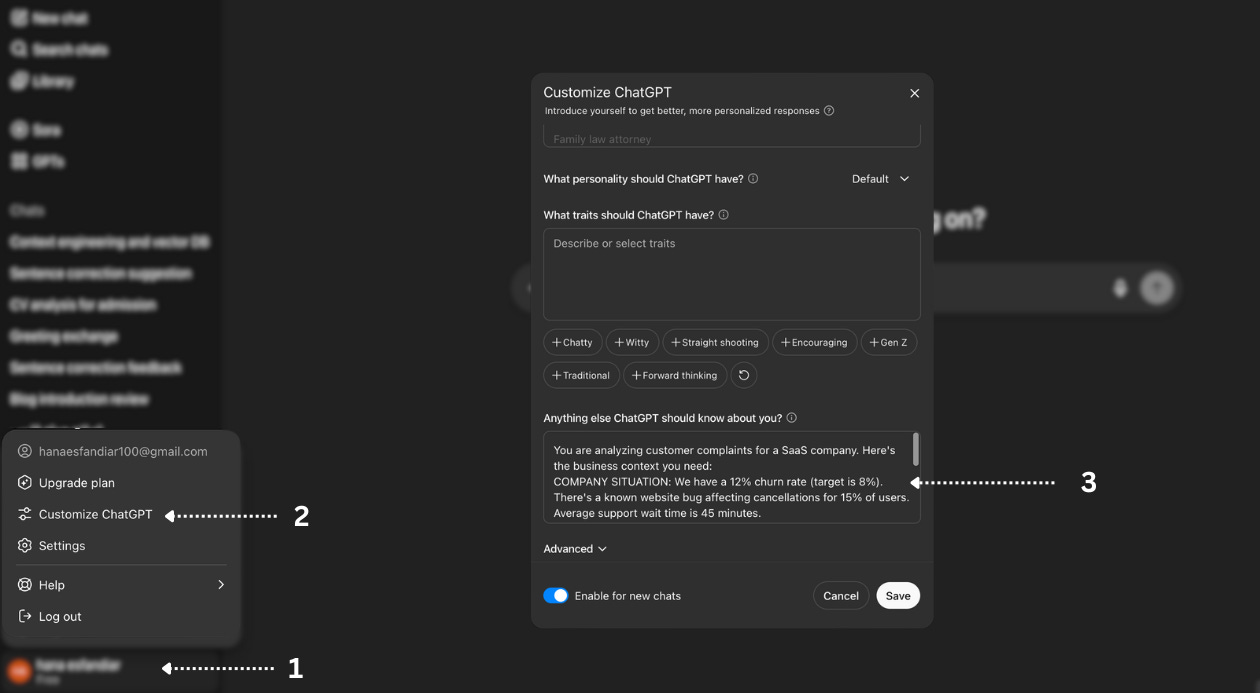
##### Step 2: Now he asks his question
Analyze this complaint: [pastes the same complaint]##### Step 3: ChatGPT responds with business-intelligent analysis
SITUATION ASSESSMENT: High-value customer (given persistence) hitting known technical issue, now at escalation point with payment dispute threat.
IMMEDIATE ACTIONS FOR YOU: 1) Process manual cancellation within 2 hours to prevent dispute, 2) Authorize $50 credit for the technical inconvenience, 3) File priority bug report citing customer impact.
BUSINESS IMPACT: This represents your technical churn problem. Customer's 3-week struggle indicates other high-value customers likely experiencing the same issue silently.
TODAY'S PRIORITIES: Beyond resolving this case, consider proactive outreach to other customers affected by the cancellation bug to prevent similar escalations.
This example shows exactly how Context Engineering improves AI output with simple changes. You don't need technical expertise in RAG or memory management. Just apply some basic Context Engineering principles and get responses that actually move your work forward. As it’s clear by now, AI systems perform exponentially better when they understand not just what you're asking, but why you're asking it and what you plan to do with the answer.
Here is another example that applied Context Engineering technique using ChatGPT.
Context Engineering Templates: Ready-to-Use Implementations
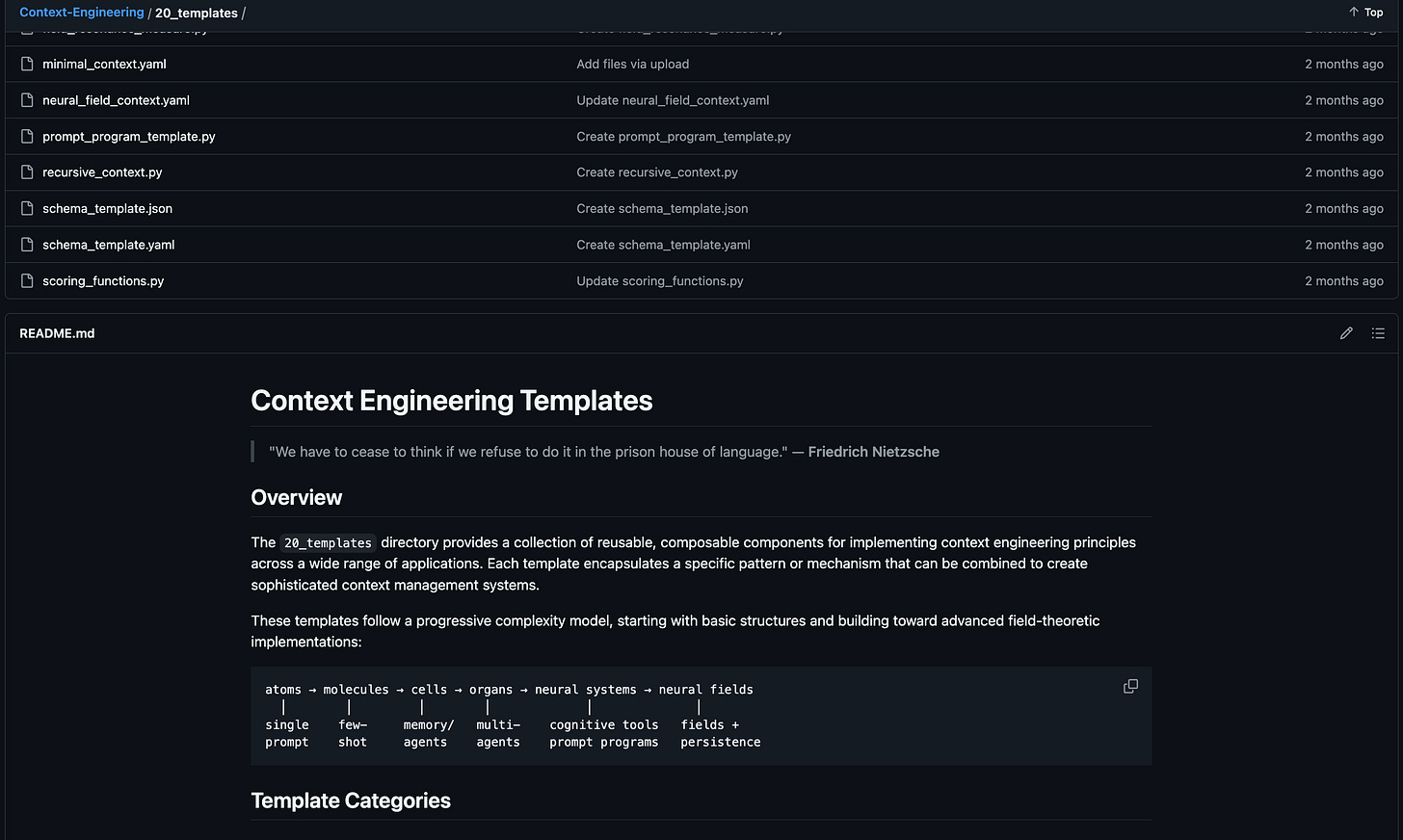
Instead of building context engineering systems from scratch, you can use proven templates that implement the principles we've discussed. These templates provide structured, reusable patterns for common AI applications.
Template Categories
This repository follows a progressive complexity model, building from basic structures to advanced implementations:
Foundation Templates - Essential building blocks for any context engineering project:
minimal_context.yaml- Lightweight template for general-purpose LLM interactionscontrol_loop.py- Framework for iterative context processing and refinementprompt_program_template.py- Structured prompting patterns for complex reasoningscoring_functions.py- Evaluation metrics for measuring context quality
Field-Theoretic Templates - Advanced components implementing neural field theory principles:
field_protocol_shells.py- Standardized field manipulation protocolsresonance_measurement.py- Tools for measuring semantic relationshipsattractor_detection.py- Techniques for identifying stable patterns in context
Meta-Recursive Templates - Self-improving and integrated systems:
meta_recursive_patterns.py- Patterns for systems that enhance themselvesunified_field_engine.py- Integration of multiple field operationscollaborative_evolution_framework.py- Human-AI partnership structures
Using the Templates
The repository implements a layered approach that lets you start simple and add sophistication incrementally:
import yaml

# Start with the minimal template
with open('minimal_context.yaml', 'r') as f:
    context_template = yaml.safe_load(f)

# Customize for your use case
context_template['system']['role'] = "research_assistant"
context_template['token_budget'] = 500
Implementation Strategy
The templates follow a proven learning path:
- Start with
minimal_context.yamlfor basic interactions - Add
control_loop.pyfor iterative refinement workflows - Integrate
scoring_functions.pyfor quantitative evaluation - Scale with field-theoretic templates for advanced semantic processing
- Implement meta-recursive patterns for self-improving systems
The key advantage is that these templates already encode context engineering principles like preventing conflicting decisions and managing context windows intelligently. You focus on domain-specific customization rather than building foundational patterns from scratch.
Found it valuable? Share with friends!
Who Needs Context Engineering?
If you're responsible for AI initiatives in your organization, understanding context engineering principles helps you:
- Set realistic expectations for AI projects
- Identify opportunities where context engineering can provide competitive advantage
- Make informed decisions about AI vendor selection and internal development
Developers, data scientists, and AI engineers need context engineering skills to:
- Build reliable, production-ready AI applications
- Move beyond simple chatbots to sophisticated AI assistants
- Integrate AI systems with existing business processes
Subject matter experts in fields like healthcare, finance, legal, and customer service should understand context engineering to:
- Identify what context AI systems need in your domain
- Design AI applications that truly understand your field's nuances
- Ensure AI systems meet regulatory and professional standards
Wrapping Up
What excites me most is that this isn't just an engineering problem, it's a new way of thinking about human-AI collaboration. The teams that figure this out first won't just have better AI tools. They'll have fundamentally different workflows.
Want to dive deeper? Start by auditing your current AI applications and join the growing community of context engineering practitioners. Here are some invaluable articles for you to take a look at:
This article was first published in the Creators AI newsletter. View the original edition.