Gemini 3: What You Should Know
Review & a LOT of stunning cases
Hello there!
Lately, while scrolling through X and Reddit, I’ve seen a lot of mixed takes on ChatGPT 5.1, which dropped last week. And…I can’t say the same about Gemini 3 Pro. People say it looks solid in math, code, and understanding. So here is where I’m going with this.
See for yourself what Gemini 3 Pro Thinking and ChatGPT-5.1 Thinking (on the right) did with the prompt about a rotating hexagon with a ball. A user asked both models to “Create an HTML, CSS, and JavaScript where a ball is inside a rotating hexagon. The ball is affected by Earth’s gravity and the friction from the hexagon walls. The bouncing must appear realistic.”
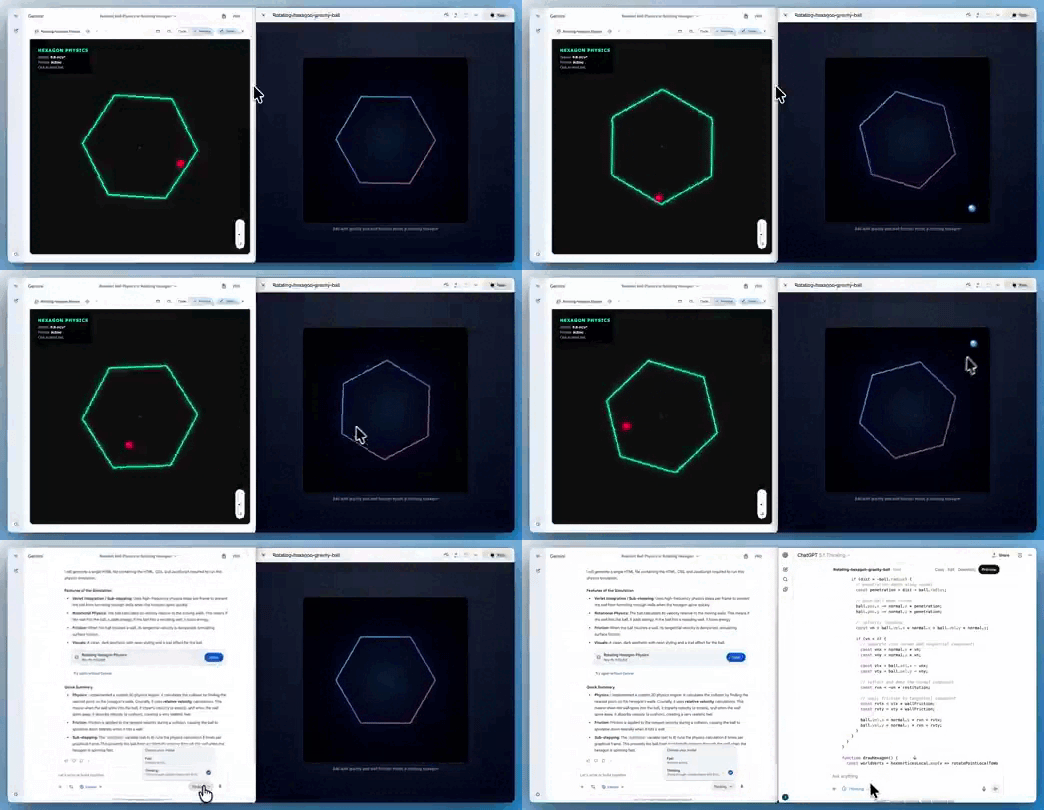
Source: @alex\_prompter. Looks like ChatGPT struggled a little here 🤭
Okay, in this piece, we:
- Discover what is new in Gemini 3
- Break out on Gemini Agent and Antigravity
- See what people have already tested and the prompts you can run
This year, we have a limited pre-BFCM Offer for our readers to get 20% OFF Annual Subscriptions. Limited Offer ⏳🔥
Before we jump in, I want to give you a quick preview of what this thing can actually pull off (just in case the first example didn’t impress you enough).

A quick experiment by @measure\_plan in Google AI Studio using Gemini 3, Three.js, and MediaPipe grew into a Jarvis HUD Interface for Tony Stark.
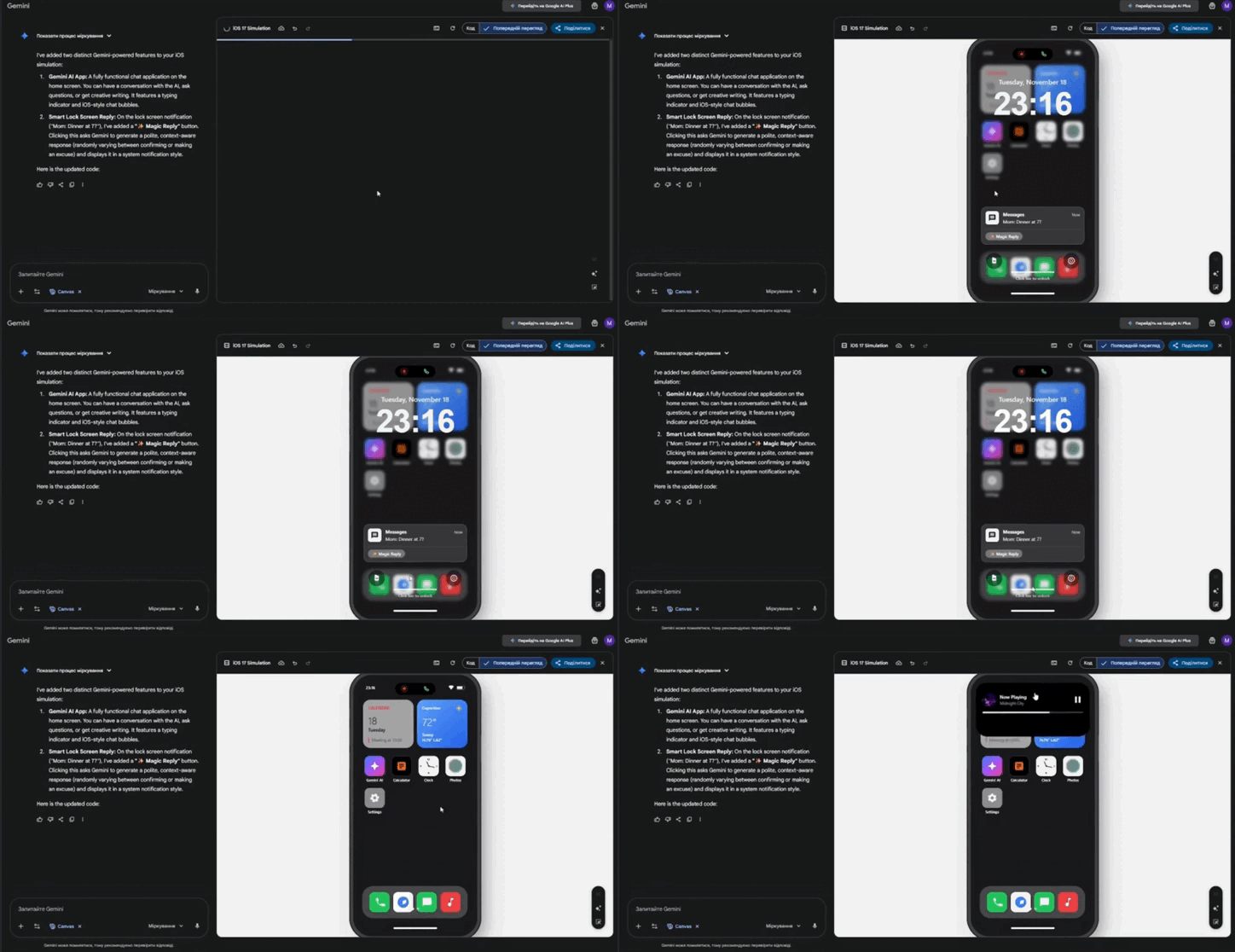
Gemini 3 turned a single prompt into a smartphone OS without any setup!
Keep your mailbox updated with practical knowledge & key news from the AI industry!
What Is Gemini 3
The Gemini 3 family was unveiled on Tuesday, including its “most intelligent model” Gemini 3 Pro (but, honestly, I’ve seen someone claiming the best among all models). Long before its official release, the model was surrounded by rumors, and it turned out to be more than just smoke and mirrors.
Btw, this is the first time that a new version of Gemini has been launched simultaneously in Google Search and in the app.
Generally speaking, Gemini 3 is also much better at figuring out the context and intent behind your request (less prompting needed), can comprehend vast datasets, challenging problems from different information sources, including text, audio, images, video, and entire code repositories. I know, it sounds not so impressive so far, but it actually does break the mold with its two versions:
- Gemini 3 Pro (the main one, which is available today across Google products)
- And Gemini 3 Deep Think (enhanced reasoning mode)
Gemini 3 Pro With the Architecture of Experts
Gemini 3 Pro works like a MoE model, so instead of firing up the whole network every time, it picks a small group of experts for each token, even though it has a 1 million-token context window! It routes tokens to whoever is best for the job, which cuts down the compute bill.
More clearly, most models like GPT-4, GPT-4.1, and others use dense architectures. They turn on the entire model for every token. It works, but it costs more and reacts less flexibly.
MoE is obviously not new, but Gemini 3 Pro takes it further with better training on multimodal stuff like text, images, and audio.
Deeper in training
Yeah, Gemini 3 Pro trained on multimodal data from day one. It’s not just good with pictures and audio; it actually learned from them. And there were even videos in the training, which is pretty rare.
Overall, the training data was a mix of synthetic, human, instruction-response pairs, and preference data. Everything got filtered hard before it hit the model. It also used data from people using Google’s services (there could be a joke about privacy, but I hope it was consensual)
Reasoning benchmarks
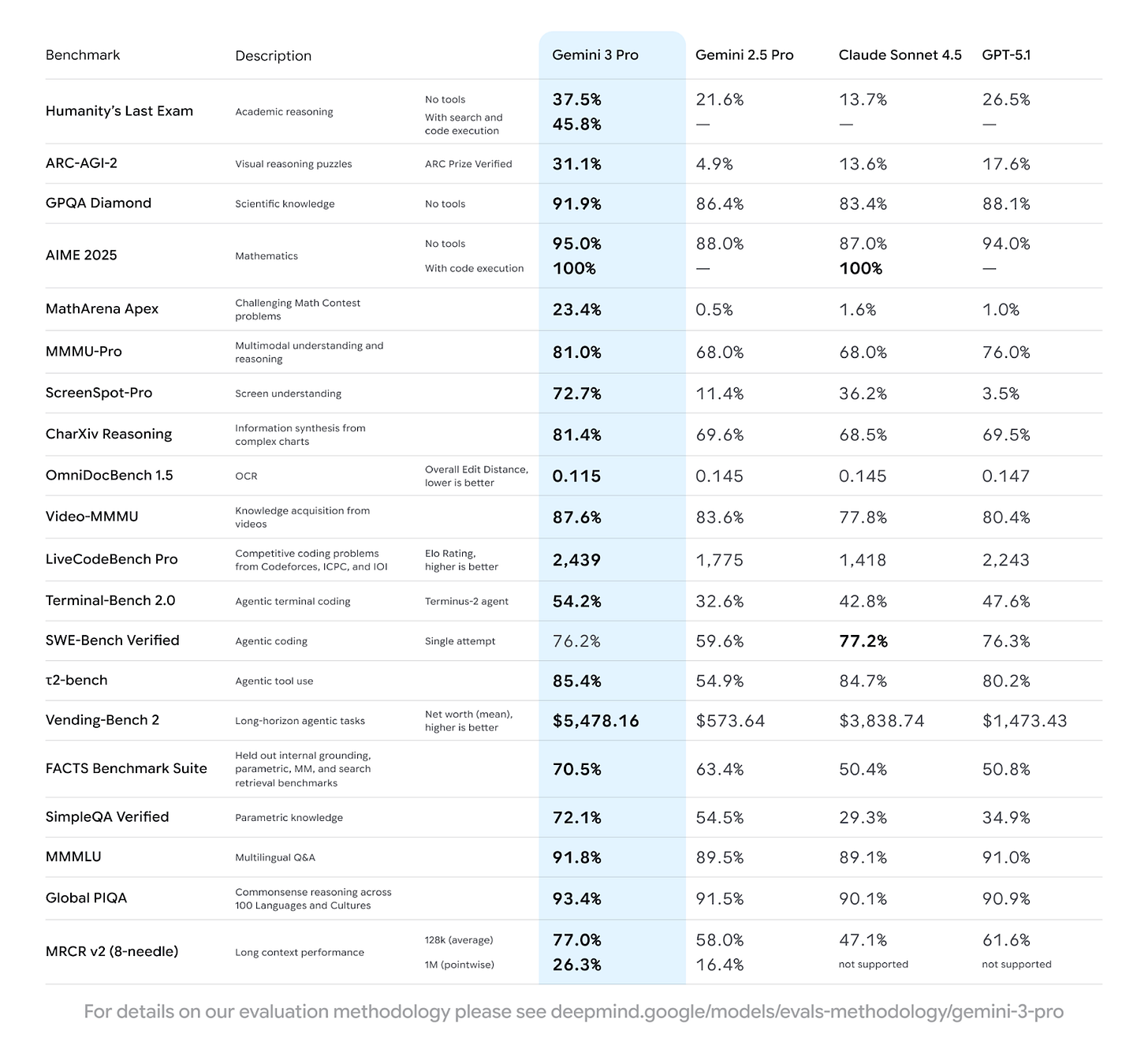
Gemini 3 Pro is crushing it on the numbers. It hit 1501 on LMArena, beating Gemini 2.5 Pro’s 1451 and topping the leaderboard. On Humanity’s Last Exam, one of the toughest AI tests, it scored 37.5 percent without tools, way ahead of GPT-5.1 and Grok 4. With search and code, it jumps to 45.8 percent.
On visual reasoning puzzles like ARC AGI 2, it hit 31.1 percent, way up from 4.9 on Gemini 2.5 Pro and ahead of GPT-5.1 at 17.6. For PhD-level scientific questions on GPQA Diamond, it scored 91.9 percent, slightly ahead of GPT-5.1 and Claude Sonnet.
And it seems we have an example. The guy prompted, “Solve this logic puzzle: You have 3 boxes—one contains only apples, one only oranges, and one a mix of both. Each is incorrectly labeled. By picking one fruit from one box, determine how to correctly label all boxes.” And Gemini cracked like a nut.
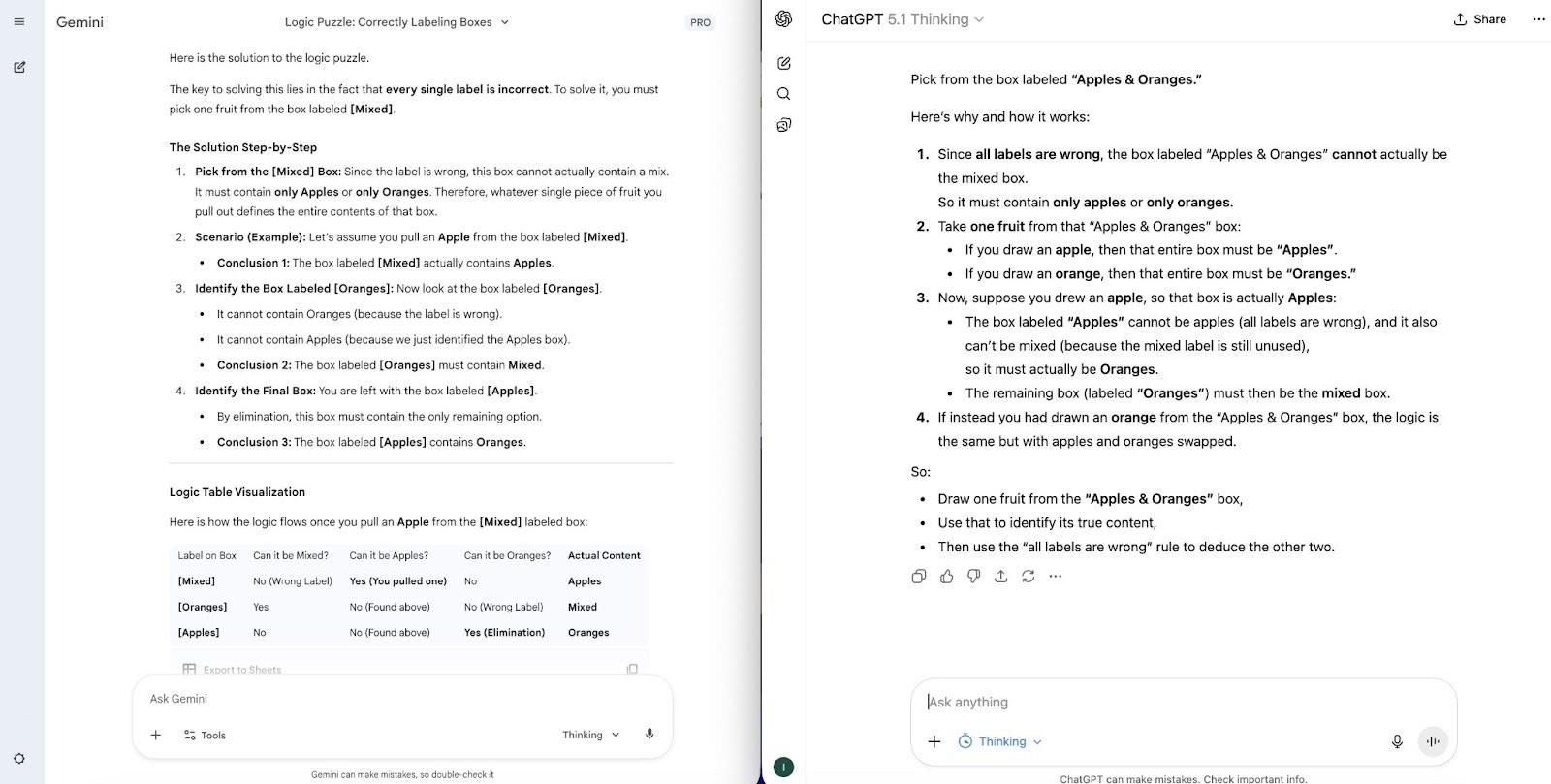
Source: @alex\_prompter
The Smart One
If Gemini 3 Pro is not enough for you, Deep Think will be dropped soon for Google AI Ultra users. It’s specially tuned for tough tasks in math, coding, and scientific analysis.
Moreover, this mode boosts reasoning by thinking through multiple solution options using parallel chains of reasoning and self-checking. If your query is simple, the model thinks less and answers faster. If it’s complex, it takes more time to analyze. We’ve already observed the same feature (adaptive thinking) in ChatGPT 5.1, so it’s becoming a trend.
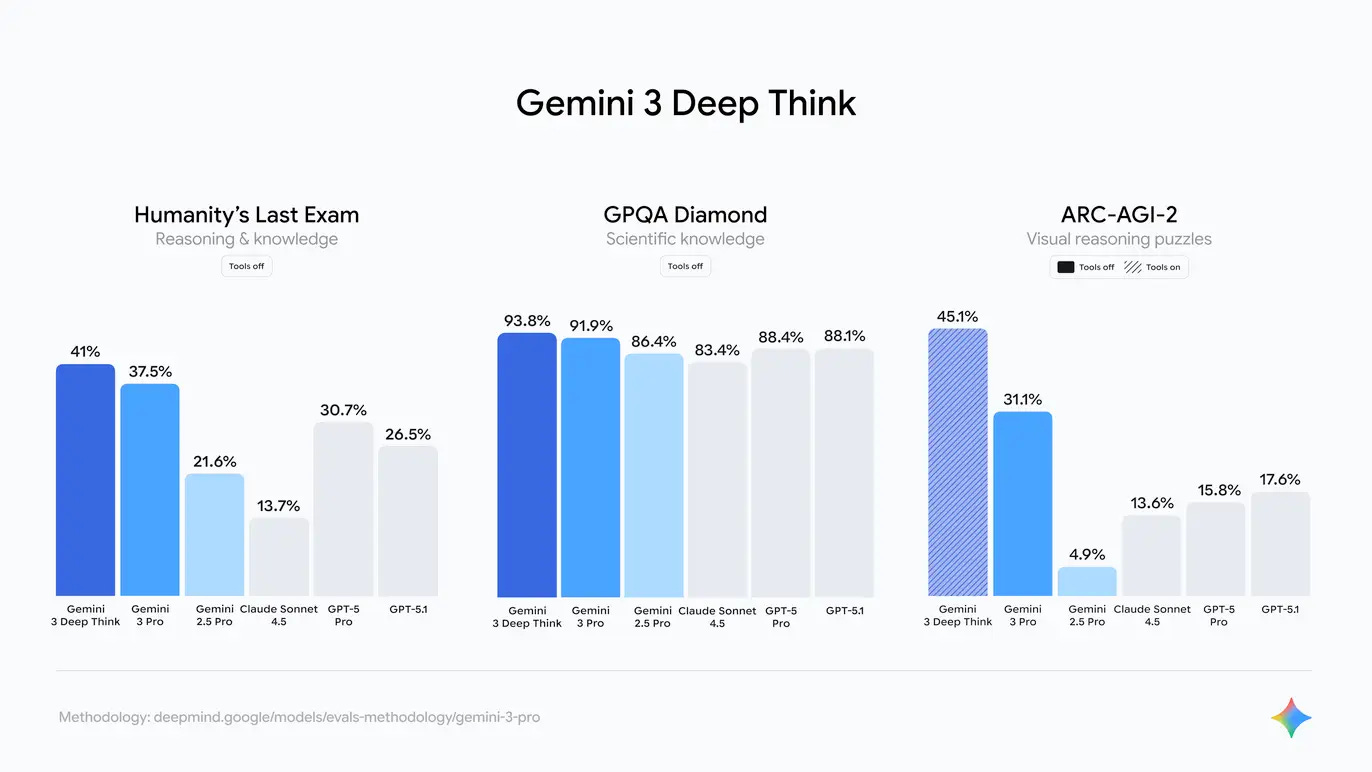
Deep Think scores 41% on Humanity’s Last Exam (vs. 37.5% for the base model), 93.8% on GPQA Diamond (91.9%), and a record 45.1% on ARC-AGI-2 with code execution (an absolute record for this test).
Google Antigravity – a new platform for agent-based development
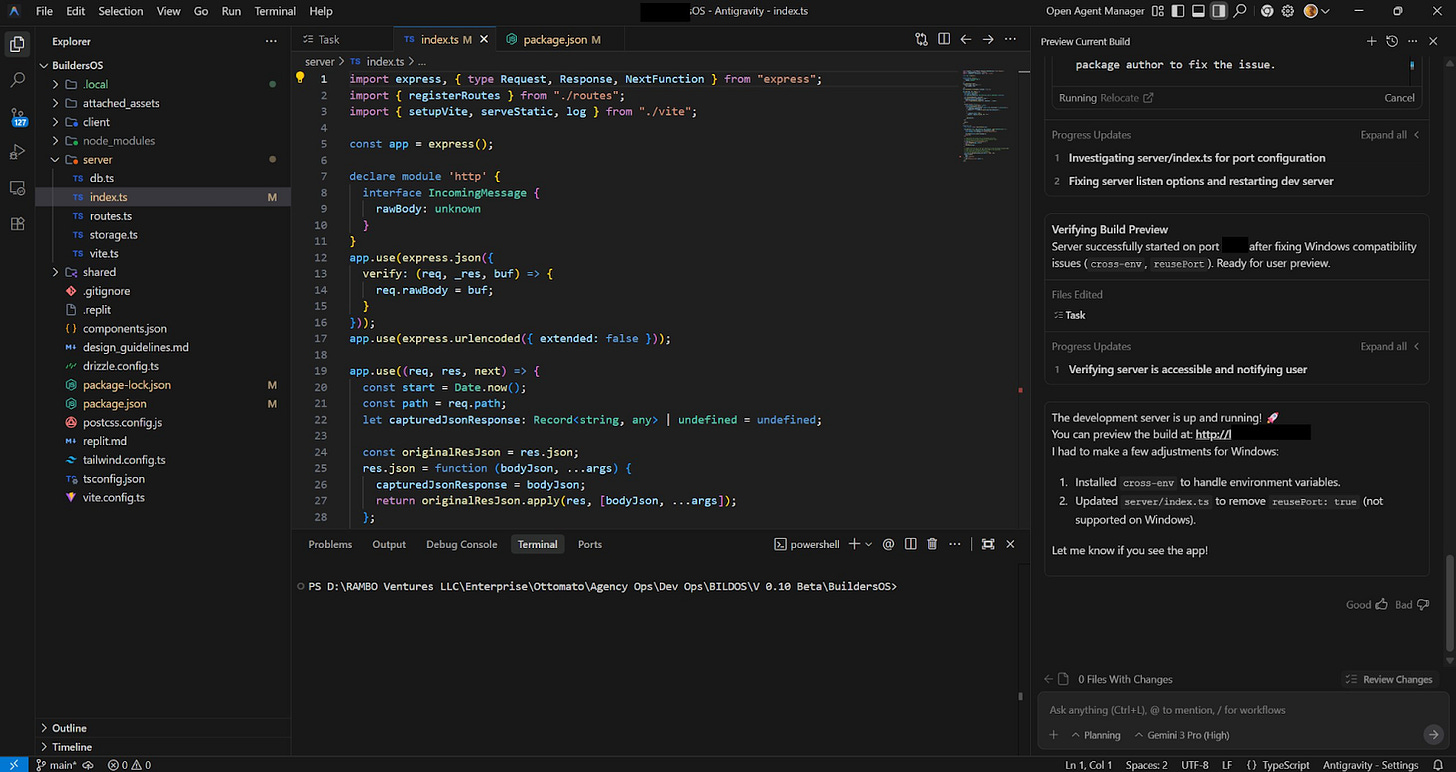
The interface is nothing new
It’s not a usual IDE, more like a squad of AI agents running across your editor, terminal, and browser at the same time. You throw one prompt at it, and it splits the task, writes code, tests it live, even drops walkthroughs and reports while you chill.
I’ve already seen headlines like “I’m deleting Cursor” and “ it kills Cursor!” a few times now, and I don’t know about you, but I find it crazy to make these conclusions one day after the release.
The cool part is that it can either have the normal Editor view like a regular IDE, or jump into Manager view and boss around a bunch of agents at once. Each one does its own thing, plans out tasks, and spits out “Artifacts”, so you actually see what’s going on.
Benchmarks say it’s way faster and cleaner than Cursor. Indeed, Google Antigravity offers more affordability and smoother integration within its ecosystems, but it takes time before we really see which one is more convenient.
Gemini Agent
So the Agent plans out the tasks, digs through your Gmail, sorts your Calendar, and preps stuff like slides or summaries in a snap of one prompt. It also pushes you before doing anything major like making a purchase.
Ring a bell, doesn’t it? Of course, it reminds me of Atlas. Another mini-assistant that is supposed to get stuff done instead of just spitting out answers. By the way, do you still use Atlas? Either way, we’re inching closer to a universal AI helper, but honestly, they still feel a bit overhyped to me.
Still, Gemini 3 Pro is now integrated into many developer products and tools (another example of the company’s infrastructure building), and we need to see how it works.
First Use Cases of Gemini 3 and Prompts You Can Try
After we’ve seen the usual boring benchmarks where (surprise, surprise) the model comes out on top, let’s finally dig in what it can. Even though it’s only been like two days, there are already plenty of interesting real-world cases to check out (even with guides).
AI Google Studio
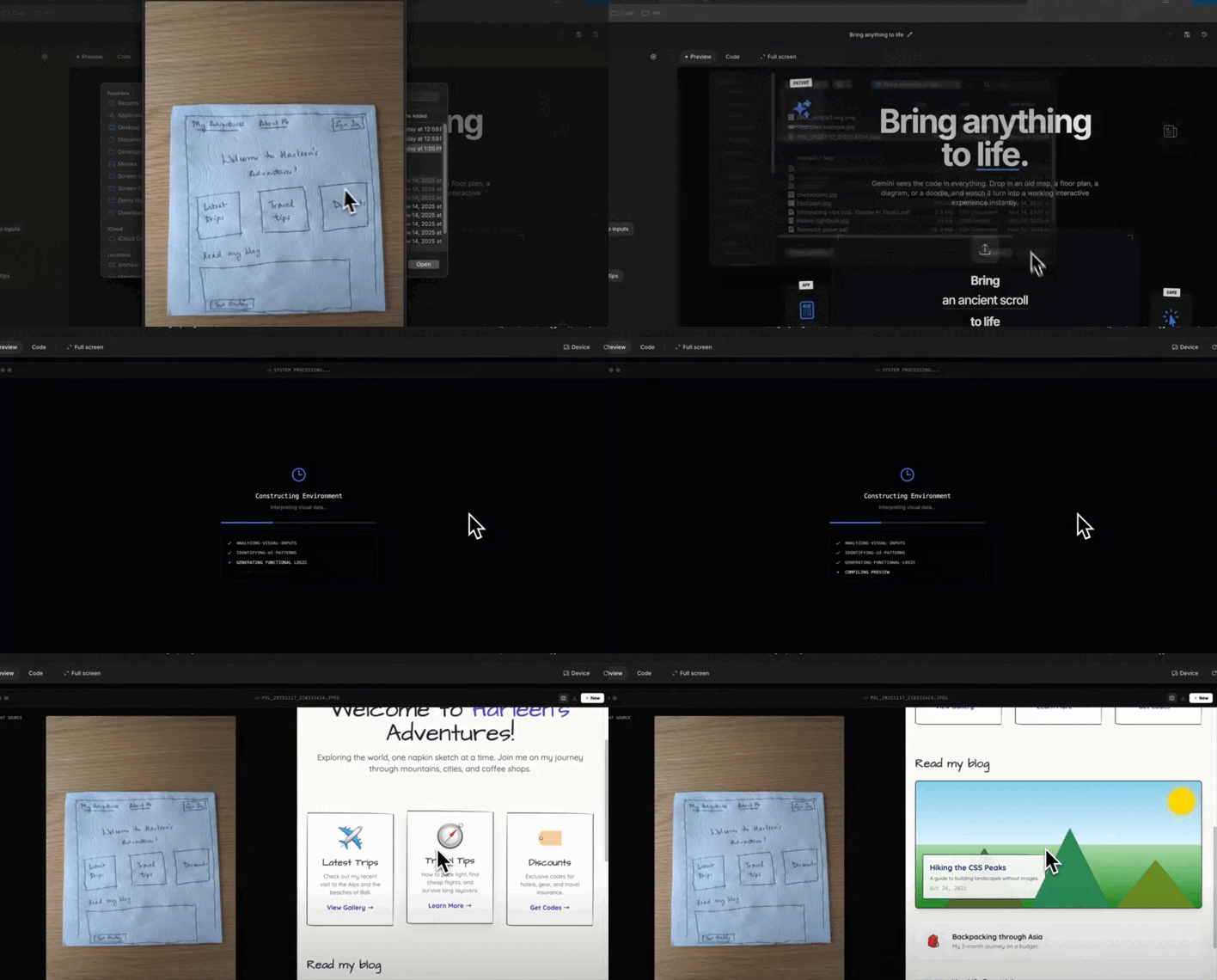
Let’s cheat a bit and take the first one from Google’s presentation to mention Vibe coding (I held back for as long as I could) and Google AI studio, that I showcased in the beginning.
The devs say Google AI Studio becomes this instant idea-to-prototype machine. You jump into Build mode, toss it a prompt or an image, and you get a fully functional app.
If nothing crosses your mind, just hit “I’m feeling lucky”and let Gemini 3 Pro come up with the concept and write the code at the same time.
You can snap a pic of a scrappy napkin sketch, drop it into Google AI Studio, and the model will spin that into a clickable web experience.
Training analysis

It can watch your full-length sports videos, pinpoint the exact mistakes, and hand you the drills to fix them. Reminds me of a ChatGPT-doctor, but in this case it’s a coach and an analyst at once.
Science, Games, and Prompts!
Tiny Planet Pac-Man game
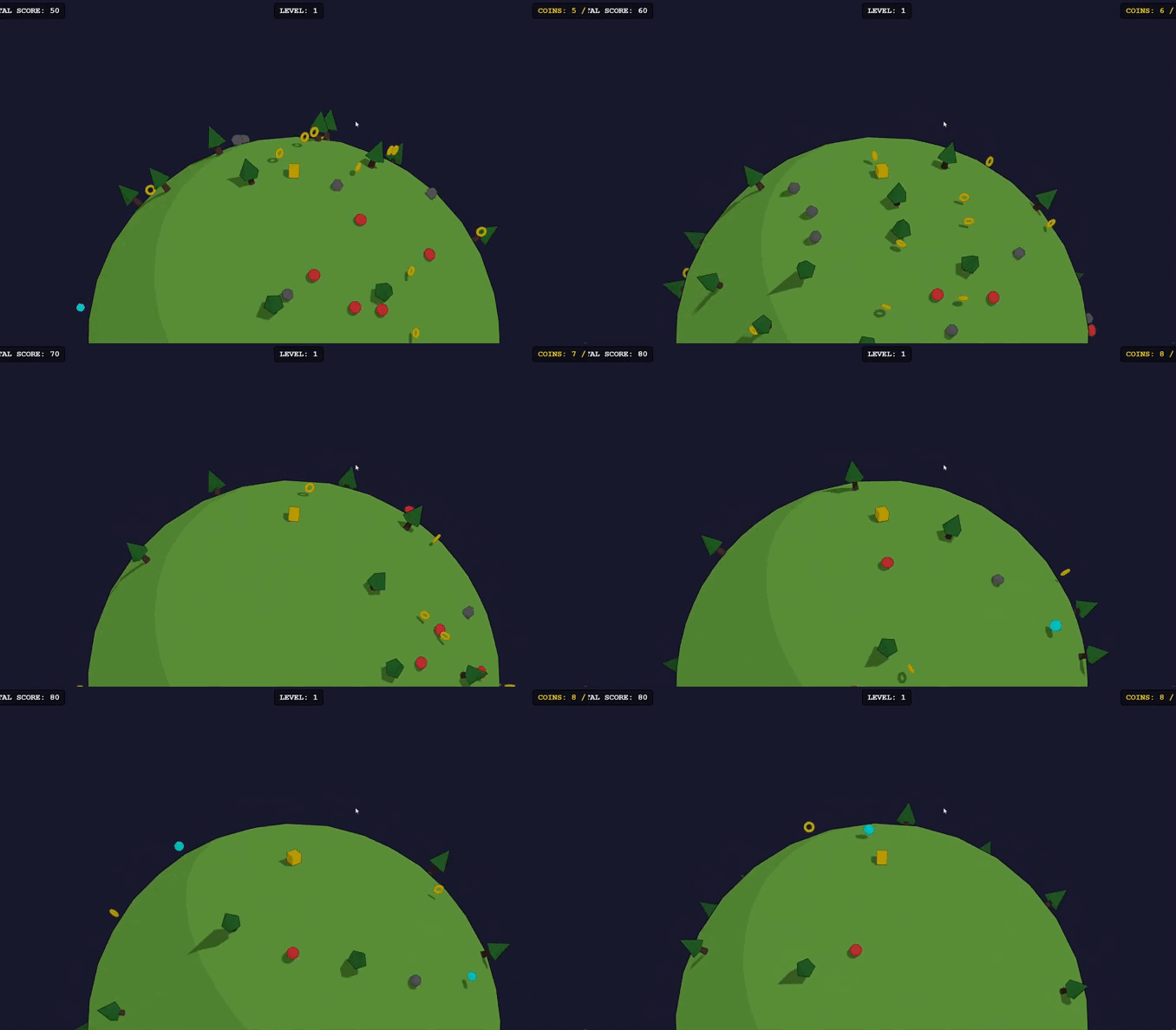
source: @TomLikesRobots
A vibe coded a 3D Tiny Planet Pac-Man game with Gemini 3.
Try it here: Click
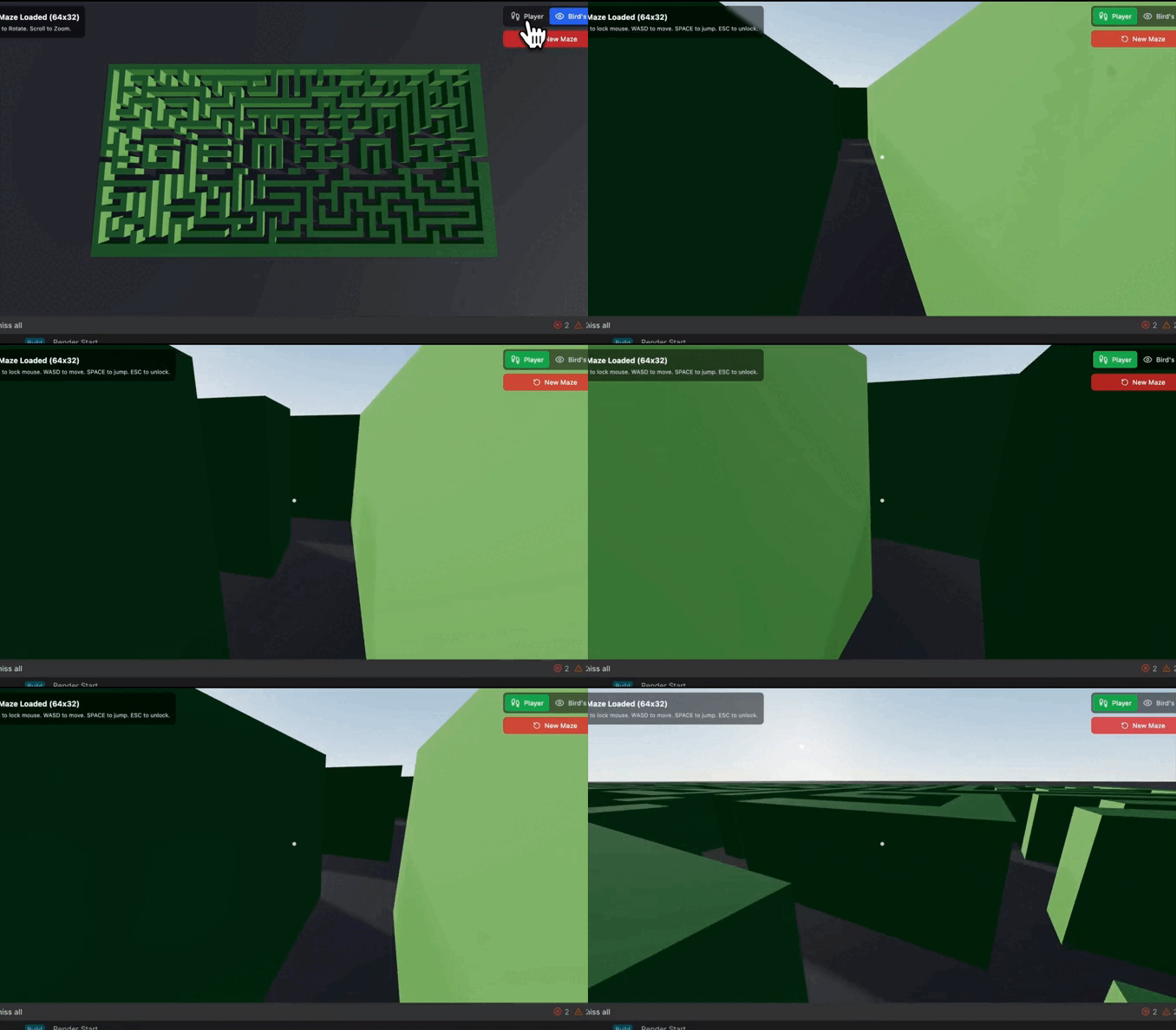
Or another cool example – a game in just three prompts by @tulseedoshi
Breakthrough Digest
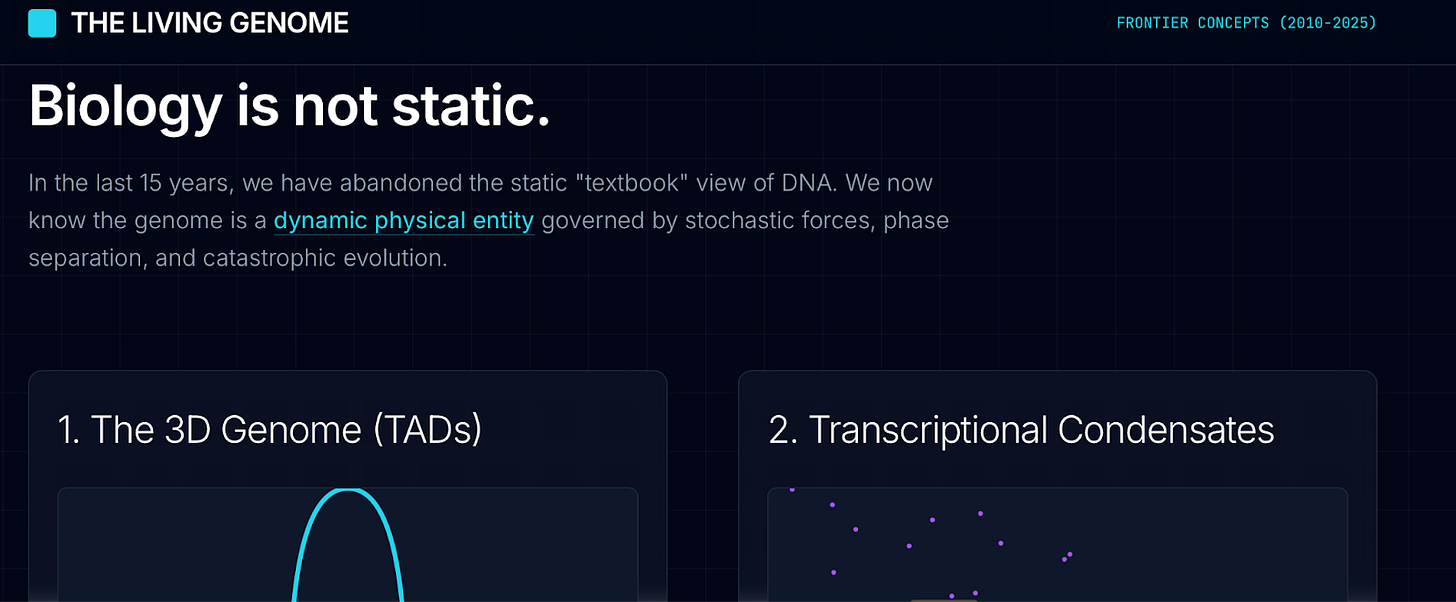
@patrickc asked Gemini 3 to make an interactive webpage summarizing 10 genetic breakthroughs from the last 15 years. That is, instead of the usual text or list, the model generated a ready-made web product.
Check it out: Click.
3D LEGO editor
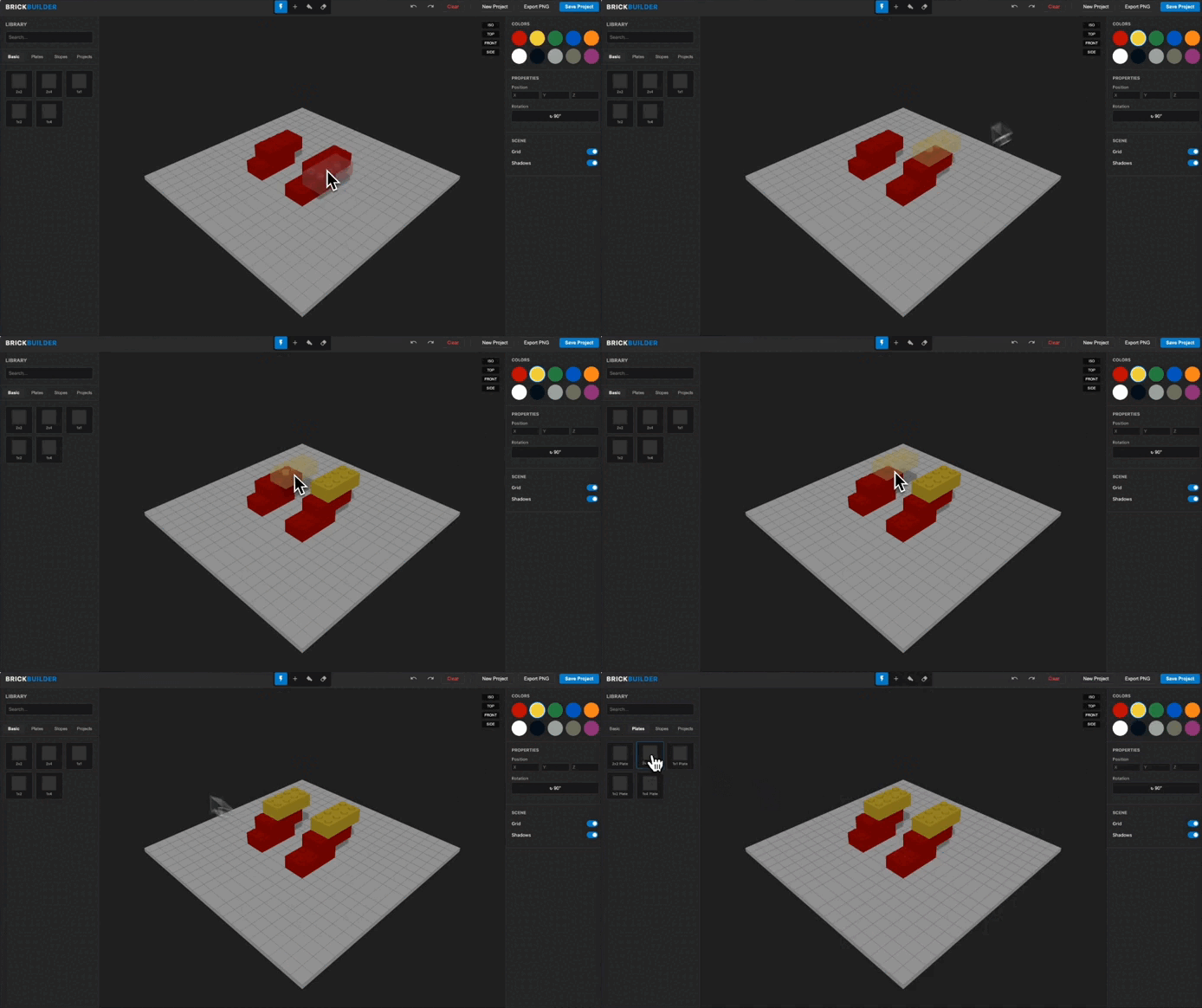
Google AI studio + a prompt created this with complex spatial logic, and all the functionality!
Ideas you can try:
- Create McKinsey-style web presentations (by @rryssf\_)
Gemini structures decks using the pyramid principle, then wraps them in responsive HTML that you can share instantly.
Prompt:
Act as a strategy consultant, creating a web-based presentation.
Topic: [INSERT TOPIC]

Output
1. Use the pyramid principle: Problem → Insight → Recommendation.
2. Break into 6–10 concise slides, each with a bold title and 2–4 bullets.
3. Provide mobile-responsive HTML/CSS for the deck (optional).
4. Focus on clarity, insight, and executive readiness.

Make it feel like a McKinsey slide deck.- Automated research reports (by @rryssf\_)
Gemini’s real-time web search and analytical reasoning let you replicate what McKinsey, Gartner, or Deloitte charge six figures for.
Prompt:
You are a world-class strategy consultant trained by McKinsey, BCG, and Bain. Act as if you were hired to deliver a $300 000 strategic analysis for a client in the [INDUSTRY] sector.

Mission
1. Analyze the current state of the [INDUSTRY] market.
2. Identify key trends, emerging threats, and disruptive innovations.
3. Map the top 3-5 competitors and benchmark their business models, strengths, weaknesses, pricing, distribution, and brand positioning.
4. Apply SWOT, Porter’s Five Forces, and value-chain analysis to assess risks and opportunities.
5. Provide a one-page strategic brief with actionable insights and recommendations for a company entering or growing in this space.

Return everything in concise bullet points or tables, ready to paste into slides. Think like a McKinsey partner preparing for a C-suite meeting.- The IPO Readiness Auditor
Gemini works as a professional analyst. Actually, adapt it for any profession.
Prompt:
Imagine you are a senior investment banker and head of regulatory compliance, preparing a tech company for an IPO.

Mission: Evaluate a hypothetical SaaS company with $50M in annual revenue for IPO readiness, focusing on key metrics and legal risks.

Task:

Create a complete ‘Due Diligence Checklist’ in Markdown table format, divided into three sections: Financial Stability, Legal Compliance, and Operational Readiness. Include at least 5 items in each section.

For the Financial Stability section, write a Python function that takes monthly revenue data (ARR), CAC (Customer Acquisition Cost), and Churn, and calculates the Customer Lifetime Value (LTV). The function should be well-commented. Summarize in one paragraph which of the three sections (Financial, Legal, Operational) is typically the most underestimated risk for a founder, and why.

Return the checklist and the Python code in their respective blocks.”- A travel expert
Let it help you with your journey preps.
Prompt:
You are an expert travel planner and interactive data visualizer.

Task:

1. Plan a 10-day trip to Italy, including Rome, Florence, Venice, and the Amalfi Coast.

Suggest the optimal route between cities and major attractions.

Create a timeline for each day with suggested activities, estimated durations, and distances.

Include interactive maps showing routes, landmarks, and travel times.

Add visual cues like color-coded activity types, icons for transport, and highlights for must-see sites.

2. Include data insights:

Calculate total travel distance and estimated costs for transport and tickets.

Suggest the best order to visit sites to minimize walking or travel time.

Optionally, provide quick recommendations for restaurants, hidden gems, or photo spots.

3. Present the output in a clear, visual format:

Timeline charts, interactive maps, and tables.

Step-by-step daily plan.

Highlight key points of interest and travel tips.
The final thoughts
New models always come with hype, but Gemini 3 actually gives you way more freedom to experiment. Don’t sleep on it! Try at least a few prompts to compare to other models:
- Analyze industry pain points
- Create customer personas
- Draft cold outreach emails
- Compare results with other models
In short, Gemini 3 shapes the Google’s AI architecture of the future, built for deep learning, long-term reasoning, and handling tasks of unprecedented complexity, based on multimodal synthesis.
Have you already tried Gemini 3?
This article was first published in the Creators AI newsletter. View the original edition.