Most Intelligence Is Search
How can you win when LLMs are better than you?

Hey everyone. We’re excited to share a guest post from Tomas Pueyo — the writer behind one of Substack’s most-read strategy newsletters, with over 800K subscribers. His essay reframes what intelligence actually is in the age of LLMs, and what that means for your edge as a creator or builder.
At a Glance
In this piece, you will learn:
- Why most human thinking has always been a form of search — and what changes now that LLMs do it better
- Where the real human advantage lies when AI can out-search any single domain
- Why the polymath, not the expert, wins in the agentic era
This post is prepared with Guest Author — Tomas Pueyo, writer of Uncharted Territories, one of Substack’s top strategy and big-ideas newsletters with 800K+ subscribers. If you also want to write for Creators AI — send us email here
Over thousands of years, tens of billions of people have spent their entire lives thinking, reasoning, creating, dreaming, solving problems. How many of our thoughts have been completely new? Very few.
When your thoughts have been original, most of the time it was because you applied existing solutions to new situations: You took the arguments and facts gathered by others and chained them in a novel way, adapted to your unique problem.
This means intelligence is mostly a search problem: Search within the body of known facts and surface the most relevant ones for you.
We just didn’t know this because, until now, search was so expensive.
The Long March to Cheap Search
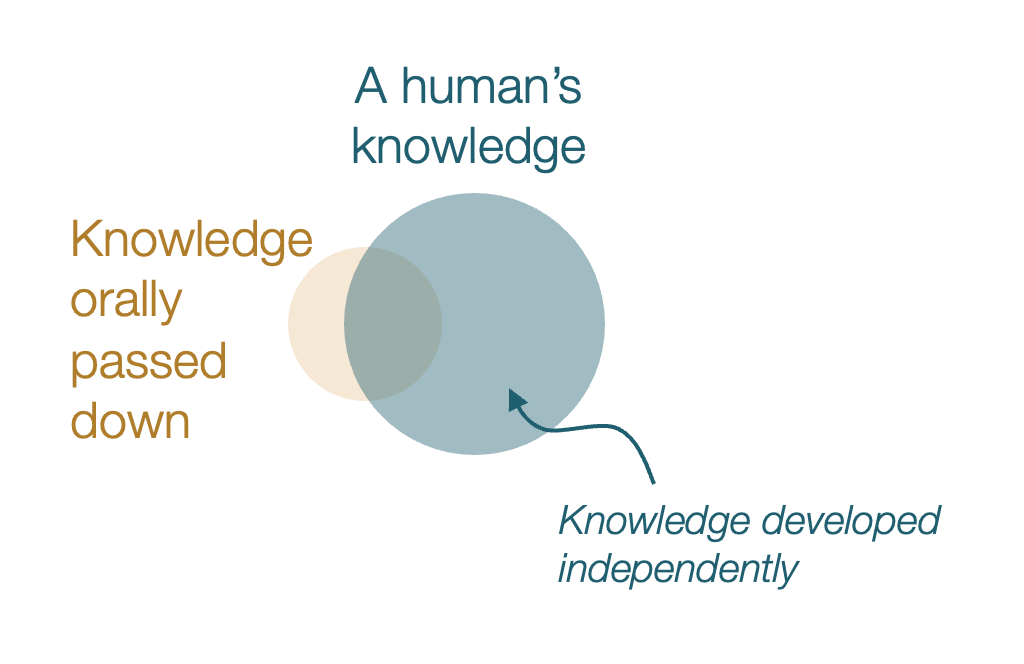
50,000 years ago, knowledge died with its holder. It could only be stored by the corruptible mind and passed by the corruptible voice. It required one person to spend time speaking, and others to spend time listening.

Low bandwidth.
Hard to search for somebody else’s ideas like that. People had to reinvent the same thoughts over and over again.
5,000 years ago, writing emerged, and we started storing information outside the brain in parchments, papyri, clay tablets… Suddenly, information storage and communication didn’t corrupt as much.

Ctrl + F “How to increase my wheat yield”
But it was still very expensive to transcribe ideas and consume them: It took a year to copy a full book, and you’d have to travel to where it was to consume it. Hard to search for ideas like that.
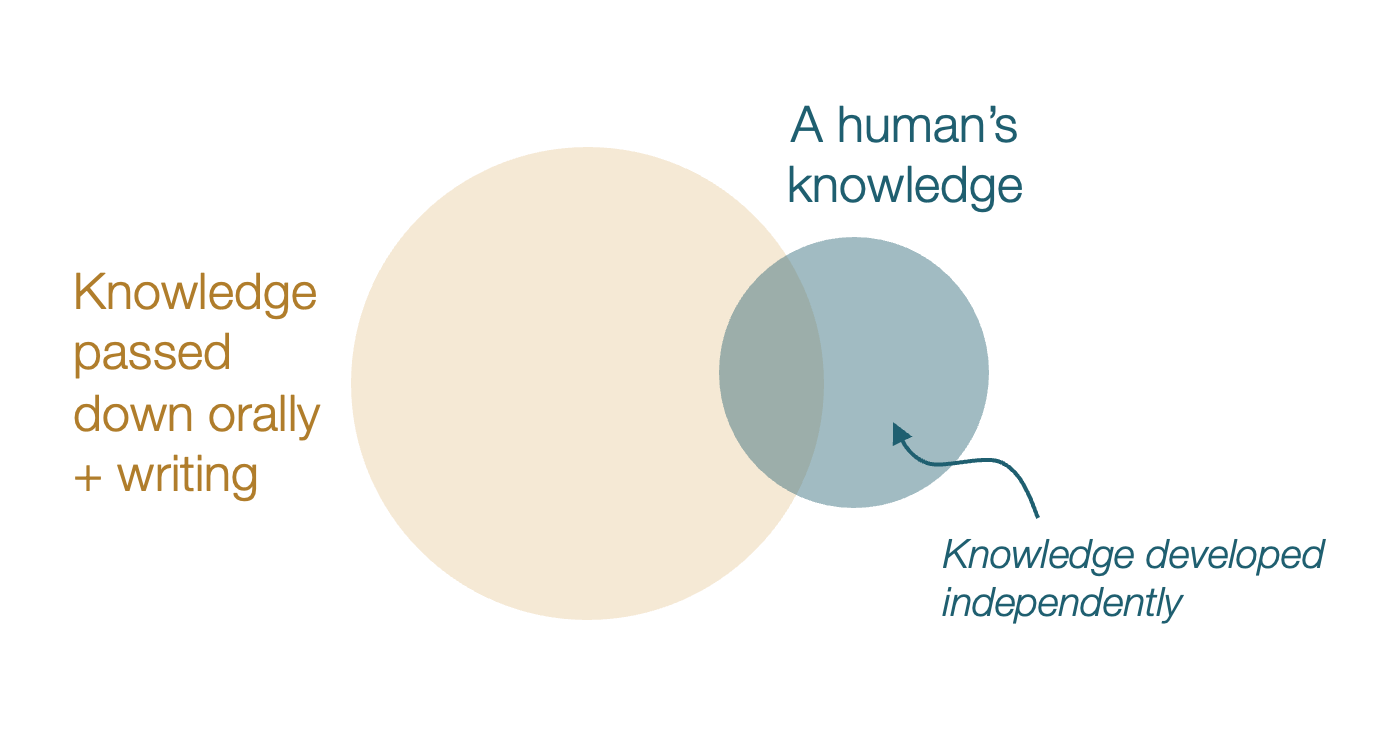
500 years ago, the printing press emerged. Now, the cost of writing a book was still the same, but the marginal cost of reproducing it fell dramatically. Suddenly, information became much more available. You could search for others’ ideas, and this was so powerful that the Enlightenment emerged, as scientists around Europe shared their ideas and built on each other’s.

Google, 1900 AD
But you still had to print the book, learn about it, search for it, and buy or borrow it. Your search was limited to the size of your pocket and your local library’s shelves.
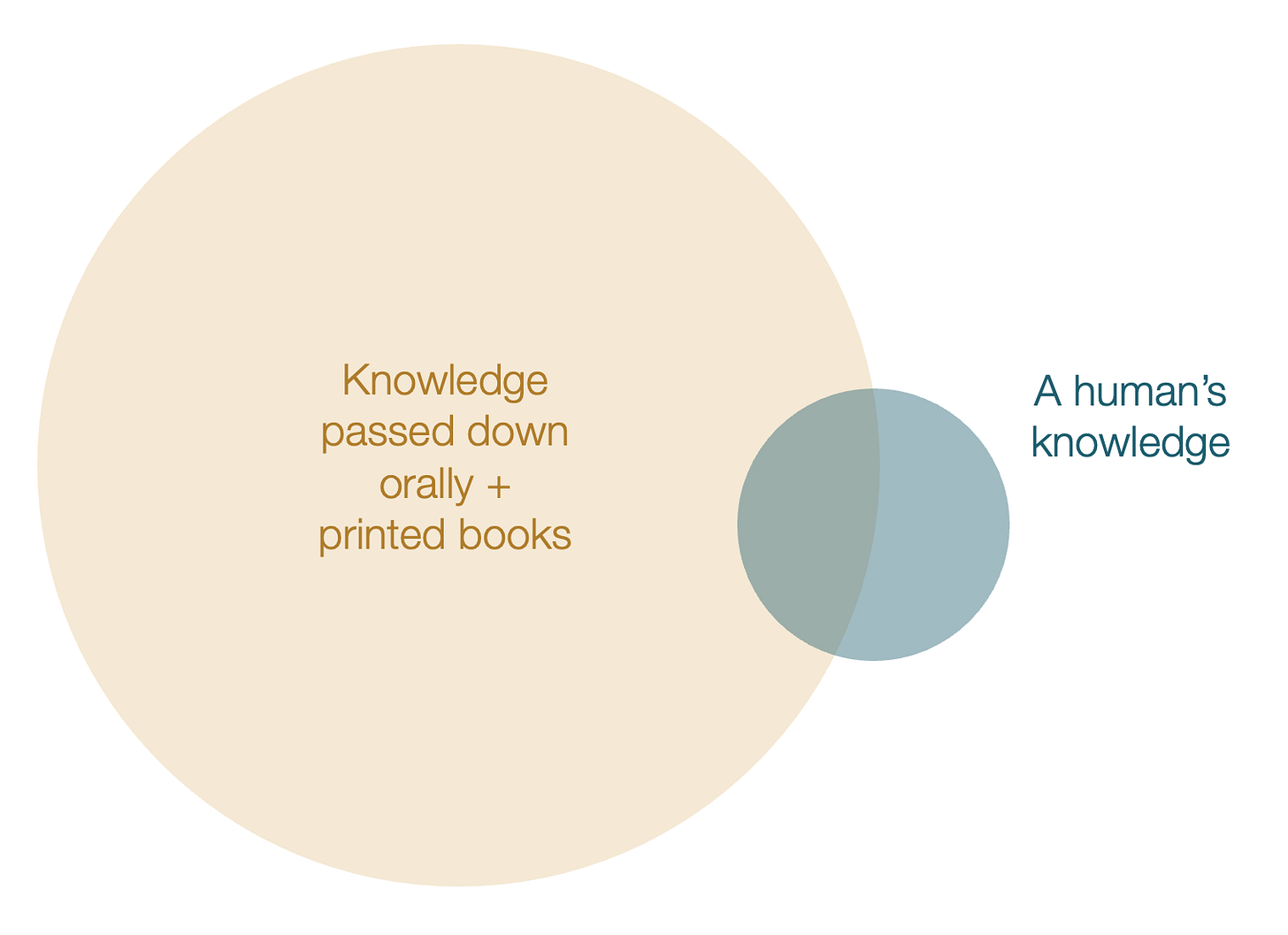
50 years ago, computers and the Internet emerged. Suddenly, writing an idea was as fast as your fingers on a keyboard. The cost of sharing it fell to nothing. Corruption was exiled. The concept of searching for somebody’s ideas became second nature — googling joined the dictionary. That’s when we realized that virtually all of our problems had already been solved by somebody else, usually someone who had written his solution in an obscure online forum 12 years ago.

Just took 1h 42m and 23 searches.
Still, to solve your personal problem, you had to look up dozens of microproblems and combine their solutions to tailor them to your needs. The friction of every search was small, but it added up to enough that you couldn’t solve all your problems through search — you had to reinvent the wheel.
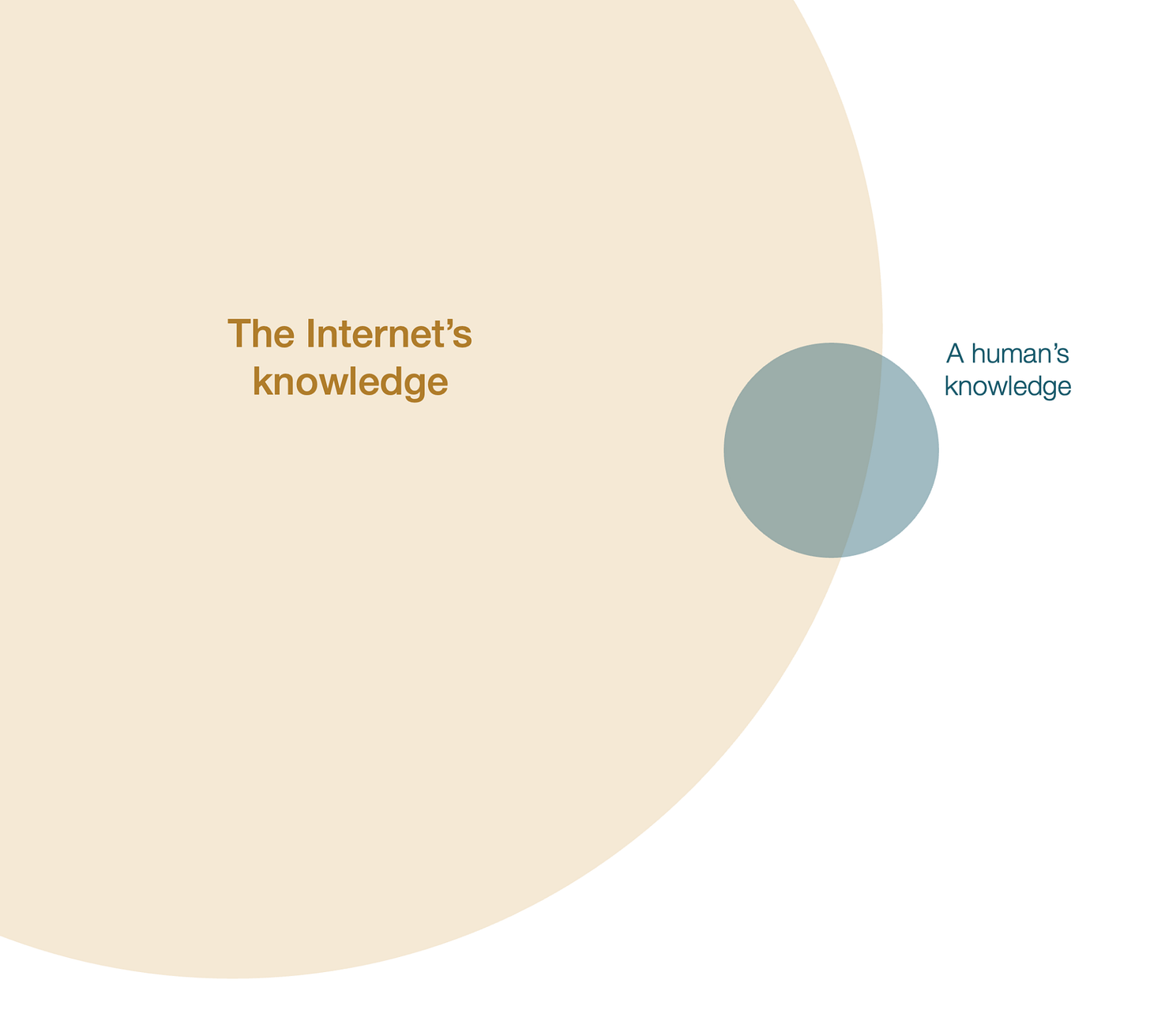
5 years ago, we put the world’s knowledge in a cauldron, and from there emerged intelligence. Suddenly, LLMs independently looked at all the problems, recorded the solutions, chained all the thoughts, and brewed an answer tailored to your specific needs. Now that the friction of every search disappeared, it became clear: Intelligence is mostly search. You just need to cast your spell deftly enough to summon the perfect combination of facts, problems, and solutions, chained in the right order from the latent space of human knowledge.
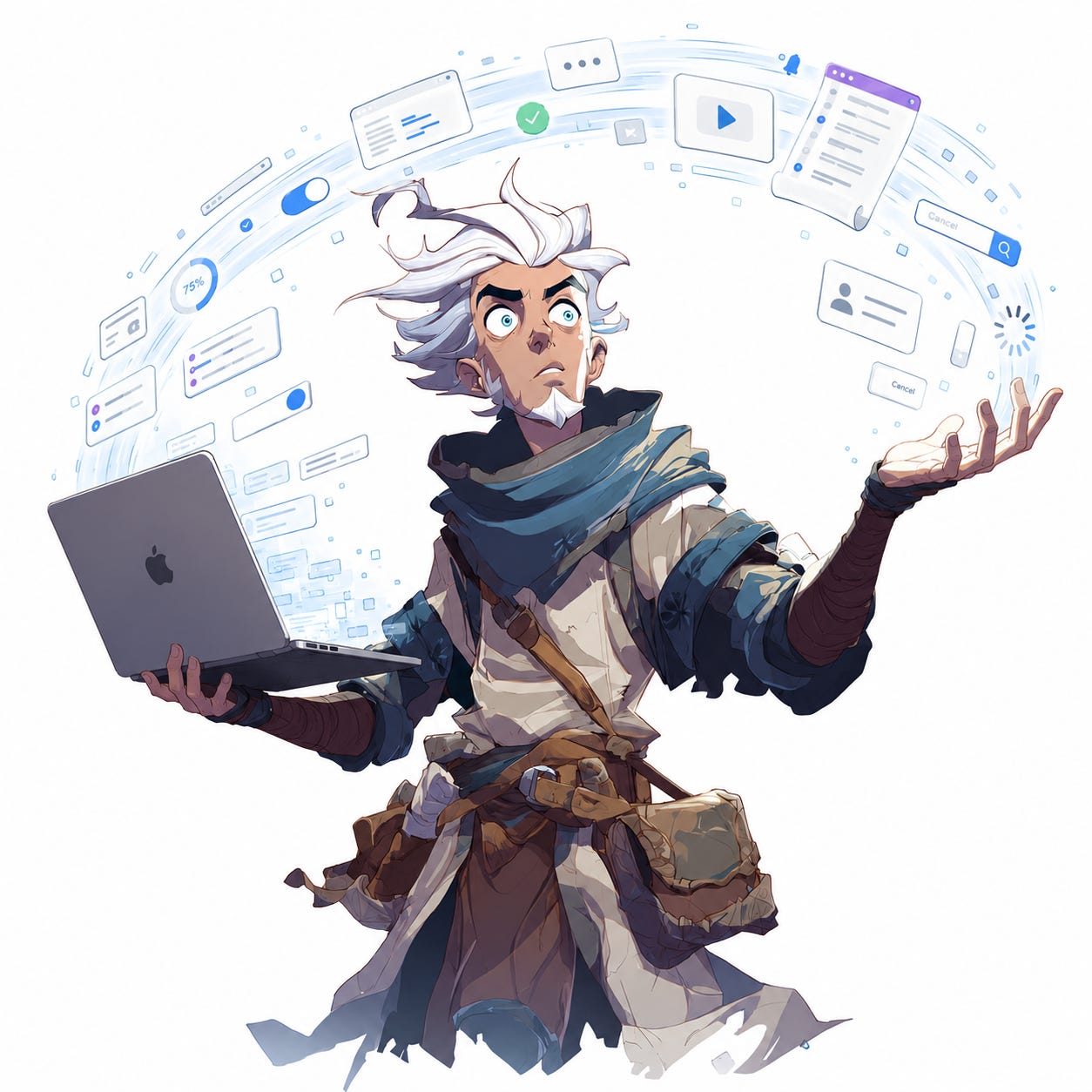
Spellcasting SaaS.
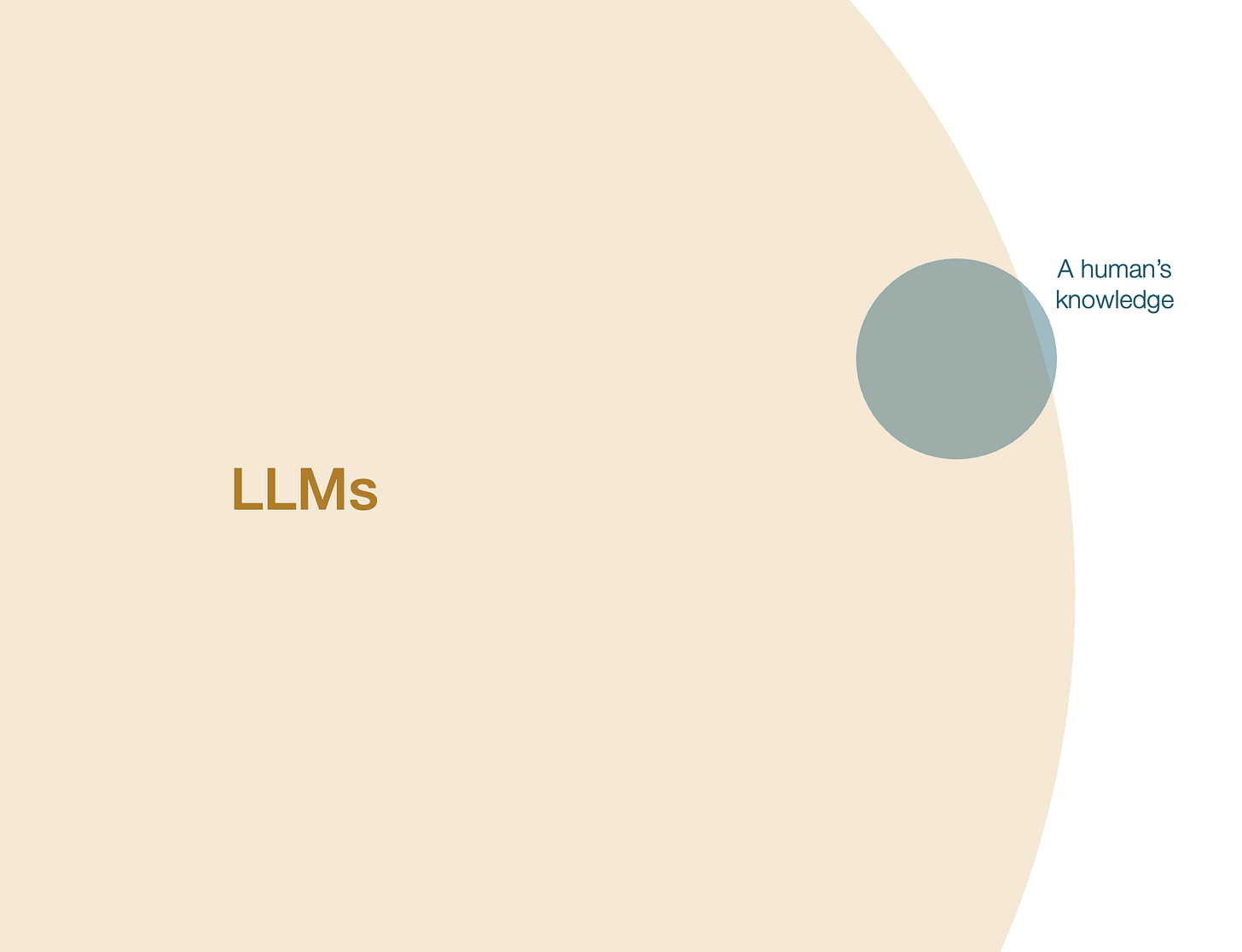
“Actually, humans have plenty of novel thoughts!”
Do we? Consider a PhD: A person spends ~14 years studying until they graduate high school, then four more years in undergrad, then two years of grad school, and then a handful of years for the PhD. After ~25 years studying non-stop, this is what they can hope to do with the horizon of human knowledge:
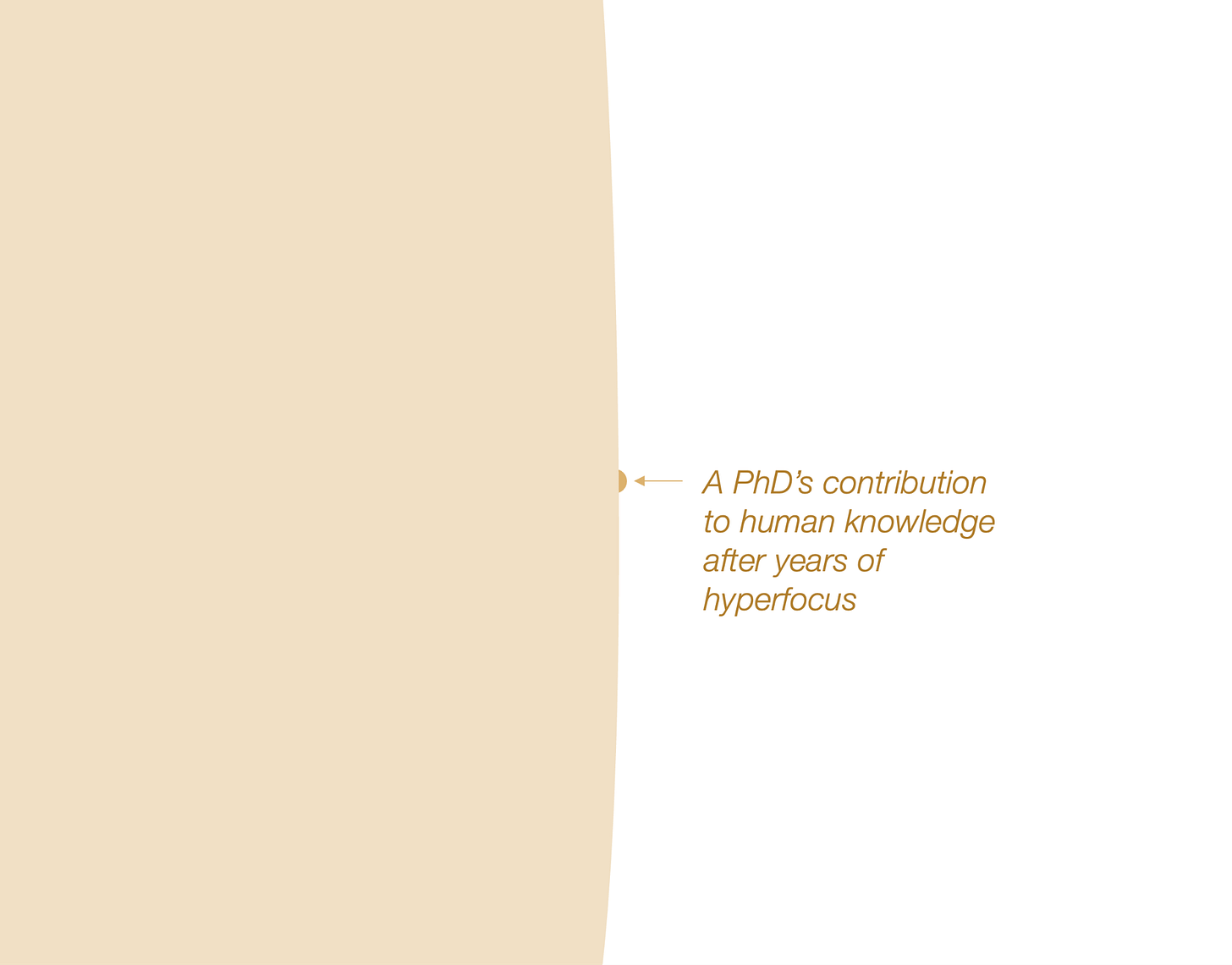
If 25 years of hyperfocus buys one pixel, how many novel thoughts do we really have? No, most ideas are just the combination of other existing ideas.
Take the logic to its endpoint, and fear might wash over you:
- If your thoughts are not original, other people have already thought most of them.
- Your advantage was collating other people’s thoughts in your unique way.
- LLMs bring the cost of searching others’ thoughts and combining them to zero.
Then, it becomes cheaper to spellcast thoughts than to craft them yourself. There will be no original thoughts for you to have.
From 50,000 to 5,000 to 500 to 50 to 5. The next step in the transition is in 0.5 years. Are you, dear reader, about to get obsoleted?
We’ve been tracking how creators are already navigating this shift — building systems rather than just using tools: How Solopreneurs Are Using Full AI Agents
This and many other practical posts on building with AI are available exclusively to our subscribers
The Fork in the Road
Luckily, humans + AI will be better than either alone. We saw that with chess already: After Deep Blue beat Kasparov in 1997, the best type of player was neither the machine nor the human, but the centaur — humans working with machines with the right process.
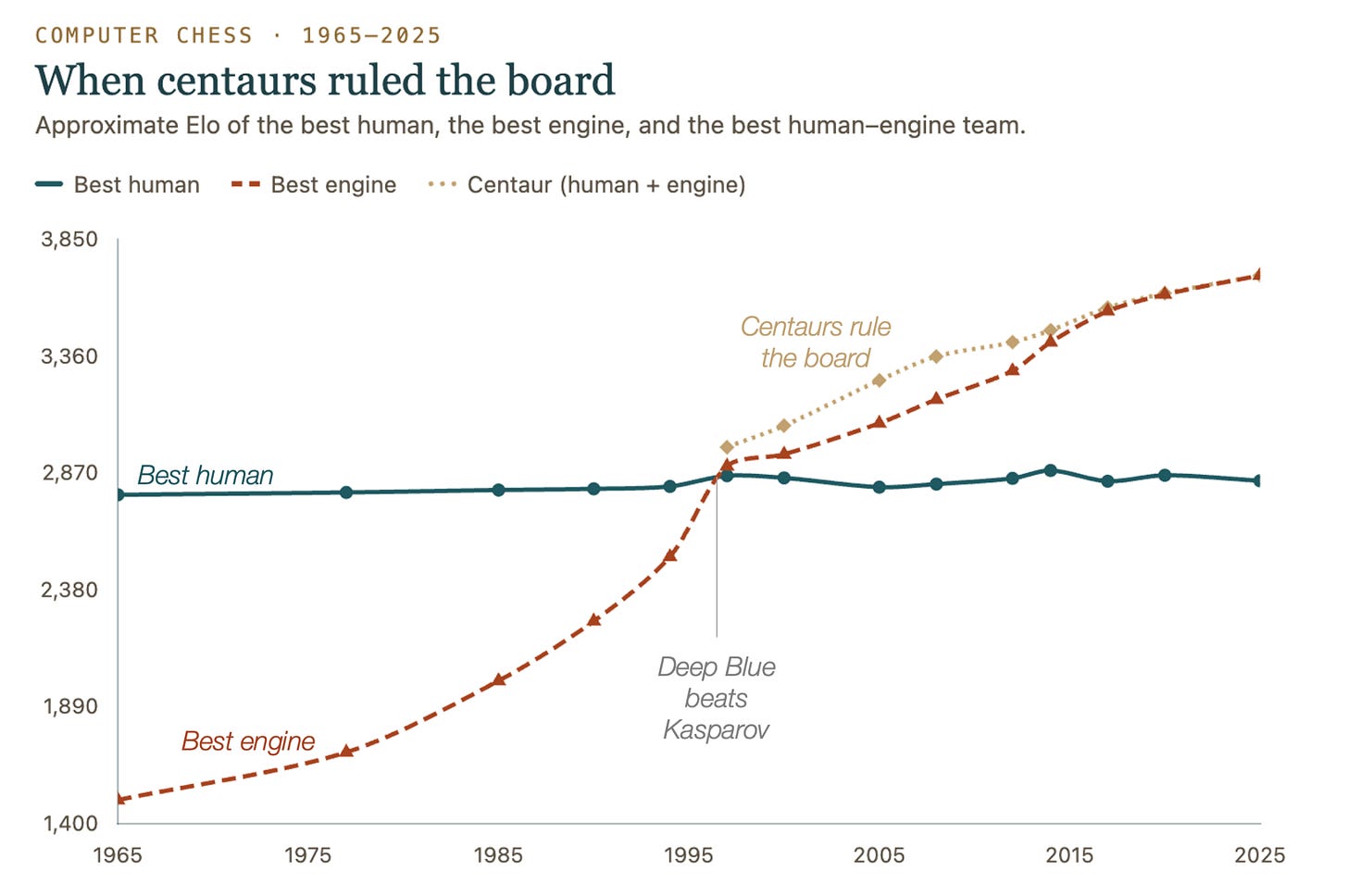
Source: Centaur = Human (yours truly Tomas Pueyo) + Computer (Claude, fact-checked by ChatGPT)
If you join forces with AIs, you’ll be able to create novel ideas faster. We’ve entered a period where breakthroughs across disciplines will be a daily event.
Unfortunately, humans never really learned much from computers: The teal line remained flat. And the Golden Era of centaur rule lasted just about two decades. Eventually, computers caught up.
But something different happened with Go: Although humans don’t beat AIs anymore in that game, the quality of human decisions has skyrocketed since AI surpassed humans, as we learn from AI.
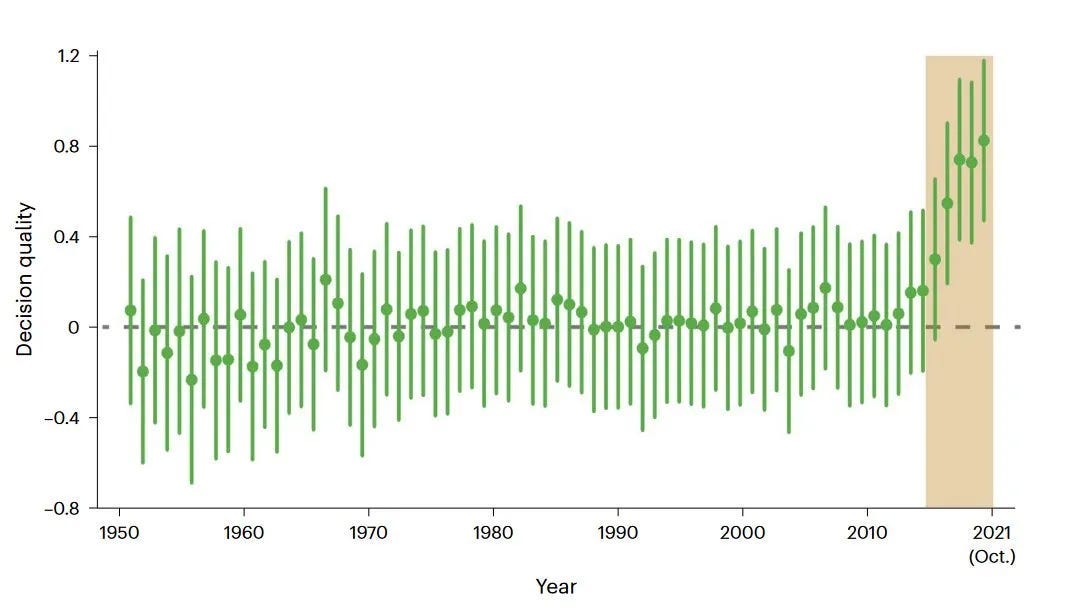
Decision quality of Go players, before and after the release of AlphaGo. Source
Why have humans progressed with Go and not in chess? Is it because Go is a much more open-ended game? What does that tell us about the future of intelligence beyond search?
Intelligence Beyond Search
Chess is a closed world, so once search got good enough, there was nothing left for the human to supply. Go is open enough that AI became a teacher instead of a replacement. The world is more open still. Knowledge is not a ball — it’s more like a universe.

Most knowledge accumulates in gravity fields we call disciplines. It’s quickly becoming impossible to beat an LLM at any single field, because it can search the field better than you. But there’s an infinite amount of combinations of these fields.
Even the search space itself isn’t defined. Someone has to notice a problem exists before anyone can search for its solution. If you pay attention to people’s unspoken needs, and you can collate the right search across fields like engineering, design, aesthetics, politics, communication, and storytelling, you might produce an experience no human has ever seen.
If intelligence is search, your edge is the query.
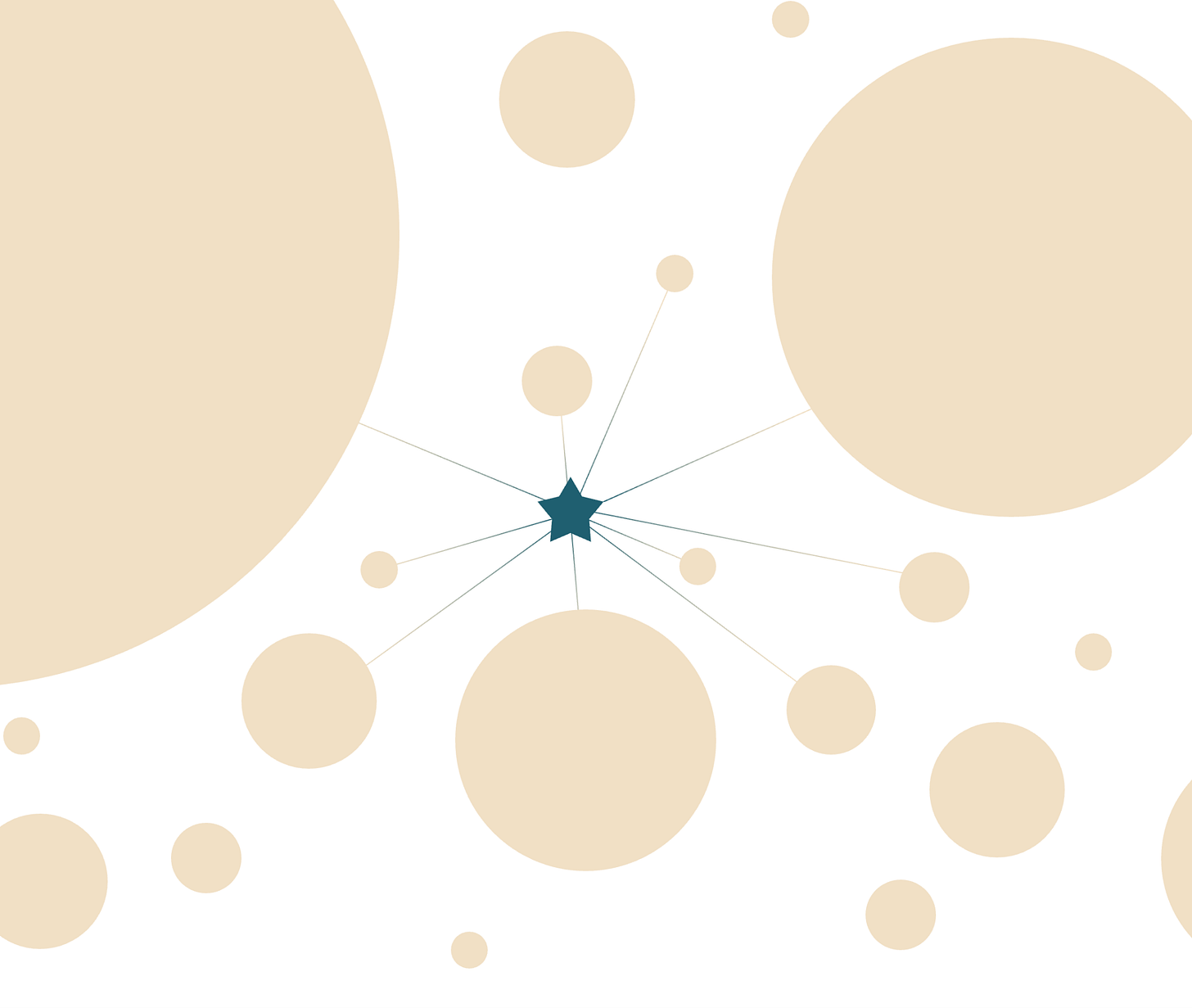
Become the black hole of your own unique discipline constellation.
If you can identify a unique need and properly orchestrate your agents to combine the data analysis of furniture styles with generative design plus social media trends plus oil painting styles plus an AI to source materials, a robot to carve, and another to paint, you might end up producing unique items like these at scale.

We seem to be entering an era in which deep focus within one discipline is losing ground to frenetic exploration across many — where polymaths will be rewarded compared to experts, as the polymaths will be able to guide their agent networks across fields.
The practical question is: what does that agent stack actually look like in practice? We broke it down here: Your AI Agent Stack Is Spaghetti — It Needs Architecture
So embrace your ADHD. Go live a life strange enough to come up with questions the cauldron has never considered.
Share this with someone who’s wondering what their edge is in the age of AI
And once you’ve figured out your unique angle, here’s how to turn it into something people will pay for: 4 Ways to Monetize AI Agents in 2026
What’s the question only you can ask — the one that sits at the intersection of your oddest combination of interests? Drop it in the comments.
Tomas Pueyo writes Uncharted Territories, a newsletter on strategy, history, and big ideas read by 800K+ subscribers.
This article was first published in the Creators AI newsletter. View the original edition.