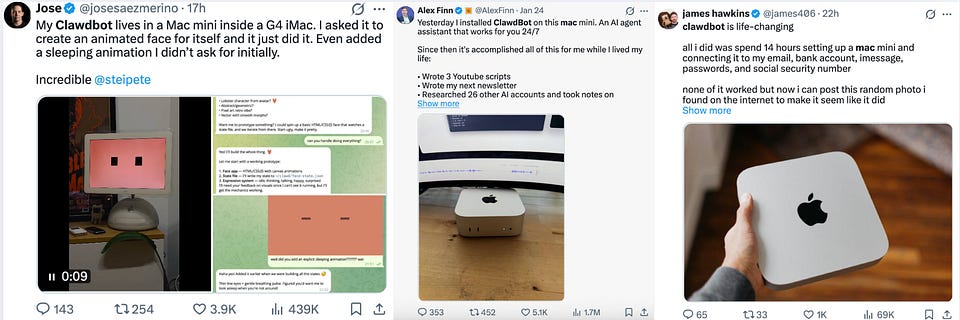
How Solopreneurs Are Using Full AI Agents
And Why You Should Too
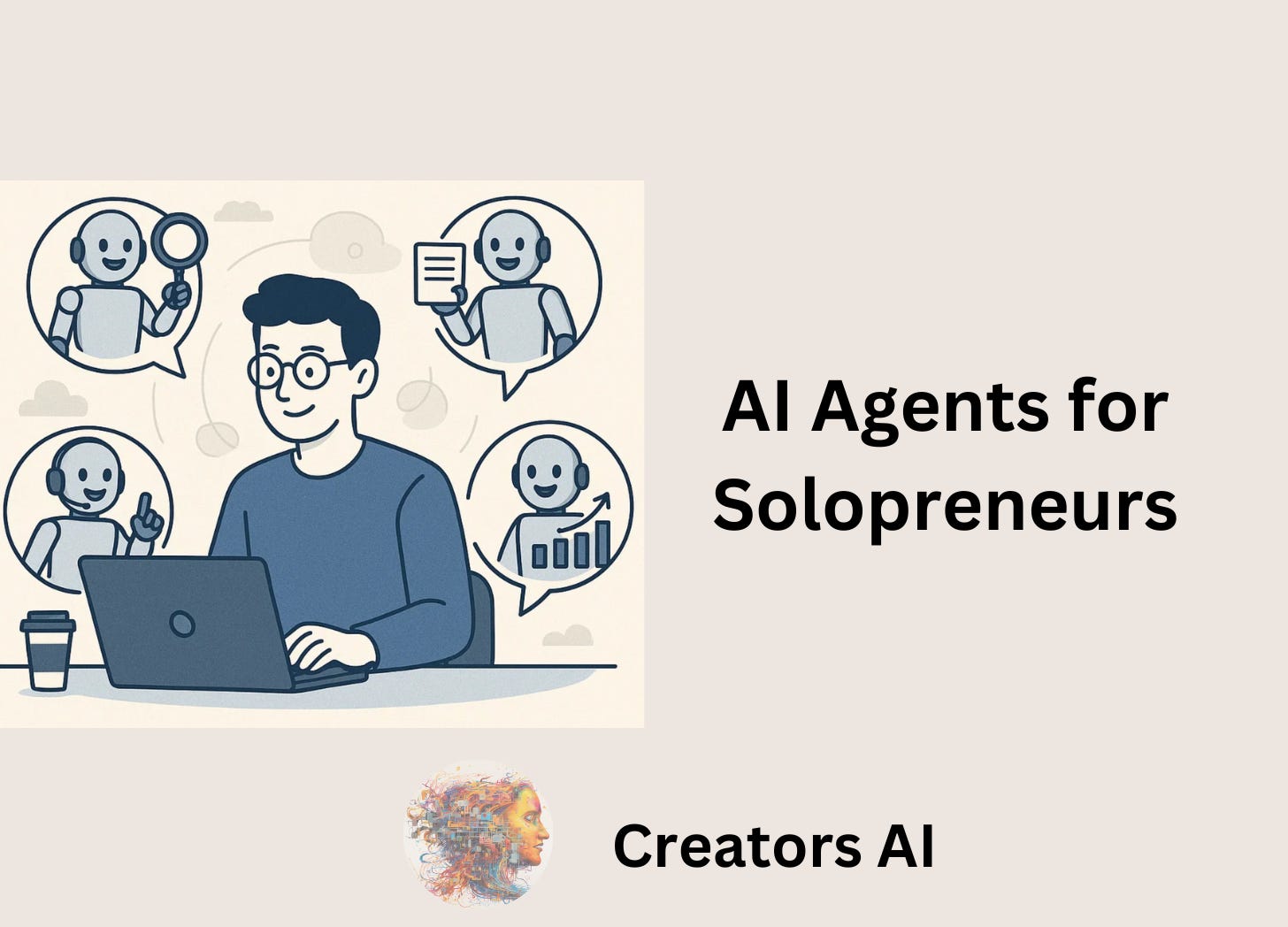
We’ve moved past the phase where ChatGPT was just a fancy search bar or a writing assistant.
Today, creators are using AI to build something far more powerful: autonomous systems that don’t just respond to prompts, but take initiative.
I didn’t fully get it until I built my first AI agent. What started as a simple automation quickly turned into a self-running system, researching, planning, and even publishing content without me lifting a finger. It wasn’t just helpful, it felt like I’d hired a digital teammate.
These aren’t tools you micromanage; they’re goal-driven systems that plan, execute, and deliver results while you sleep, work, or move on to bigger problems.
It’s a shift from automation to true delegation, and it’s changing the way we think about creative work.
So, what does it actually look like in practice?
Let’s break down 4 real examples of creators using agents to save time, make money, and scale their work, without burning out!
1. Mart Kempenaar’s Lead-Gen AI Agent
❓The Problem
Lead generation is one of the toughest and most expensive parts of growing a business. We broke this down in our previous post on*AI tools for sales and cold outreach*, where we shared real examples of how creators are using AI to supercharge their cold outreach strategies.
What’s changing now?
AI isn’t just assisting, it’s doing: sourcing leads, qualifying them, and writing personalized messages, so you can focus on building relationships and closing deals.
💡The Solution
Mart, a solo consultant and founder, faced this exact issue. He wanted a smarter, scalable way to fill his pipeline. Instead of hiring a VA or buying shady lead lists, he built a multi-agent system that handles lead generation end-to-end.
🔧 How It Works
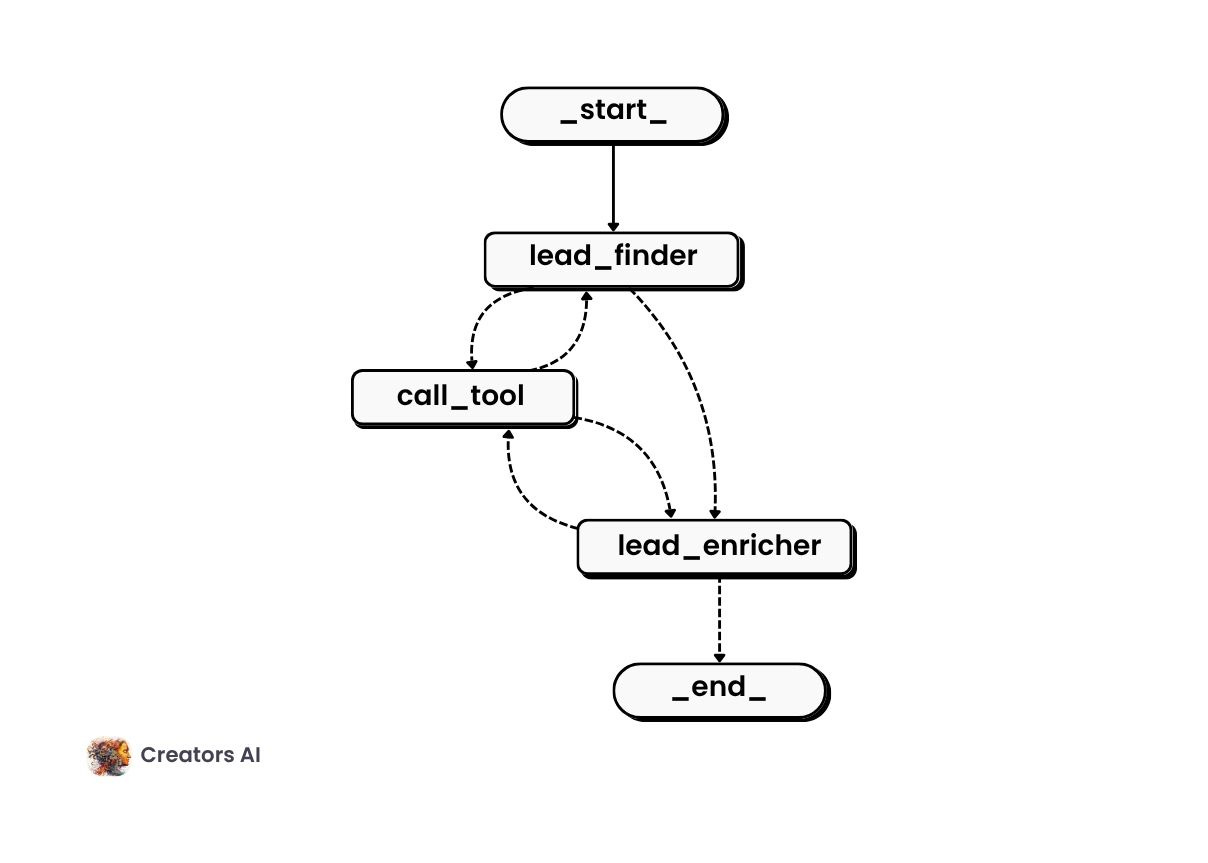
He used LangGraph, a framework for chaining LLM-based agents together in a graph-like structure. The pipeline looks like this:
- First, the system queries external data sources like Google Maps API to surface businesses that match a niche profile.
- Those businesses are filtered based on Mart’s Ideal Customer Profile (ICP), using logic like industry type, employee count, and online presence.
- For those that pass validation, the agent runs enrichment scripts, pulling in website data, social handles, and even funding history via APIs and scraping.
- GPT-4 then crafts a cold outreach email, personalized to each lead.
- Finally, it sends the email via Gmail or MailerSend and logs the attempt.
The system loops or reroutes based on validation scores or errors, all orchestrated via LangGraph.

You can explore the full source code for this agent here for a deeper dive.
📊 The Outcome
This system doesn’t just scale outreach, it’s flexible enough to fit niche, local-first strategies.
- For creators and startups working with local businesses, it can automate the entire top-of-funnel.
- It scrapes local directories, enriches contact data, and crafts custom outreach! No manual effort needed.
- Once set up, it runs quietly in the background, sending qualified leads daily while you focus on sales or delivery.
Mart also breaks down how to adapt this workflow for local outreach using n8n to pull leads from sources like Google Maps and enrich them with AI before the first message is even sent. Check it out here!
Lead gen isn’t the only grind solopreneurs are automating. When it comes to travel and logistics, another solo builder took things a step further, with a modular AI planner that handles everything from flights to food.
2. Nir Bar's Travel Planning Agent (DocentPro / CyberArk)
Like Mart, Nir built his agent to eliminate busywork, but he tackled a completely different, yet equally frustrating, domain.
❓The Problem
Planning complex travel (especially for teams or events) involves a hundred micro-decisions:
- What flights match the agenda?
- What hotels fit the budget and location?
- Can we generate a formatted itinerary?
Daniil, founder of Creators’ AI, used to spend hours every week juggling travel plans, booking flights, hotels, and meetings, and he is not alone! Many founders face the same time-consuming hassle that drains their focus.
💡The Solution
To eliminate this friction, Nir built a travel agent system that transforms a simple request, like “3-day trip to SF for a SaaS event”, into a ready-made itinerary.
So, how does this system actually work behind the scenes?
🔧 How It Works
The system combines several modern tools:
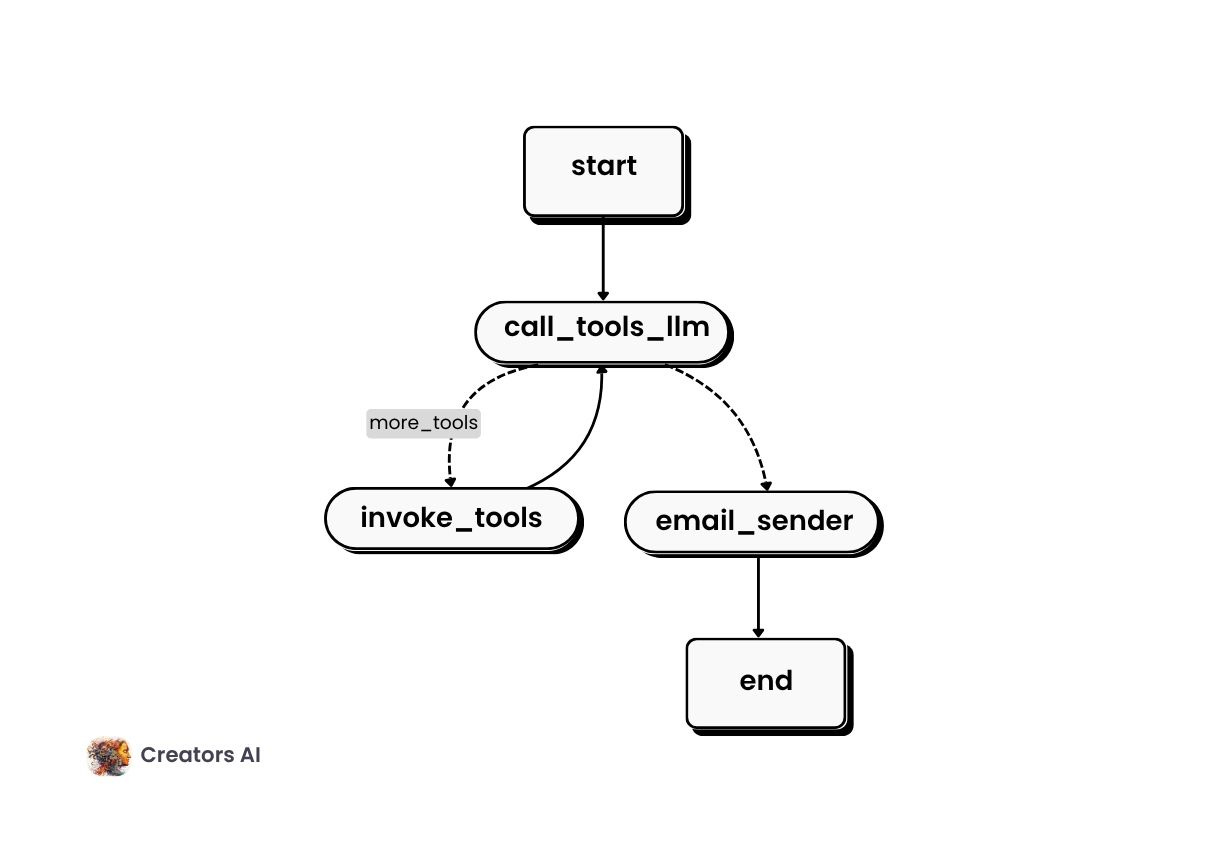
- LangGraph orchestrates the logic: planning → searching → validating → compiling the final output.
- LangChain acts as the interface to external services like Google Flights, Hotels.com, and OpenTable.
- LangSmith tracks what decisions each agent makes, which helps with debugging and improving accuracy.
- Memory APIs store session context, so if the user returns later, their preferences are remembered.
The entire setup is packaged into a modular FastAPI app that can be accessed via a web interface or run offline for demos or privacy-sensitive scenarios.
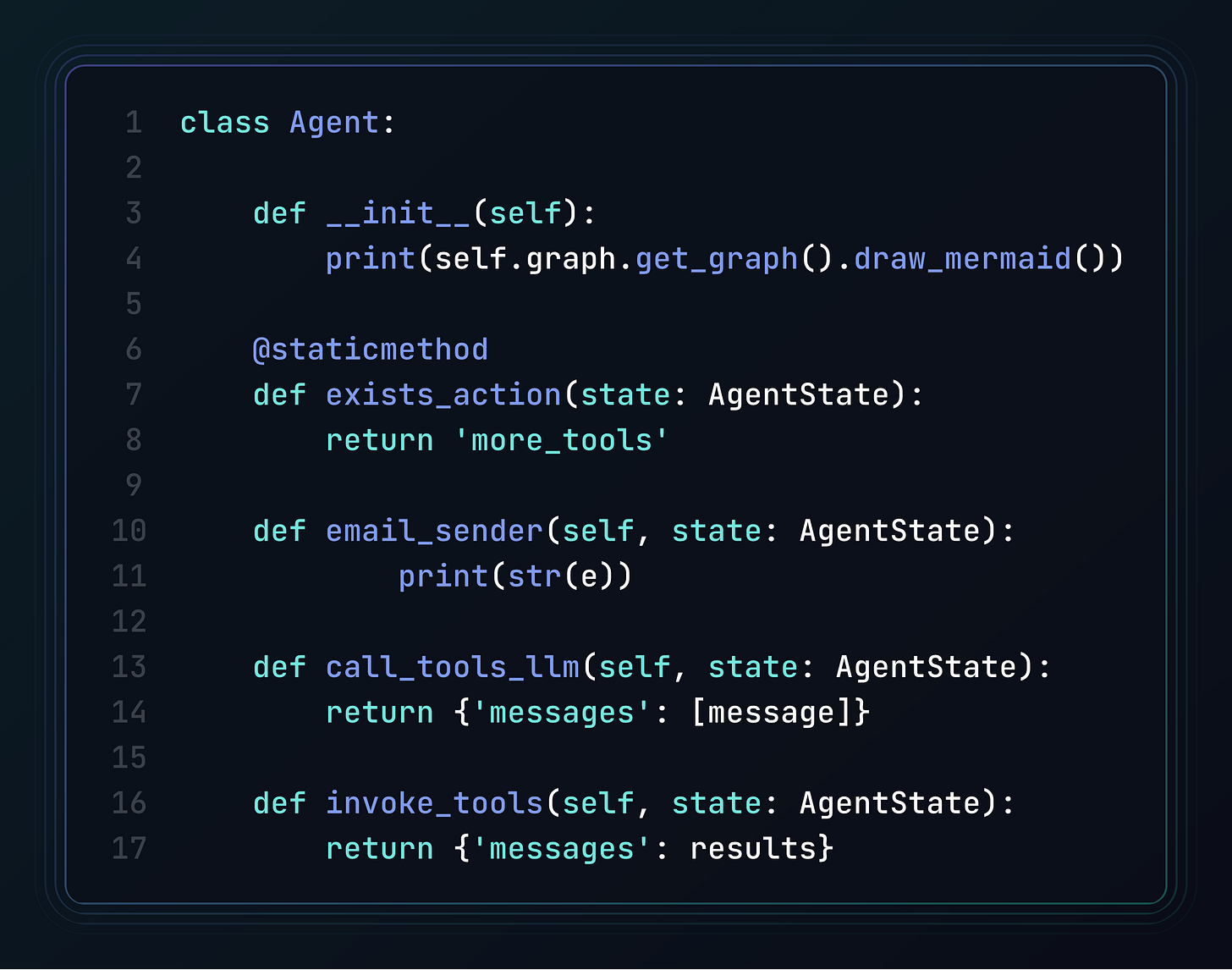
You can find the full source code for Nir’s agent here to explore its inner workings.
📊 The Outcome
Nir Bar’s AI travel agent has dramatically enhanced travel planning efficiency for founders and teams. It delivers:
- Saved hours by automating every tedious step.
- Accurate, real-time options without manual searching.
- Streamlined booking with flight and hotel comparisons in one place.
- Instant itineraries sent straight to your inbox.
- Scalable performance that grows with your needs.
Automating logistics is powerful, but what if you could delegate your actual content creation? That’s exactly what one creator did with a smart AI system that turns trends into LinkedIn-ready posts.
⚡ Quick Note: Notice the pattern? These agents aren’t answering questions; they’re executing goals. Think of them as junior team members, not fancy macros.
3. James Dickerson’s AI Content Agent
I first discovered this AI content system in a YouTube video by Greg Isenberg, where James Dickerson breaks down his autonomous content workflow. It’s one of the most practical examples I’ve seen of how creators can use AI to go beyond writing prompts
Watch the full YouTube video here.
❓The Problem
Creating consistent, high-quality content is a full-time job. Most creators and marketers burn countless hours researching trends, writing drafts, editing, and still often end up with subpar results. The biggest underlying problem? Starting from scratch, every single time.
💡The Solution
But what if you could build a system that picks up where the internet leaves off, handling everything from idea generation to publication? That’s precisely what James Dickerson’s workflow achieves.
He built a content agent that scrapes top-performing content, generates new posts using LLMs, and queues them for publishing, all inside n8n.
The real magic lies in the system design. Here's how James structured his agent to produce research-backed, platform-ready content at scale.
🔧 How It Works
This system was built entirely inside n8n, This content agent runs a four-stage loop:
- Scrape & collect top-performing content
- Generate original ideas using LLMs
- Validate insights with real-world data
- Write & publish to LinkedIn
All of this happens with almost no manual work! Just a human review before publishing.
📊 The Outcome
The fascinating thing about this workflow is that it isn't a glorified ChatGPT prompt; It’s a validated, automated pipeline that matches your tone and strategy and produces content that doesn’t sound AI-generated.
You get content that’s:
- Timely and trend-aware, perfect for growing your brand without the blank page struggle.
- Research-backed, not hallucinated, so your posts feel credible and data-driven.
- Ready to publish in minutes, helping your company stay active online and boost SEO effortlessly.
Authentic in tone, making it easy to test new product ideas with social media campaigns that still sound like you.
Content creation? Handled.
But why stop there when you can stretch a single post across multiple platforms with zero extra effort?
4. Hasan Aboul Hasan’s “AI Content Repurposing Machine”
❓The Problem
Creating original, high-quality content is demanding enough. Repurposing it across multiple platforms is even harder, often leading people to either skip it entirely or perform it manually, which kills consistency and scalability. The result? Great content trapped on a single platform, underperforming its potential.
💡The Solution
Hasan built a brilliant system that takes any piece of content and automatically repackages it into multiple, optimized formats. While it’s not a full-blown autonomous agent in the sense of self-correcting loops, it’s a remarkably clean, efficient workflow powered by GPT-4 that acts as a practical MVP for a future repurposing agent.
Let’s see how it’s done!
🔧 How It Works
This flexible system operates with impressive simplicity and effectiveness:
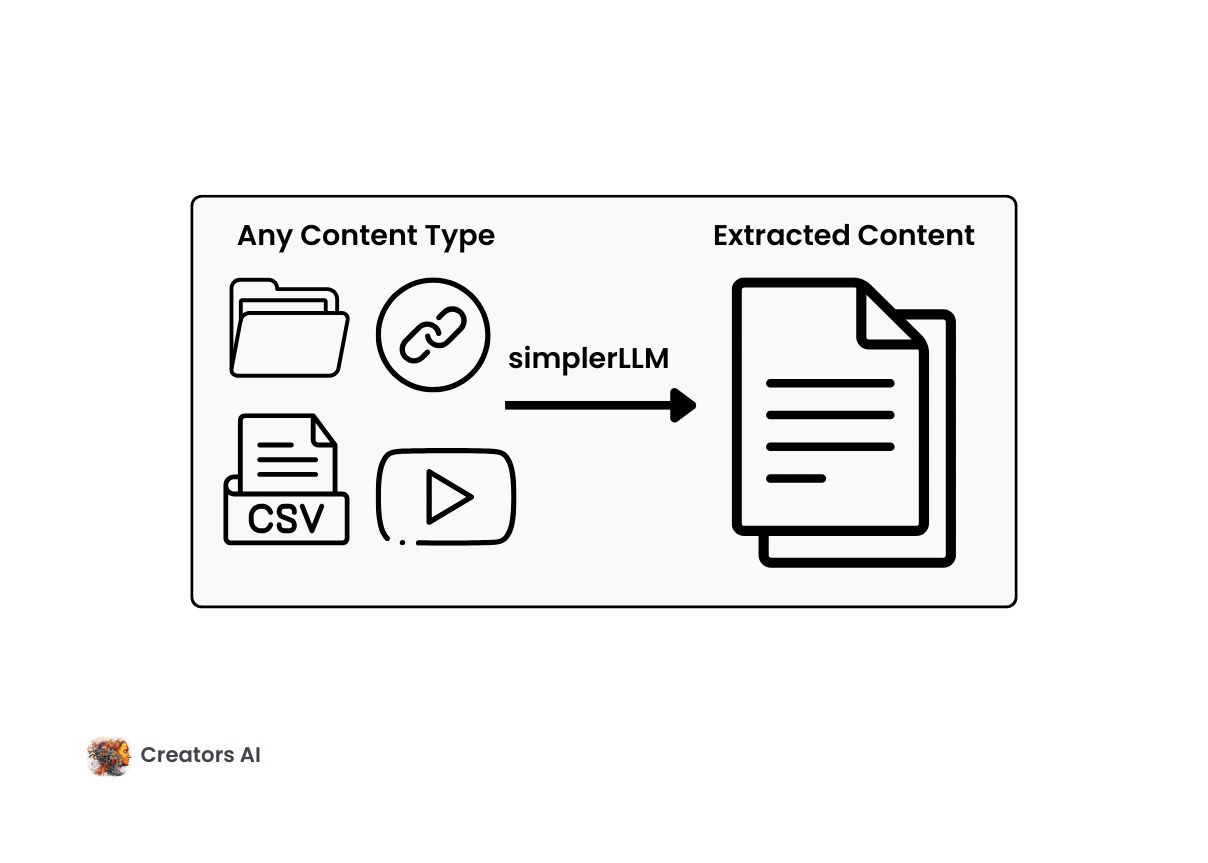
- First, the system takes in content from almost any source.
- Next, it uses a helper library (like SimplerLLM) to intelligently pull out and break down the main ideas and key messages from that original content.
- Then, using custom prompts, it runs these extracted ideas through GPT-4. This generates various new versions of the content.
- Finally, it delivers these new versions in multiple formats all at once.
With this flow in place, what once took hours now happens in minutes, and the impact is easy to see.
📊 The Outcome
Instead of starting from scratch, creators can effortlessly generate multiple content pieces from a single asset while also unlocking new social platforms and marketing channels using content they’ve already created.
You’ve now seen four agents tackling four very different jobs. But they all point to one undeniable trend: Agents are changing the game, and fast.
Share this post with friends, especially those interested in AI Agents!
🤖Why is now the era of Agents, not just LLMs or SaaS?
Let’s clarify: this is not a Zapier flow or a GPT prompt chain!
Agentic systems:
- Have a goal, not just a single task
- Use tools, call APIs, write to databases
- Can plan and adapt based on real-time info
- Include multi-step logic and branching (like a mini brain)
These agents replace junior team members, not just automate one button or a small function.
Understanding the shift is one thing. Knowing how to use it to your advantage? That’s where things get interesting.
❗Why This Matters to You (as a Creator or Founder)
If you:
- Spend 4+ hours/week on repetitive workflows
- Have a clear goal (e.g., leads, trip plans, SEO content)
- Understand your process well enough to break it into steps
… then you’re ready to build your AI agent.
You don’t need 10 tools or a $10K/month stack. Most of the agents we featured? Built using open-source tools and the GPT-4 API. That’s it!
Curious to go deeper?We’ve covered more examples that show how real founders are shipping with agents:
Operator: The Real AI Agent by OpenAI
AI Agents Are Better Than SaaS
We’re sharing tactical breakdowns, real-world builds, and experiments with agents every week. Subscribe to stay ahead!
This article was first published in the Creators AI newsletter. View the original edition.